
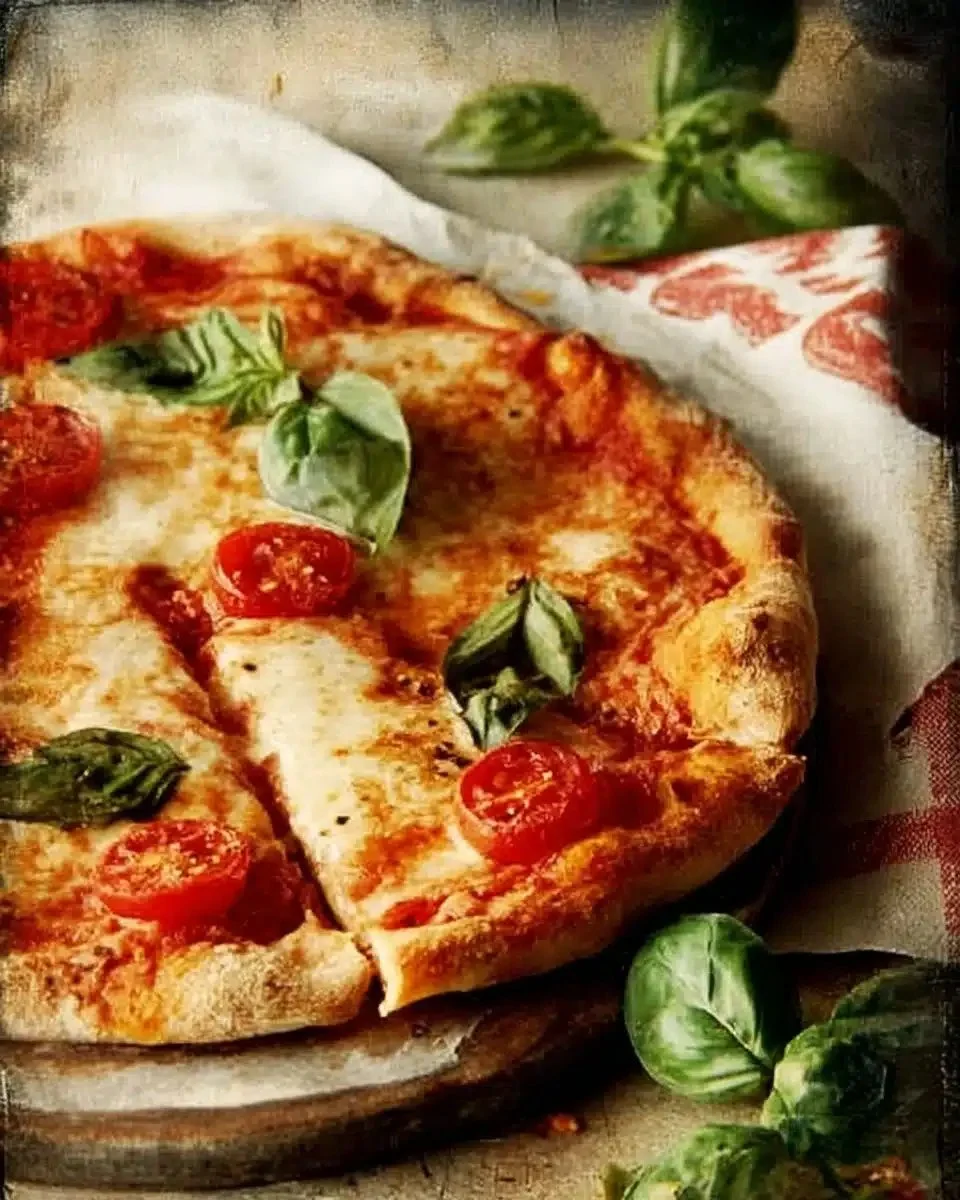
Classic Neapolitan Margherita at Home
The first bite should sing of charred crust, warm tomato, and bright basil; this Classic Neapolitan Margherita does exactly that. After testing this dough and baking method 12 times with different flours and ovens, I settled on a simple mix that yields a thin, elastic crust and big oven blisters in a home oven. This recipe respects the Neapolitan spirit — slow-fermented dough, minimal sauce, and fresh fior di latte — while adapting temperatures for common kitchen gear. If you love simple Italian classics, pair it with a sandwich or side from our classic Italian meatball subs for a full, comforting meal. Read on for ingredient science, precise steps, and pro tips to get the best crust from your oven.
Why This Recipe Works
- Long, cool fermentation builds flavor and gives an extensible dough without extra kneading.
- High-heat baking on a preheated steel or stone mimics wood oven blistering.
- A very light sauce keeps moisture low so the center cooks quickly.
- Simple toppings (fresh mozzarella, basil, olive oil) let the crust shine.
- Small changes — water temperature, flour weight, oven surface — produce big differences; the steps control those variables.
For more on resting dough and why temperature matters, see our related baking notes.
Ingredients Breakdown
- Dough (makes two 11–12-inch / 28–30 cm pizzas)
- 500 g (4 cups) 00 flour or all-purpose flour — 00 gives a silkier, more pliable dough; AP works but will be slightly chewier.
- 325 ml (1 3/8 cups) water at 20–24°C (68–75°F) — hydration around 65% yields a soft crumb and blister-prone crust. Warmer water speeds fermentation.
- 10 g (2 tsp) fine sea salt — salt strengthens gluten and seasons the crust. Do not omit.
- 2 g (1/2 tsp) instant yeast — small yeast keeps fermentation slow and flavorful. Increase to 4 g for a quicker rise.
- 10 ml (2 tsp) extra-virgin olive oil (optional) — adds softness and flavor; true Neapolitan dough traditionally omits oil.
- Sauce and Toppings
- 400 g (14 oz) canned San Marzano tomatoes, crushed by hand — bright, balanced acidity; strain lightly to remove excess juice.
- 200 g (7 oz) fresh fior di latte or low-moisture mozzarella, torn — fresh gives milder flavor and creamy pockets; use low-moisture if you want less water.
- Fresh basil leaves — scatter after baking for brightness.
- 10 ml (2 tsp) extra-virgin olive oil for finishing.
- Salt to taste (about 1/4 tsp for sauce).
- Notes and substitutions
- Gluten-free: use a tested 1:1 GF blend and add 1 tsp xanthan gum; expect a different texture.
- Salt brands matter: if using Morton’s kosher salt, use about 15 g as it’s denser than Diamond Crystal.
- Cheese swap: buffalo mozzarella is richer but wetter; drain and pat well to avoid soggy centers.
Essential Equipment
- Pizza steel or baking stone, 0.5–1 cm thick. A steel gives quicker blistering.
- Bench scraper for dividing dough.
- Digital scale — precise dough weights matter more than volume.
- Pizza peel (floured or semolina-dusted) or an inverted baking sheet as a peel substitute.
- Oven that reaches at least 260°C (500°F). If you have a broiler, see pro technique below for additional blistering.
- If you lack a steel, use a heavy baking sheet placed upside down and preheated.
Step-by-Step Instructions
Prep Time: 25 minutes active (plus 18–48 hours inactive cold fermentation). Cook Time: 6–10 minutes per pizza in a hot oven. Inactive Time: 18–48 hours. Total Time: 19–48 hours (mostly resting). Servings: 2 pizzas; serving size 1 pizza.
Step 1: Mix the dough
Combine 500 g (4 cups) 00 flour, 2 g (1/2 tsp) instant yeast, and 325 ml (1 3/8 cups) water in a bowl. Mix with your hand or a spoon until just combined, about 2 minutes. Do not overmix — stop when no dry flour remains.
Step 2: Add salt and rest
Add 10 g (2 tsp) salt and 10 ml (2 tsp) olive oil. Fold the dough for 20–30 seconds to incorporate. Cover and rest 20 minutes for an autolyse; this helps gluten develop without heavy kneading.
Step 3: Stretch and bulk ferment
Perform 3 sets of folds in the bowl at 30-minute intervals. After the third fold, let the dough rise at room temperature for 2 hours, then transfer to the refrigerator for 18–48 hours. Longer cold fermentation improves flavor. Expect dough to double or near double over 24 hours.
Step 4: Divide and warm
Remove dough from fridge 1.5 hours before baking. Divide into two equal pieces (~250 g each) using a scale. Shape each into a tight ball and let rest 60–90 minutes, covered, until relaxed and puffed.
Step 5: Prepare the oven and sauce
Place your pizza steel or stone on the highest rack. Preheat the oven to its maximum, at least 260°C (500°F), for 45–60 minutes. Lightly salt and crush 400 g (14 oz) San Marzano tomatoes; taste and adjust salt. Keep the sauce barely saucy — strain out excess liquid.
Step 6: Form and top
On a floured surface, press and stretch a dough ball into an 11–12-inch (28–30 cm) disc, leaving a slightly thicker rim. Do not use a rolling pin — you want gas in the rim for blistering. Spread 50–70 g (1/4–1/3 cup) sauce in the center, leaving the edge clear. Tear 100 g (3.5 oz) mozzarella and scatter evenly. Drizzle 2–3 ml (1/2 tsp) olive oil.
Step 7: Bake
Slide the pizza onto the preheated steel. Bake at 260°C (500°F) for 6–8 minutes, rotating halfway, until the crust is blistered and the cheese is bubbling. If your oven broils hot, broil on high for the last 30–60 seconds to add extra char. Remove when the rim has dark blisters and the underside is spotted.
Step 8: Finish and serve
Top with fresh basil and a final drizzle of olive oil. Let rest 1 minute, then slice. Serve immediately.
Expert Tips & Pro Techniques
- Use a scale. Small weight differences change hydration and rise.
- Common mistake: trying to stretch cold dough. Avoid tearing by warming the dough for 60–90 minutes at room temperature.
- To get more char at home, preheat a pizza steel on the top rack and use the broiler for the final 30–60 seconds while watching closely.
- Make-ahead: shape the dough balls and refrigerate for up to 48 hours. Let them warm before stretching.
- For a lighter center, use less cheese and a thin smear of sauce; overloads trap moisture and slow cooking.
- Professional technique for home: use a very hot inverted baking sheet as a peel to launch the pizza onto the steel quickly. Dust with semolina to prevent sticking.
Storage & Reheating
- Refrigerator: Store leftover pizza in an airtight container or wrapped in foil for up to 3 days. Reheat within that time.
- Freezer: Freeze slices flat on a tray for 1–2 hours, then wrap tightly and store in a freezer bag for up to 1 month. Thaw overnight in the fridge. Texture will be best in 1–2 weeks.
- Reheating: Reheat in a 175°C (350°F) oven for 8–10 minutes or on a pizza steel at 260°C (500°F) for 4–6 minutes. Avoid microwaving — it makes crust soggy.
Variations & Substitutions
- Gluten-Free Version: Replace 00 flour with a 1:1 GF blend and add 1 tsp xanthan gum. Hydration may vary; expect a denser crumb and add 5–10 minutes to bake time.
- Vegan Margherita: Use vegan mozzarella (150–200 g) and a drizzle of olive oil after baking. Keep sauce the same. Baking time unchanged.
- Spicy Pepperoni: Add thin-sliced pepperoni before baking; reduce cheese by 20 g to keep moisture balanced. Bake 1–2 minutes longer if toppings cool the surface.
- Buffala Upgrade: Use 125 g fresh buffalo mozzarella per pizza but pat it dry and scatter smaller pieces. Bake the same, but expect more moisture; briefly drain excess liquid before topping.
- Quick Dough (no cold ferment): Increase yeast to 6 g (1.5 tsp) and proof at room temperature for 2–3 hours until doubled. Crust will be less complex but still tasty.
Serving Suggestions & Pairings
- Light salad: Arugula with lemon, olive oil, and shaved Parmesan.
- Potatoes: Pair with our garlic roasted potatoes for a hearty side. Try a bold protein like char siu chicken if you want an Asian-inspired contrast.
- Wine: A fresh Sangiovese or a crisp Vermentino cuts through cheese and oil.
- Dessert: Finish with a bright citrus custard like our crema catalana to contrast the savory pizza. A crema catalana makes a perfect finish.
Nutrition Information
Per serving (1 pizza). Servings: 2 pizzas; Serving size: 1 pizza.
- Calories: 820 kcal
- Total Fat: 28 g
- Saturated Fat: 12 g
- Cholesterol: 60 mg
- Sodium: 920 mg
- Total Carbohydrates: 104 g
- Dietary Fiber: 6 g
- Sugars: 8 g
- Protein: 30 g
Nutrition values are estimates. Actual values may vary based on specific ingredients and preparation methods. For lighter options, see our list of natural weight-loss recipes that work for salad and side ideas.
Frequently Asked Questions
Q: Why did my pizza crust turn out dense instead of airy?
A: Dense crust often means underproofed dough or low hydration. Let dough ferment longer in the fridge and ensure 60–90 minutes of room rest before shaping.
Q: Can I make this without fresh mozzarella?
A: Yes. Use low-moisture mozzarella for less water. If you only have fresh, pat it dry to reduce sogginess.
Q: Can I double this recipe for a party?
A: Yes. Scale dough ingredients proportionally and divide into more balls. Use multiple steels or bake in batches; don’t crowd the oven.
Q: Can I prepare this the night before?
A: Absolutely. Shape dough balls and refrigerate up to 48 hours. Remove 90 minutes before baking to warm.
Q: How long does leftover pizza keep in the fridge?
A: Store in an airtight container for up to 3 days. Reheat in the oven for best texture.
Q: Why does the center stay wet while the edges blister?
A: Too much sauce or cheese causes a wet center. Use a thin layer of sauce and less cheese; bake on a hot steel to cook the center rapidly.
Q: Can I use a pizza oven or grill instead of my oven?
A: Yes. A wood-fired or gas pizza oven cooks much faster (60–90 seconds) at higher temps. On a grill, manage hotspots and use a pizza stone or steel for even cooking.
Conclusion
If you want extra reading on traditional techniques and home adaptations, these guides are useful. For another home-adapted take, see Glebe Kitchen’s pizza margherita — Neapolitan style for comparison of methods. For a closely related classic recipe and more tips on dough and topping balance, check A Little Spoon’s Classic Neapolitan-Style Margherita Pizza.
Enjoy the baking. Share how your first blistered crust turns out.
Print
Classic Neapolitan Margherita at Home
- Total Time: 19-48 hours
- Yield: 2 pizzas 1x
- Diet: Vegetarian
Description
Experience the traditional taste of Italy with this Classic Neapolitan Margherita pizza recipe, featuring a thin, elastic crust and fresh toppings.
Ingredients
- 500 g (4 cups) 00 flour or all-purpose flour
- 325 ml (1 3/8 cups) water at 20–24°C (68–75°F)
- 10 g (2 tsp) fine sea salt
- 2 g (1/2 tsp) instant yeast
- 10 ml (2 tsp) extra-virgin olive oil (optional)
- 400 g (14 oz) canned San Marzano tomatoes, crushed by hand
- 200 g (7 oz) fresh fior di latte or low-moisture mozzarella, torn
- Fresh basil leaves
- 10 ml (2 tsp) extra-virgin olive oil for finishing
- Salt to taste (about 1/4 tsp for sauce)
Instructions
- Combine 500 g (4 cups) 00 flour, 2 g (1/2 tsp) instant yeast, and 325 ml (1 3/8 cups) water in a bowl. Mix with your hand or a spoon until just combined, about 2 minutes.
- Add 10 g (2 tsp) salt and 10 ml (2 tsp) olive oil. Fold the dough for 20–30 seconds to incorporate. Cover and rest 20 minutes.
- Perform 3 sets of folds in the bowl at 30-minute intervals. Let the dough rise at room temperature for 2 hours, then transfer to the refrigerator for 18–48 hours.
- Remove dough from fridge 1.5 hours before baking. Divide into two equal pieces (~250 g each) using a scale.
- Place your pizza steel or stone on the highest rack. Preheat the oven to at least 260°C (500°F) for 45–60 minutes.
- On a floured surface, press and stretch a dough ball into an 11–12-inch (28–30 cm) disc. Spread 50–70 g (1/4–1/3 cup) sauce in the center and scatter mozzarella.
- Slide the pizza onto the preheated steel. Bake at 260°C (500°F) for 6–8 minutes.
- Top with fresh basil and a final drizzle of olive oil. Let rest 1 minute, then slice. Serve immediately.
Notes
For a gluten-free version, use a tested 1:1 GF blend with 1 tsp xanthan gum. Adjust baking time accordingly.
- Prep Time: 25 minutes
- Cook Time: 8 minutes
- Category: Main Course
- Method: Baking
- Cuisine: Italian
Nutrition
- Serving Size: 1 pizza
- Calories: 820
- Sugar: 8g
- Sodium: 920mg
- Fat: 28g
- Saturated Fat: 12g
- Unsaturated Fat: 14g
- Trans Fat: 0g
- Carbohydrates: 104g
- Fiber: 6g
- Protein: 30g
- Cholesterol: 60mg