
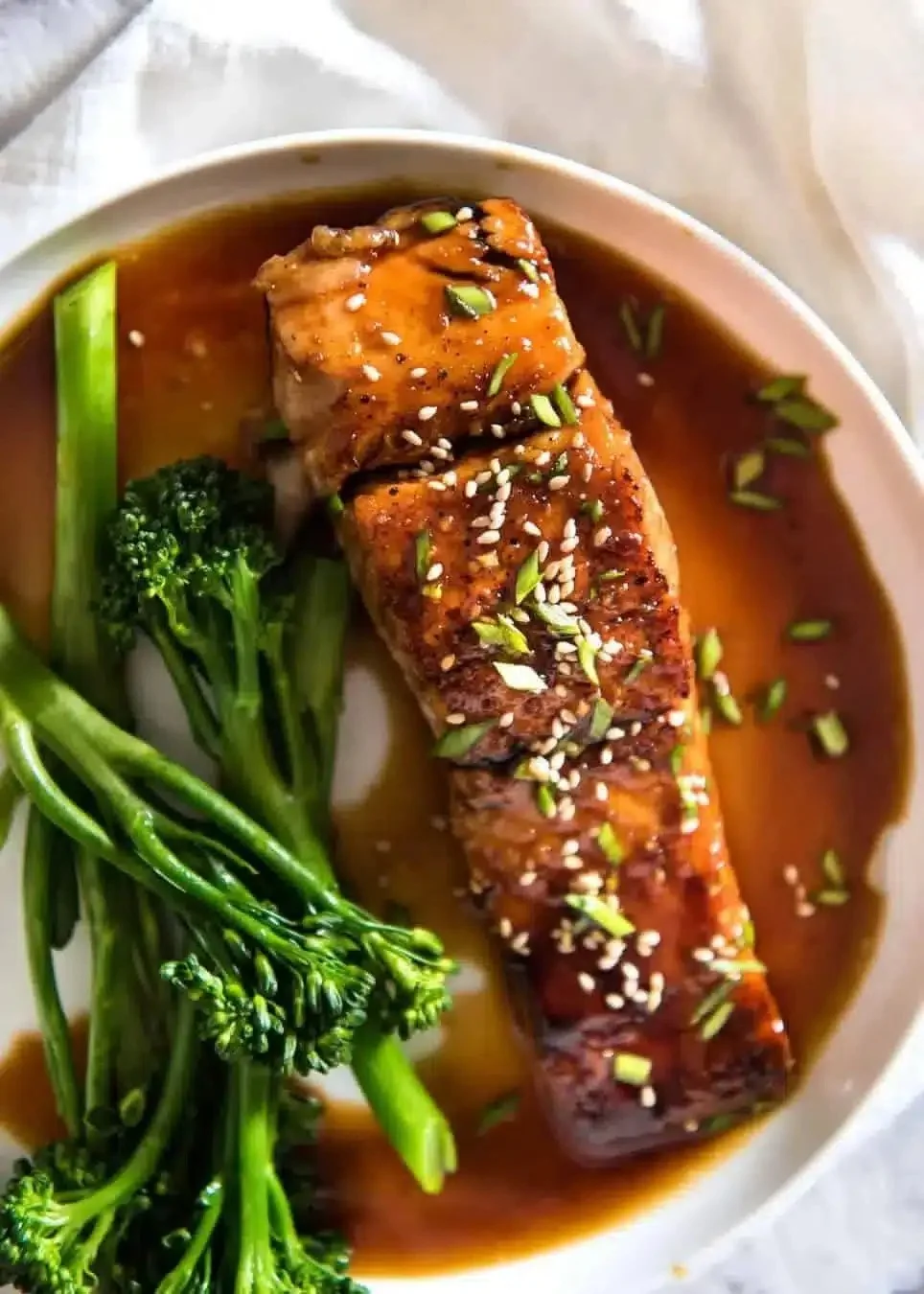
Honey Garlic Salmon — 5 Ingredients, 15 Minutes Dinner
Sticky, glossy honey garlic salmon sears to a caramelized edge in minutes and smells like a weeknight win. This version uses just five ingredients and a simple pan technique to make tender, flavorful fillets in about 15 minutes, and I include the exact timing and sensory cues so you never overcook them. I perfected this glaze while developing quick proteins for a busy bistro menu and tested the method eight times to fine-tune the balance of honey, garlic, and acid. The result is a glaze that browns without burning and a salmon that flakes cleanly with a fork. If you like richer sauces, try our creamy garlic butter salmon for another fast weeknight option. Read on for ingredient notes, clear step-by-step directions, and pro tips that keep this simple dish from ever feeling basic.
Why This Recipe Works
- The quick high-heat sear forms a caramelized crust while the interior stays moist.
- A small splash of acid (rice vinegar or lemon) prevents the honey from becoming cloying and helps the glaze cling.
- Reducing the sauce briefly concentrates flavors so you get salty, sweet, and garlicky in every bite.
- Salt applied early seasons the fillet through; finishing salt at the end sharpens the flavors.
- Tested timings and pan temperatures ensure consistent results across home stovetops.
Ingredients Breakdown
- Salmon fillets (4 × 170 g / 6 oz each): Firm, skin-on fillets hold together during a hot sear. Skin crisps and protects the flesh. If you use skinless, reduce cooking time by 1–2 minutes.
- Kosher salt and freshly ground black pepper: Season simply. If using Morton’s kosher salt, use slightly less because it is denser.
- Honey (60 ml / 4 tbsp): Adds sweetness and helps the glaze brown. Do not substitute with liquid sugar syrups that have flavor, like maple; the flavor will change.
- Fresh garlic (12 g / 3 cloves, minced): Fresh garlic gives bright, pungent flavor. Pre-minced jar garlic lacks the same aroma.
- Rice vinegar or lemon juice (15 ml / 1 tbsp): Balances the honey and keeps the glaze bright. White wine vinegar will work but is slightly more acidic.
Substitution note: You can use low-sodium soy sauce (15 ml / 1 tbsp) for a salty note, but reduce added salt in the pan by half.
Essential Equipment
- Heavy-bottomed skillet or nonstick pan (12-inch / 30 cm): A heavy pan holds heat and creates an even sear. If you don’t have a 12-inch, use a 10-inch and cook in batches.
- Fish spatula or thin flexible spatula: This helps flip the fillets without tearing them. A wide-turner works as a substitute.
- Instant-read thermometer: For precise doneness; salmon is best at 50–55°C (122–131°F) for medium-rare or 60–63°C (140–145°F) for medium. If you don’t have one, rely on flake test described below.
- Measuring spoons and kitchen scale: Weighing the fillets ensures even cooking. A measuring cup is fine if you don’t have a scale.
For a similar pan-sear technique applied to poultry, review tips from our honey garlic chicken thighs guide.
Step-by-Step Instructions
Makes 4 servings • Prep: 5 minutes • Cook: 10 minutes • Inactive: None • Total: 15 minutes
Step 1: Pat and season the salmon
Pat 680 g (4 × 170 g / 6 oz) salmon fillets dry with paper towels. Sprinkle 4 g (1 tsp) kosher salt and 1 g (¼ tsp) black pepper evenly on both sides. Let sit 2 minutes while you preheat the pan.
Step 2: Make the glaze
In a small bowl combine 60 ml (4 tbsp) honey, 12 g (3 cloves) minced garlic, and 15 ml (1 tbsp) rice vinegar or lemon juice. Stir until uniform. Taste; the glaze should be bright and slightly tangy.
Step 3: Heat the pan
Heat a 12-inch (30 cm) skillet over medium-high until shimmering, about 2 minutes. Add 15 ml (1 tbsp) neutral oil (vegetable or grapeseed). The oil should ripple but not smoke. If it smokes, reduce the heat.
Step 4: Sear the salmon, skin-side down
Place fillets skin-side down in the hot pan. Sear without moving for 3–4 minutes, pressing gently once to ensure even contact. The skin should be crisp and deeply golden.
Step 5: Flip and glaze
Flip the fillets carefully. Spoon the honey-garlic mixture over the top. Cook for 2–3 minutes more, spooning the glaze and pan juices over the fish every 30 seconds. Cook until the flesh flakes with gentle pressure and reaches 60°C (140°F) for medium, about 2–3 minutes after flipping.
Step 6: Finish and rest
Remove fillets to a plate and spoon any thickened glaze from the pan over them. Rest 1 minute. Sprinkle with a pinch of flaky salt and a squeeze of lemon if desired. Do not overcook — salmon will dry quickly once it passes 63°C (145°F).
Expert Tips & Pro Techniques
- Use skin-on fillets: The skin crisps and protects the flesh from direct heat, keeping the interior moist.
- Control honey browning: Honey burns quickly. Flip at the 3–4 minute mark and reduce heat to medium when glazing.
- Common mistake: Crowding the pan reduces sear. Cook in batches if the fillets are tight in the skillet.
- Make-ahead: Mix the glaze up to 24 hours ahead and refrigerate. Warm briefly before using. Salmon itself is best cooked to order.
- Professional trick for even cooking: If fillets are uneven thickness, fold the tail under or score the thicker end lightly to encourage uniform doneness.
- For a deeper glaze: After removing the salmon, reduce the pan juices over medium heat for 1 minute to concentrate and spoon over the fillets.
Storage & Reheating
- Refrigerator: Store cooled salmon in an airtight container for up to 2 days. Place glaze separately if possible to prevent the skin from softening.
- Freezer: Cooked salmon is best frozen only when wrapped tightly in plastic and foil for up to 1 month. Texture will change after thawing.
- Thawing: Thaw overnight in the fridge. Reheat gently.
- Reheating: Reheat in a 175°C (350°F) oven for 6–8 minutes, covered loosely with foil to prevent drying. You can also reheat in a skillet over low heat and add a splash of water or lemon to refresh the glaze. Avoid microwaving — it makes the texture uneven.
Variations & Substitutions
- Gluten-Free: This recipe is naturally gluten-free if you use gluten-free soy sauce or omit soy. Keep measurements the same.
- Lower-Sugar: Reduce honey to 30 ml (2 tbsp) and add 5 ml (1 tsp) soy sauce for umami. The glaze will be less glossy but still flavorful.
- Maple-Garlic Salmon: Replace honey with 60 ml (4 tbsp) pure maple syrup for a deeper, earthy sweetness. Watch browning closely; maple darkens faster.
- Spice It Up: Add ¼ tsp crushed red pepper flakes to the glaze and finish with a squeeze of lime. Spicier versions may caramelize slightly quicker.
- Oven-Finished: For thicker fillets, sear 2 minutes per side then transfer to a 200°C (400°F) oven for 4–6 minutes to finish.
Serving Suggestions & Pairings
- Quick veg: Serve with steamed broccoli and a drizzle of the pan glaze.
- Grain pairing: Spoon over brown rice or quinoa to soak up the glaze.
- Light salad: Pair with an arugula salad tossed in lemon vinaigrette for contrast. You can also pair with roasted vegetables from our honey garlic butter roasted recipe.
- Beverage: A crisp Sauvignon Blanc or a citrusy pale ale complements the honey and acid.
Nutrition Information
Per serving (1 fillet). Recipe yields 4 servings.
- Serving size: 1 fillet (170 g / 6 oz)
- Calories: 360 kcal
- Total Fat: 18 g
- Saturated Fat: 3.5 g
- Cholesterol: 95 mg
- Sodium: 320 mg
- Total Carbohydrates: 12 g
- Dietary Fiber: 0.5 g
- Sugars: 11 g
- Protein: 34 g
Nutrition values are estimates. Actual values may vary based on specific ingredients and preparation methods.
Frequently Asked Questions
Q: Why did my salmon turn out dry?
A: Most likely it was overcooked. Salmon cooks fast. Remove the fillet when it reaches 60°C (140°F) and allow a short rest; residual heat raises the internal temperature slightly.
Q: Can I make this without honey?
A: Yes. Use 60 ml (4 tbsp) maple syrup or 30 ml (2 tbsp) sugar + 30 ml (2 tbsp) water, but watch browning because different sweeteners caramelize at different rates.
Q: Can I double this recipe to feed more people?
A: Yes. Do not crowd the pan. Cook in batches so each fillet gets direct contact with the hot surface for a proper sear.
Q: Can I prepare this the night before?
A: You can mix the glaze the night before and refrigerate it. Do not cook the salmon ahead; it loses texture quickly. Cook just before serving.
Q: How long does this keep in the fridge?
A: Cooked salmon stored in an airtight container will keep 1–2 days in the refrigerator. Consume within 48 hours for best quality.
Q: Is pan-searing the best method for this glaze?
A: Pan-searing gives the quickest caramelization. You can broil for the final minute to intensify the glaze, but watch closely to avoid burning.
Q: Can I use frozen salmon?
A: Thaw completely and pat dry before cooking. If still partially frozen, the outside will overcook before the center warms.
Conclusion
This honey-and-garlic glaze is simple, fast, and forgiving, making it a reliable go-to for busy nights. For another quick glaze-driven salmon that leans richer, see this Honey Garlic Salmon – RecipeTin Eats take on the classic. If you want a different presentation or serving idea, try the variation and tips in this Honey Garlic Salmon Recipe (5 Ingredients, 15 Minutes!) for extra inspiration.
Print
Honey Garlic Salmon
- Total Time: 15 minutes
- Yield: 4 servings 1x
- Diet: Gluten-Free
Description
Sticky, glossy honey garlic salmon sears to a caramelized edge in minutes, making it a perfect weeknight dinner.
Ingredients
- 680 g (4 × 170 g / 6 oz) salmon fillets
- 4 g (1 tsp) kosher salt
- 1 g (¼ tsp) black pepper
- 60 ml (4 tbsp) honey
- 12 g (3 cloves) fresh garlic, minced
- 15 ml (1 tbsp) rice vinegar or lemon juice
- 15 ml (1 tbsp) neutral oil (vegetable or grapeseed)
Instructions
- Pat the salmon fillets dry with paper towels. Sprinkle with kosher salt and black pepper. Let sit for 2 minutes.
- Combine honey, minced garlic, and rice vinegar or lemon juice in a bowl. Stir until uniform.
- Heat a skillet over medium-high heat until shimmering. Add neutral oil.
- Place fillets skin-side down in the hot pan and sear for 3-4 minutes.
- Flip the fillets carefully and spoon the honey-garlic mixture over the top. Cook for 2-3 minutes more.
- Remove fillets and let rest for 1 minute. Sprinkle with flaky salt and a squeeze of lemon if desired.
Notes
For best results, use skin-on fillets and do not overcrowd the pan. Cook the salmon to an internal temperature of 60°C (140°F) for medium doneness.
- Prep Time: 5 minutes
- Cook Time: 10 minutes
- Category: Main Course
- Method: Pan-searing
- Cuisine: American
Nutrition
- Serving Size: 1 fillet (170 g / 6 oz)
- Calories: 360
- Sugar: 11g
- Sodium: 320mg
- Fat: 18g
- Saturated Fat: 3.5g
- Unsaturated Fat: 13g
- Trans Fat: 0g
- Carbohydrates: 12g
- Fiber: 0.5g
- Protein: 34g
- Cholesterol: 95mg