
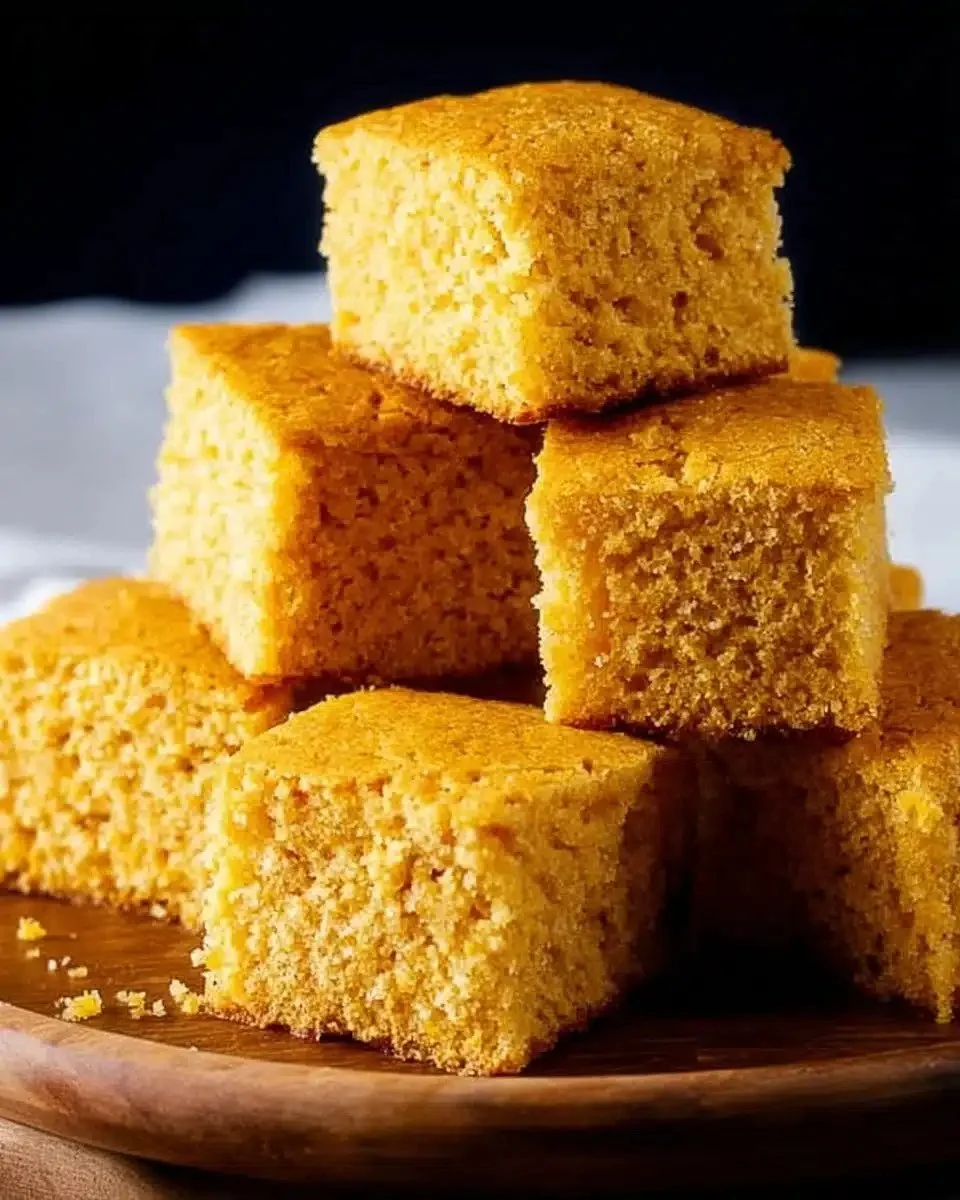
Homemade Cornbread — Tender Skillet Classic
The first bite is all crust: butter-slick edges, a warm, crumbly interior, and a faint sweetness that makes you reach for another slice. This homemade cornbread recipe delivers that classic contrast — crisp around the rim, tender inside — every time. After testing this formula 12 times with different cornmeal grinds and pans, I settled on a mix that gives the best balance of texture and flavor. I developed and refined it in a busy test kitchen where timing and consistency mattered, so these directions focus on one thing: reliable results you can repeat at home. Read on for the why, the how, and pro tips that will save your next bake.
Why This Recipe Works
- Coarse yellow cornmeal plus a bit of all-purpose flour gives structure without drying the crumb. The cornmeal provides that classic tooth; the flour holds the shape.
- Buttermilk reacts with baking soda for lift while adding tang and moisture. This avoids a dense, heavy loaf.
- Hot skillet and melted butter create immediate crust when the batter hits the pan. That quick sear makes the edges crisp.
- Minimal mixing prevents a gummy crumb. Mixing until just combined keeps the cornmeal’s texture intact.
- A short bake at moderately high heat cooks the center fast enough that crumb stays moist while the exterior browns.
Ingredients Breakdown
- Yellow cornmeal — 160 g (1 cup): Provides the classic corn flavor and grainy texture. Use medium- or coarse-ground for best mouthfeel. Fine cornmeal will give a softer, less textured crumb.
- All-purpose flour — 125 g (1 cup): Lightens the structure. Do not swap for bread flour; it makes the cornbread tough.
- Granulated sugar — 24 g (2 tbsp): Balances the corn’s corn flavor. Reduce to 1 tbsp or omit for savory versions.
- Baking powder — 12 g (1 tbsp) and baking soda — 3 g (½ tsp): The powder gives lift; the soda reacts with buttermilk for extra rise and tender crumb.
- Salt — 6 g (1 tsp): I recommend Diamond Crystal kosher salt for texture. If using Morton’s, use ½ tsp because it’s denser.
- Buttermilk — 240 ml (1 cup): Adds acid, moisture, and tang. Substitute 240 ml plain whole milk + 15 ml (1 tbsp) lemon juice if needed — let stand 5 minutes.
- Large eggs — 2 (about 100 g without shells): Bind and enrich.
- Unsalted butter, melted — 56 g (4 tbsp): Adds flavor and helps the crust brown. You can replace half with neutral oil for a softer edge.
- Vegetable oil or additional butter for skillet — 15 ml (1 tbsp): To grease pan and encourage a crisp exterior.
If you like skillet bakes with a homey texture, try our Easy Homemade Mounjaro for another quick, satisfying bread-style recipe.
Essential Equipment
- 9-inch (23 cm) cast-iron skillet — preferred for even heat and a superior crust. A 9-inch ovenproof metal skillet works as a substitute.
- Kitchen scale — for accurate dry measurements (highly recommended).
- Measuring cups and spoons — for wet ingredients and small amounts.
- Whisk and rubber spatula — whisk dry ingredients, fold wet ones gently.
- Instant-read thermometer — helpful to confirm doneness (optional but useful).
If you don’t have a 9-inch skillet, use a 9-inch round cake pan, but the crust will be less pronounced and the center may need 3–5 extra minutes.
Step-by-Step Instructions
Prep Time: 15 minutes — Cook Time: 20–25 minutes — Inactive Time: None — Total Time: 35–40 minutes — Servings: 8 (1 wedge each)
Step 1: Preheat and prepare the skillet
Preheat the oven to 204°C (400°F) and place the empty 9-inch (23 cm) skillet inside to heat for 8–10 minutes. Add 15 ml (1 tbsp) butter to the hot skillet, swirl to melt and coat the bottom; this gives a nutty, browned edge. Timing: heat skillet 8–10 minutes.
Step 2: Whisk dry ingredients
In a medium bowl, whisk together 160 g (1 cup) coarse yellow cornmeal, 125 g (1 cup) all-purpose flour, 24 g (2 tbsp) granulated sugar, 12 g (1 tbsp) baking powder, 3 g (½ tsp) baking soda, and 6 g (1 tsp) kosher salt until evenly combined. This step ensures even leavening. Time: 1–2 minutes.
Step 3: Mix wet ingredients
In a separate bowl, whisk 240 ml (1 cup) buttermilk, 2 large eggs, and 56 g (4 tbsp) melted and slightly cooled unsalted butter until smooth. If your butter is too hot it will cook the eggs; let it cool for 1–2 minutes. Time: 1–2 minutes.
Step 4: Combine wet and dry
Pour the wet mixture into the dry ingredients and stir with a rubber spatula until just combined — no large streaks of flour visible. Do not overmix — stop as soon as the batter is homogenous. The batter should be thick but pourable; if too stiff, add 15–30 ml (1–2 tbsp) milk. Time: 30–60 seconds.
Step 5: Bake in the hot skillet
Carefully remove the preheated skillet, pour in the batter, and smooth the top. Bake at 204°C (400°F) for 20–25 minutes, rotating once after 12 minutes for even browning. The cornbread is done when the top is golden brown, edges pull slightly from the skillet, and a toothpick inserted into the center comes out clean — or it reaches 95°C (203°F). Time: 20–25 minutes.
Step 6: Rest and serve
Let the cornbread rest in the skillet for 10 minutes before slicing. This short rest allows the crumb to set and makes slicing cleaner. Serve warm with butter or honey. Time: 10 minutes resting.
Expert Tips & Pro Techniques
- Common mistake: overmixing causes a gummy crumb. Mix only until no dry flour remains; a few lumps are fine.
- Cast-iron sear trick: heat the skillet in the oven — pouring batter into a hot, buttered pan creates immediate steam contact and a crunchy rim you can’t get in a cool pan.
- Make-ahead: Bake, cool completely, wrap tightly in foil, and refrigerate up to 2 days. Reheat in a 175°C (350°F) oven for 8–10 minutes.
- Professional tweak for home bakers: brown 28 g (2 tbsp) butter until nutty, cool slightly, then mix into the batter for a deeper, toasted butter flavor.
- If the center sinks: your oven may be too cool or you opened the door too early. Use an instant-read thermometer; remove at 95°C (203°F).
- To test salt balance before baking: pinch a small piece of batter and taste (raw egg aside) — adjust sugar or salt sparingly.
Storage & Reheating
- Refrigerator: Cool completely, wrap in plastic or store in an airtight container for up to 3 days. Reheat single slices in a 175°C (350°F) oven for 8–10 minutes.
- Freezer: Cool completely, wrap tightly in plastic and foil or in a freezer bag. Freeze up to 3 months. Thaw overnight in the refrigerator, then reheat in a 175°C (350°F) oven for 10–12 minutes.
- Reheating: For the best crust, reheat in an oven or toaster oven at 175°C (350°F) until warmed through. Avoid microwaving — it makes the crumb gummy and the crust limp.
Variations & Substitutions
- Gluten-Free Version: Replace 125 g (1 cup) all-purpose flour with 125 g (1 cup) 1:1 gluten-free blend (such as Bob’s Red Mill). Add ½ tsp xanthan gum if your blend lacks it. Bake time increases by 3–5 minutes; monitor with a toothpick.
- Dairy-Free Version: Use 240 ml (1 cup) unsweetened soy or almond milk plus 15 ml (1 tbsp) lemon juice as souring agent instead of buttermilk. Replace butter with 56 g (4 tbsp) dairy-free margarine or coconut oil. Expect a slightly different flavor and softer crust.
- Jalapeño-Cheddar Cornbread: Fold 60 g (½ cup) grated cheddar and 1 diced jalapeño (seeds removed for less heat) into the batter. Keep measurements the same. Bake as directed; cheese pockets will make the center slightly denser.
- Sweeter Southern Style: Increase sugar to 50 g (¼ cup) and add 60 ml (¼ cup) honey. You may see a darker crust; bake until toothpick comes out clean.
- Pan vs Skillet: If using a 9-inch (23 cm) cake pan instead of cast iron, reduce oven to 190°C (375°F) and bake 22–27 minutes to avoid over-browning.
Serving Suggestions & Pairings
- Classic: Serve warm with salted butter and a drizzle of honey. Pair with a bowl of chili or braised greens.
- Savory spread: Top slices with melting sharp cheddar and pickled jalapeños for a hearty snack.
- Brunch: Serve with scrambled eggs and maple breakfast sausage for a comfort spread.
- Beverage: A strong coffee or a malty amber ale complements the corn flavor well. For a lighter touch, pair with iced tea.
For a contrasting sweet treat after cornbread, see our take on homemade chocolate chip cookies to round out a casual meal.
Nutrition Information (per serving)
Serving size: 1 wedge (recipe makes 8 servings)
- Calories: 260 kcal
- Total Fat: 12 g
- Saturated Fat: 6 g
- Cholesterol: 55 mg
- Sodium: 420 mg
- Total Carbohydrates: 33 g
- Dietary Fiber: 2 g
- Sugars: 6 g
- Protein: 5 g
Nutrition values are estimates. Actual values may vary based on specific ingredients and preparation methods.
Frequently Asked Questions
Q: Why did my cornbread turn out dry?
A: Dry cornbread usually results from overbaking or too much flour relative to liquid. Check doneness with a toothpick and remove at the first clean pull. Also measure flour by weight to avoid packing too much.
Q: Can I make this without eggs?
A: Yes. Use two egg replacers (such as a commercial binder) or 120 g (½ cup) mashed banana or unsweetened applesauce for each egg; expect a slight change in flavor and texture. Add a bit more baking powder (½ tsp) to aid lift.
Q: Can I double this recipe?
A: Yes — you can double and bake in a 12×9-inch (30×23 cm) pan. Baking time increases to 25–30 minutes; check for a clean toothpick. Do not try to bake a double batch in the same 9-inch skillet.
Q: Can I prepare this the night before?
A: You can mix the dry ingredients and refrigerate, then whisk wet ingredients and combine before baking. For a fully made loaf, bake, cool, wrap, and refrigerate; reheat before serving. Fresh is best within 1–2 days.
Q: How long does this keep in the fridge?
A: Stored in an airtight container, homemade cornbread keeps for up to 3 days in the refrigerator. For longer storage, freeze.
Q: Why is my cornbread crumbly and falling apart?
A: A crumbly cornbread often needs more binding — reduce cornmeal slightly or add an extra egg next time. Also be sure to measure cornmeal accurately by weight; coarse cornmeal absorbs more liquid.
Q: Can I use fine cornmeal instead of medium/coarse?
A: You can, but fine cornmeal yields a smoother texture and less “bite.” If you switch, reduce flour by 15–20 g (about 2 tbsp) to keep moisture balance.
Conclusion
If you want another trusted variation to compare techniques, this Best Homemade Cornbread Recipe from Bless this Mess offers a helpful, well-tested approach that contrasts nicely with this skillet method. For a different moisture profile and ingredient list, read The BEST Homemade Cornbread from Dance Around the Kitchen to see how bakers tweak sugar, fat, and cooking vessels for varied results.
Easy Homemade Mounjaro (used in the introduction)
Another Mounjaro variation (used in Expert Tips)
homemade chocolate chip cookies (used in Serving Suggestions)
rhubarb custard bars (used in Essential Equipment)
rhubarb custard bars variation (used in Variations & Substitutions)

Homemade Cornbread
- Total Time: 40 minutes
- Yield: 8 servings 1x
- Diet: Vegetarian
Description
Tender cornbread with a crisp crust and a warm, crumbly interior, delivering classic texture and flavor.
Ingredients
- 160 g (1 cup) coarse yellow cornmeal
- 125 g (1 cup) all-purpose flour
- 24 g (2 tbsp) granulated sugar
- 12 g (1 tbsp) baking powder
- 3 g (½ tsp) baking soda
- 6 g (1 tsp) kosher salt
- 240 ml (1 cup) buttermilk
- 2 large eggs
- 56 g (4 tbsp) unsalted butter, melted
- 15 ml (1 tbsp) vegetable oil or additional butter for skillet
Instructions
- Preheat the oven to 204°C (400°F) and place the empty 9-inch skillet inside to heat for 8–10 minutes.
- Add 15 ml (1 tbsp) butter to the hot skillet, swirl to melt and coat the bottom.
- Whisk together cornmeal, flour, sugar, baking powder, baking soda, and salt in a medium bowl.
- In a separate bowl, whisk buttermilk, eggs, and melted butter until smooth.
- Pour the wet mixture into the dry ingredients and stir until just combined.
- Carefully remove the skillet, pour in the batter, and smooth the top.
- Bake for 20–25 minutes, rotating once after 12 minutes for even browning.
- Let the cornbread rest in the skillet for 10 minutes before slicing.
Notes
Avoid overmixing the batter for a lighter crumb. Serve warm with butter or honey.
- Prep Time: 15 minutes
- Cook Time: 25 minutes
- Category: Side Dish
- Method: Baking
- Cuisine: American
Nutrition
- Serving Size: 1 wedge
- Calories: 260
- Sugar: 6g
- Sodium: 420mg
- Fat: 12g
- Saturated Fat: 6g
- Unsaturated Fat: 4g
- Trans Fat: 0g
- Carbohydrates: 33g
- Fiber: 2g
- Protein: 5g
- Cholesterol: 55mg