
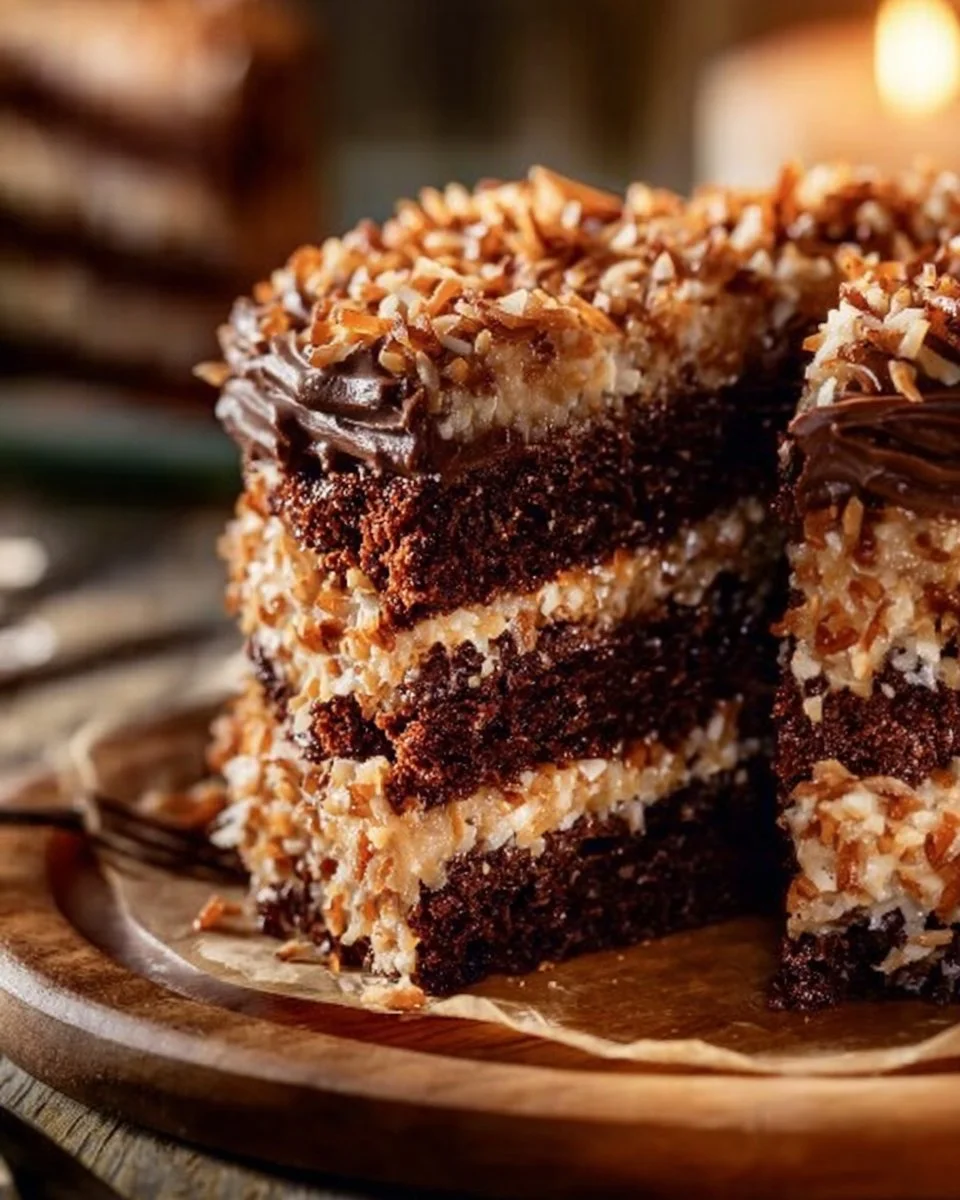
Traditional German Chocolate Cake — Classic
The first bite should be a balance of tender chocolate cake and a glossy, caramelized coconut-pecan frosting that melts on the tongue. Traditional German Chocolate Cake is exactly that: three thin, tender layers of cocoa-scented cake topped with a custard-like coconut-pecan frosting and a silky chocolate glaze. After testing this version eight times with different cocoa blends and pans, I landed on a reliably moist crumb and a frosting that stays glossy without weeping. I perfected the mixing and timing while staging in pastry kitchens, and I’ll walk you through the tiny details that make the difference. Read on for ingredient science, step-by-step photos, and pro tips to make this show-stopping dessert at home.
By Alex Hart, Culinary school graduate and pastry chef with 12 years’ experience.
Why This Recipe Works
- Creaming the butter and sugar until light traps air that gives the cake lift and a fine crumb.
- Buttermilk and oil together keep the cake moist while allowing a tender, not gummy, texture.
- Toasting the pecans and coconut lightly increases nutty depth without burning sugars.
- Tempering beaten egg yolks into the hot sugar-syrup frosting yields a glossy, stable custard.
- A quick chocolate glaze seals moisture and creates a clean contrast between cake and filling.
Ingredients Breakdown
- Cake
- 240 g (2 cups) all-purpose flour — provides the structure; weigh for consistency.
- 50 g (1/2 cup) unsweetened cocoa powder — use Dutch-process for deeper flavor or natural cocoa for brighter chocolate notes.
- 1½ tsp baking soda — leavens and reacts with buttermilk to lift the cake.
- 1 tsp fine sea salt — enhances chocolate flavor.
- 225 g (1 cup) granulated sugar — creamed with butter for aeration.
- 113 g (1/2 cup) unsalted butter, room temperature — fat for tenderness and flavor.
- 120 ml (1/2 cup) neutral oil (canola or grapeseed) — adds moisture; do not substitute with butter alone or the crumb will be firmer.
- 240 ml (1 cup) buttermilk, room temperature — acidity tenderizes gluten and reacts with baking soda.
- 2 large eggs, room temperature — add structure and richness.
- 2 tsp pure vanilla extract — flavor lift.
- 120 ml (1/2 cup) hot brewed coffee — intensifies chocolate without tasting like coffee. Using water instead will make a less complex chocolate note.
- Coconut-Pecan Frosting (filling)
- 200 g (1 cup) evaporated milk — forms the custard base; do not replace with regular milk (it affects consistency).
- 160 g (3/4 cup) granulated sugar — caramelizes with the milk to thicken.
- 60 g (1/4 cup) unsalted butter — enriches the custard.
- 3 large egg yolks, lightly beaten — thicken the mixture; temper carefully to avoid scrambled yolks.
- 150 g (1 1/2 cups) sweetened shredded coconut, lightly toasted — texture and characteristic flavor.
- 100 g (1 cup) pecans, chopped and toasted — toasty flavor; toasting is essential for best taste.
- 1 tsp vanilla extract — finish for aroma.
- Chocolate Glaze (optional but recommended)
- 170 g (6 oz) semisweet chocolate, chopped — use 60% cacao for balance.
- 120 ml (1/2 cup) heavy cream — creates a shiny ganache.
- 15 g (1 tbsp) unsalted butter — gives sheen and soft set.
Substitutions & impact warnings
- Swap milk or half-and-half for evaporated milk: frosting may be thinner and less glossy.
- Use Morton’s kosher salt? Halve the amount compared to Diamond Crystal style measures.
- Gluten-free: use a 1:1 cup-for-cup blend and add ½ tsp xanthan gum; expect a slightly denser crumb.
Essential Equipment
- Two 9-inch (23 cm) round cake pans — do not use 8-inch pans; batter volume and layer thickness need 9-inch pans to prevent overflow.
- Stand mixer or hand mixer — for reliable creaming and frosting control. A whisk works for small tasks but needs more effort.
- Instant-read thermometer — for checking doneness and hot sugar temperature when needed.
- Saucepan (medium) — for the coconut-pecan custard frosting.
- Spatula and offset spatula — for scraping bowls and spreading frosting cleanly.
- Cooling racks — allow layers to cool evenly.
- Bench scraper — optional but helps smooth sides for a neat finish.
- If you don’t have two 9-inch pans, bake in three batches using the same pan, rotating cooling time between layers.
Step-by-Step Instructions
Prep Time 45 minutes; Cook Time 35 minutes; Inactive Time 1 hour cooling; Total Time 2 hours 20 minutes; Servings 12.
Step 1: Preheat and prepare pans
Preheat oven to 175°C (350°F). Grease two 9-inch (23 cm) round pans, line bottoms with parchment, and grease parchment. Cool in pans for 10 minutes after baking, then transfer to a rack to finish cooling.
Step 2: Combine dry ingredients
Whisk 240 g (2 cups) all-purpose flour, 50 g (1/2 cup) cocoa powder, 1½ tsp baking soda, and 1 tsp fine sea salt in a bowl until evenly mixed, about 10–15 seconds. Sifting is optional but helps remove lumps from cocoa and creates a lighter crumb.
Step 3: Cream butter, sugar, and oil
In a mixer, beat 113 g (1/2 cup) unsalted butter and 225 g (1 cup) granulated sugar until pale and slightly fluffy, about 3–4 minutes on medium speed. Add 120 ml (1/2 cup) neutral oil and beat 30 seconds to combine. Do not overbeat after adding oil or the batter may break.
Step 4: Add eggs and vanilla
Add 2 room-temperature eggs one at a time, beating 15 seconds after each. Mix in 2 tsp vanilla extract. Scrape the bowl; the mixture should look smooth and glossy.
Step 5: Alternate dry ingredients and buttermilk
With mixer on low, add dry ingredients in three additions alternating with 240 ml (1 cup) buttermilk, beginning and ending with dry ingredients. Mix only until combined—stop when no dry streaks remain to avoid a tough cake. Stir in 120 ml (1/2 cup) hot brewed coffee by hand, about 15 seconds.
Step 6: Bake
Divide batter evenly between prepared pans (about 700–750 g per pan). Bake for 28–32 minutes until a toothpick or cake tester comes out with a few moist crumbs and an instant-read thermometer reads 96°C (205°F) at center. Rotate pans halfway through baking for even color.
Step 7: Cool layers
Let cakes rest in pans for 10 minutes, then invert onto cooling racks. Cool completely, about 45–60 minutes, before filling to prevent frosting melt.
Step 8: Toast coconut and pecans
While cakes cool, toast 150 g (1 1/2 cups) shredded coconut and 100 g (1 cup) chopped pecans in a single layer on a baking sheet at 175°C (350°F) for 6–8 minutes, stirring once, until golden and fragrant. Cool completely.
Step 9: Make the coconut-pecan frosting
In a medium saucepan, combine 200 g (1 cup) evaporated milk, 160 g (3/4 cup) granulated sugar, and 60 g (1/4 cup) unsalted butter. Cook over medium heat, stirring constantly, until butter melts and mixture comes to a gentle simmer, about 4–5 minutes. Temper 3 lightly beaten egg yolks by whisking a small ladle of hot liquid into yolks, then return yolk mixture to the pan and cook, stirring, until thickened to custard that coats the back of a spoon, about 3–4 minutes more. Remove from heat and stir in toasted coconut, toasted pecans, and 1 tsp vanilla. Cool to room temperature — the frosting will thicken as it cools.
Step 10: Make the chocolate glaze
Heat 120 ml (1/2 cup) heavy cream to a simmer, pour over 170 g (6 oz) chopped semisweet chocolate and 15 g (1 tbsp) butter. Let sit 1 minute, then whisk until smooth and glossy. Cool 5–10 minutes to pourable but not runny.
Step 11: Assemble the cake
Place one cake layer on a serving plate. Spread one-third of the coconut-pecan frosting, keeping it slightly in from the edge. Repeat with second layer and remaining frosting, leaving the top layer plain. Pour the chocolate glaze over the top layer, letting it drip slightly down the sides. Chill briefly for glaze to set, about 15–20 minutes.
Step 12: Serve
Let the cake come to room temperature before slicing, about 20–30 minutes. Slice with a sharp serrated knife wiped clean between cuts for neat layers.
Expert Tips & Pro Techniques
- Use room-temperature ingredients: eggs and buttermilk incorporate more easily and trap air during creaming.
- Common mistake: overmixing after adding flour. Stop mixing as soon as no streaks remain to prevent a dense crumb.
- Toast nuts and coconut lightly — under-toasted ingredients taste raw; over-toast and they turn bitter. Aim for a pale golden color.
- Make-ahead: Bake cake layers up to 2 days ahead, wrap tightly in plastic, and store at room temperature. Make frosting and glaze the day of serving for best texture.
- Professional shortcut: Warm the cake layers for 10 seconds in the microwave on low power before assembling to soften edges for cleaner frosting spreads.
- If frosting separates: whisk in 1 tsp of warm water or a tablespoon of evaporated milk and cook gently for 30–60 seconds to re-emulsify.
Storage & Reheating
- Refrigerator: Store cake covered with a cake dome or airtight container for 3–4 days. The frosting keeps texture but may soften on hot days.
- Freezer: The unfrosted layers freeze well up to 3 months. Wrap layers tightly in plastic and foil. Thaw overnight in the refrigerator and bring to room temperature before assembling.
- Reheating: Serve at room temperature. To revive a chilled slice, warm at 120°C (250°F) for 8–10 minutes; this softens the frosting and brightens flavor. Avoid microwaving whole slices — it can make the frosting greasy.
Variations & Substitutions
- Chocolate-Intense Version: Increase cocoa to 65 g (2/3 cup) and use 70% chocolate for the glaze. Baking time is unchanged.
- Lighter Frosting: Replace half the evaporated milk with whole milk and reduce sugar by 25 g (2 tbsp). Frosting will be less thick and keep better refrigerated.
- Gluten-Free Version: Substitute a 1:1 gluten-free flour blend (250 g) and add ½ tsp xanthan gum. Expect a slightly crumblier texture and add 3–5 minutes to baking time.
- Eggless Option (filling): For an egg-free frosting, make a cornstarch-thickened custard using 1½ tbsp cornstarch whisked into 80 ml (1/3 cup) milk, then mix into simmering evaporated milk base. Results will be slightly less glossy.
- Mini Layer Cakes: Bake in 6-inch pans and reduce batter per pan; bake 18–22 minutes. Assembly and frosting ratios stay the same but plan more chilling time between layers.
Serving Suggestions & Pairings
- Serve with lightly sweetened whipped cream and extra toasted pecans on the side.
- Coffee pairing: a medium-roast coffee balances the sweetness and highlights the chocolate notes; try our Belgian-style chocolate cake as an alternate for darker chocolate pairings here.
- For holidays: add a dusting of fine cocoa and pair with a boozy cherry compote; see our chocolate Bundt for festive ideas for inspiration.
- For a playful twist: turn leftover frosting into a poke-cake topping over a plain sheet cake — technique adapted from this poke-cake guide here.
Nutrition Information
Serving size: 1 slice (1 of 12). Per serving (estimate):
- Calories: 620
- Total Fat: 34 g
- Saturated Fat: 15 g
- Cholesterol: 125 mg
- Sodium: 420 mg
- Total Carbohydrates: 72 g
- Dietary Fiber: 3 g
- Sugars: 48 g
- Protein: 6 g
Nutrition values are estimates. Actual values may vary based on specific ingredients and preparation methods.
Frequently Asked Questions
Q: Why did my cake turn out dry?
A: Most often you overbaked it or overmixed the batter after adding flour. Check doneness with an instant-read thermometer — remove at 95–96°C (203–205°F) and allow carryover while cooling.
Q: Can I make this without eggs?
A: For the cake, substitute each egg with 60 g (1/4 cup) unsweetened applesauce and add 1/2 tsp baking powder per egg. For the frosting, use a cornstarch-thickened custard as described in Variations.
Q: Can I double this recipe?
A: Yes. Bake in two batches or use more pans. If doubling, mix in a larger bowl and divide into pans to avoid overfilling. Baking times per pan stay the same; do not crowd the oven.
Q: Can I prepare this the night before?
A: You can bake the layers the day before and store them wrapped at room temperature. Make the frosting the day you assemble for best texture.
Q: How long does this keep in the fridge?
A: Properly stored in an airtight container or under a cake dome, the assembled cake keeps 3–4 days in the refrigerator.
Q: Is the coconut-pecan frosting stable at room temperature?
A: It will soften in warm conditions. If serving outdoors, keep the cake chilled until just before serving and avoid direct sunlight.
Q: My frosting looks grainy — what went wrong?
A: Graininess usually means the sugar didn’t fully dissolve before adding yolks, or the mixture cooked too long on too high heat. Cook over medium heat and whisk constantly when thickening.
Conclusion
This Traditional German Chocolate Cake delivers the nostalgic combination of tender chocolate layers and a rich coconut-pecan frosting. It’s a recipe meant to be shared and to impress at any gathering. For additional inspiration on variations and assembly techniques, compare this approach with another well-tested version at Traditional German Chocolate Cake – Salt & Baker and see a home-cook’s step-by-step guide at Homemade German Chocolate Cake – Tastes Better From Scratch.
Print
Traditional German Chocolate Cake
- Total Time: 135 minutes
- Yield: 12 servings 1x
- Diet: Vegetarian
Description
A classic dessert with tender chocolate cake layers and a glossy coconut-pecan frosting that melts in your mouth.
Ingredients
- 240 g (2 cups) all-purpose flour
- 50 g (1/2 cup) unsweetened cocoa powder
- 1½ tsp baking soda
- 1 tsp fine sea salt
- 225 g (1 cup) granulated sugar
- 113 g (1/2 cup) unsalted butter, room temperature
- 120 ml (1/2 cup) neutral oil
- 240 ml (1 cup) buttermilk, room temperature
- 2 large eggs, room temperature
- 2 tsp pure vanilla extract
- 120 ml (1/2 cup) hot brewed coffee
- 200 g (1 cup) evaporated milk
- 160 g (3/4 cup) granulated sugar (for frosting)
- 60 g (1/4 cup) unsalted butter (for frosting)
- 3 large egg yolks, lightly beaten
- 150 g (1 1/2 cups) sweetened shredded coconut, lightly toasted
- 100 g (1 cup) pecans, chopped and toasted
- 1 tsp vanilla extract (for frosting)
- 170 g (6 oz) semisweet chocolate, chopped (for glaze)
- 120 ml (1/2 cup) heavy cream (for glaze)
- 15 g (1 tbsp) unsalted butter (for glaze)
Instructions
- Preheat oven to 175°C (350°F) and prepare pans.
- Whisk together flour, cocoa powder, baking soda, and salt in a bowl.
- Cream butter and sugar in a mixer until pale; add oil.
- Add eggs and vanilla, beating well.
- Alternate adding dry ingredients with buttermilk; stir in coffee.
- Divide batter into prepared pans and bake for 28-32 minutes.
- Cool layers in pans for 10 minutes, then invert onto racks.
- Toast coconut and pecans until golden.
- Make the frosting by combining evaporated milk, sugar, and butter; temper egg yolks, then cook until thick.
- Make the chocolate glaze by simmering cream and pouring over chocolate; whisk until smooth.
- Assemble the cake by layering with coconut-pecan frosting and topping with chocolate glaze.
- Let cool before serving.
Notes
For best results, ensure all ingredients are at room temperature. Make-ahead options suggested for layers and frosting.
- Prep Time: 45 minutes
- Cook Time: 35 minutes
- Category: Dessert
- Method: Baking
- Cuisine: German
Nutrition
- Serving Size: 1 slice
- Calories: 620
- Sugar: 48g
- Sodium: 420mg
- Fat: 34g
- Saturated Fat: 15g
- Unsaturated Fat: 19g
- Trans Fat: 0g
- Carbohydrates: 72g
- Fiber: 3g
- Protein: 6g
- Cholesterol: 125mg