
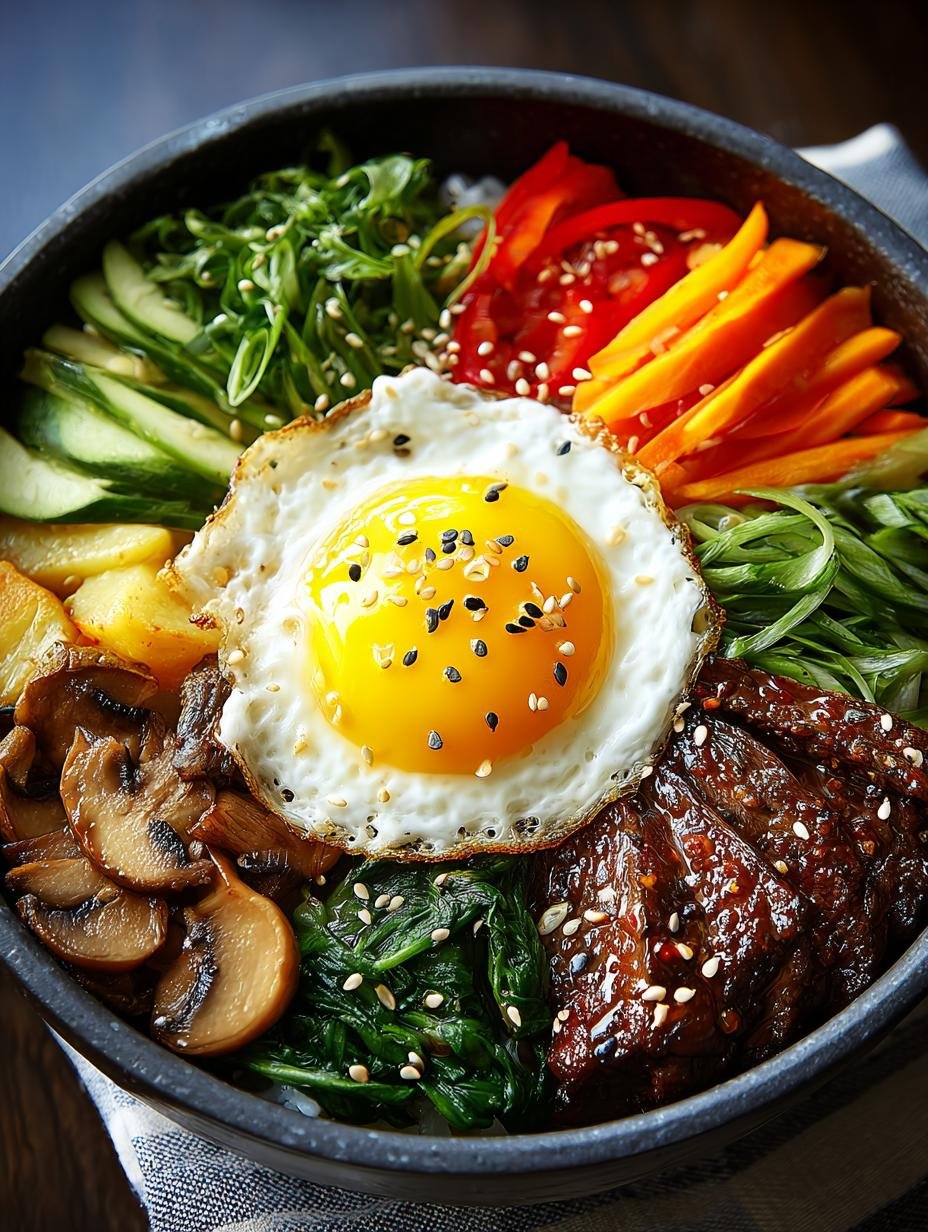
Korean Bibimbap Bowl is a traditional Korean dish served with rice, mixed vegetables, and protein, topped with a spicy sauce. This dish has become a favorite for many due to its vibrant colors, rich flavors, and customizable nature. It’s not just a meal; it’s an experience that brings together various elements to create a wholesome and satisfying dish. Let’s dive into how to create this delicious dish at home.
Why You’ll Love This Korean Bibimbap Bowl
This Korean mixed rice bowl is not only visually appealing but also incredibly nutritious and satisfying. First, it’s packed with a variety of fresh vegetables, making it a great source of vitamins and minerals. Second, it can be easily modified to fit any dietary requirement, such as a vegetarian bibimbap recipe by substituting beef with tofu. Third, the combination of flavors is unmatched, offering a delightful contrast between the spicy gochujang sauce and the mild taste of rice and veggies. Fourth, it’s a quick meal to prepare, perfect for busy weeknights. Fifth, the dish is customizable, allowing you to add your favorite ingredients. Finally, the cultural experience of making and eating bibimbap is rewarding and fun!
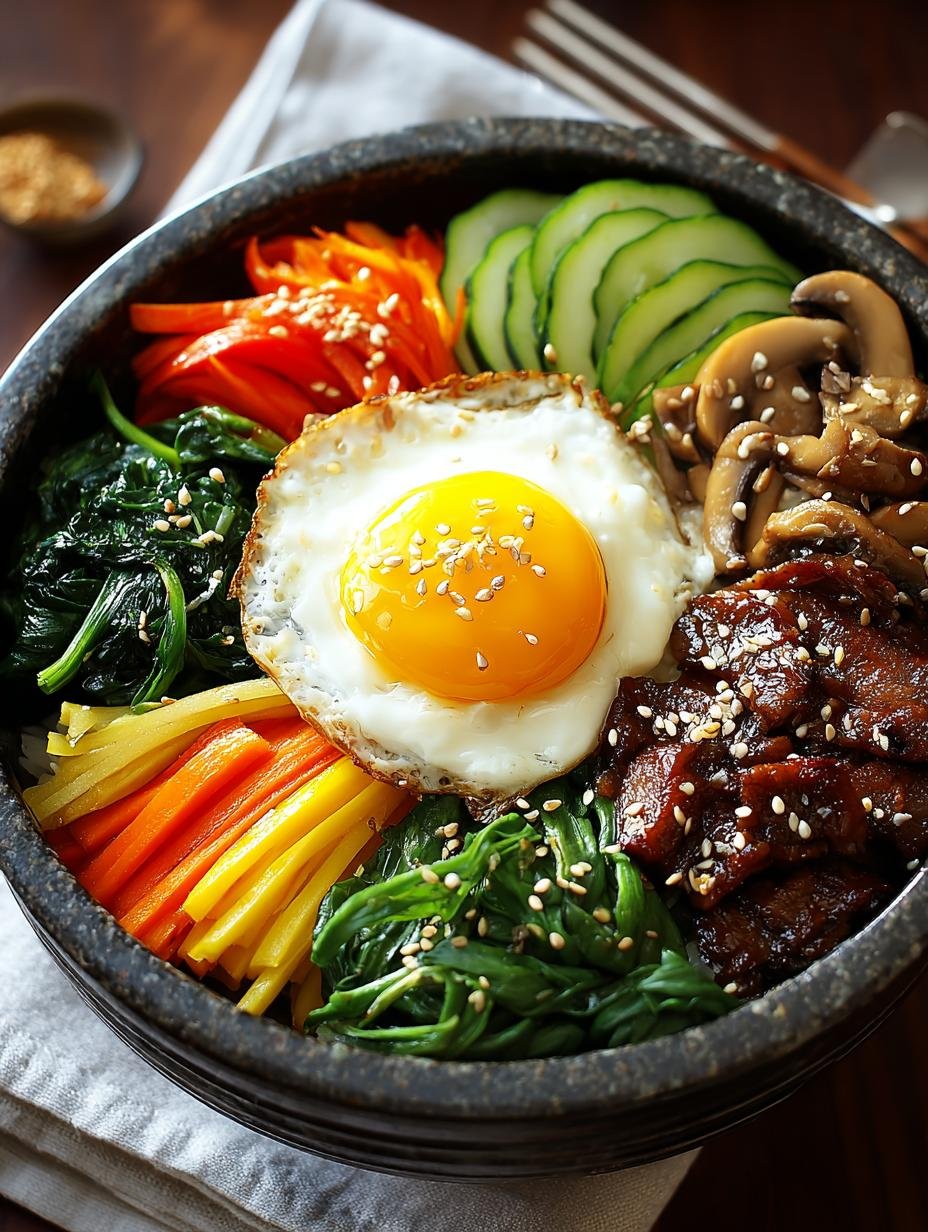
Ingredients for Korean Bibimbap Bowl
Gather these items:
- 2 cups cooked rice (white or brown)
- 1 cup spinach (blanched)
- 1 cup carrots (julienned)
- 1 cup zucchini (julienned)
- 1 cup mushrooms (shiitake or button, sliced)
- 1 cup bean sprouts (blanched)
- 1 cup sliced beef (or tofu for a vegetarian option)
- 4 eggs
- 2 tablespoons vegetable oil (for cooking)
- Sesame oil (for drizzling)
- Sesame seeds (for garnish)
- Salt and pepper (to taste)
- 3 tablespoons gochujang (Korean chili paste)
- 1 tablespoon sesame oil
- 1 tablespoon sugar
- 1 tablespoon rice vinegar
- 1 teaspoon minced garlic
- 1 teaspoon soy sauce
How to Make Korean Bibimbap Bowl Step-by-Step
- Step 1: In a small bowl, whisk together the gochujang, sesame oil, sugar, rice vinegar, minced garlic, and soy sauce until smooth. Set aside.
- Step 2: In a skillet, heat 1 tablespoon of vegetable oil over medium heat. Sauté the carrots and zucchini for about 3–4 minutes until tender. Season with salt and pepper. Remove from the skillet and set aside.
- Step 3: In the same skillet, add another tablespoon of oil and sauté the mushrooms until golden brown, about 3–4 minutes. Season with salt and pepper.
- Step 4: If using beef, cook the sliced beef in the skillet until browned and cooked through, about 4–5 minutes. For tofu, sauté until golden on all sides.
- Step 5: In a separate pan, fry the eggs sunny-side up or to your desired doneness.
- Step 6: In a large bowl or individual serving bowls, place a generous scoop of cooked rice at the bottom.
- Step 7: Arrange the sautéed vegetables (spinach, carrots, zucchini, mushrooms, and bean sprouts) and cooked beef or tofu on top of the rice.
- Step 8: Place a fried egg on top of the vegetables.
- Step 9: Drizzle the gochujang sauce over the top and add a sprinkle of sesame seeds and a drizzle of sesame oil.
- Step 10: Serve immediately, allowing everyone to mix their bibimbap together before eating.
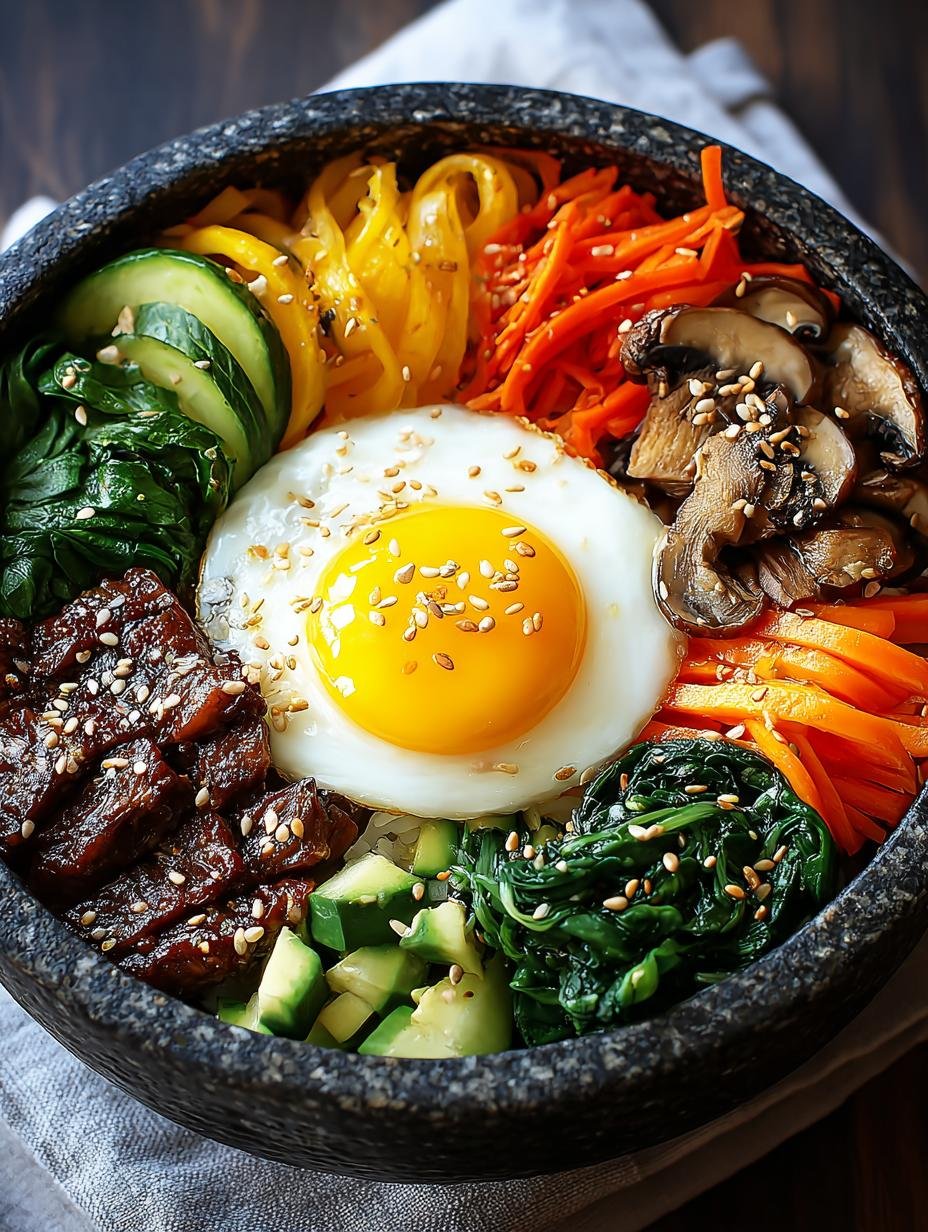
Pro Tips for the Perfect Korean Bibimbap Bowl
Keep these in mind:
- This dish is customizable with your choice of vegetables and protein.
- Adjust the spiciness by varying the amount of gochujang.
- For a healthier option, consider using brown rice or adding more vegetables.
- Ensure all ingredients are prepared before cooking, as the process is quick.
Best Ways to Serve Korean Bibimbap Bowl
Consider these serving ideas:
- Serve in individual bowls for a personal touch.
- Pair with kimchi for added flavor and an authentic experience.
- Offer additional toppings like sliced avocado or seaweed for variety.
How to Store and Reheat Korean Bibimbap Bowl
Store any leftovers in an airtight container in the refrigerator. When ready to enjoy again, reheat in the microwave, adding a splash of water to keep the rice moist. This dish is perfect for meal prep, as you can create multiple servings in advance.
Frequently Asked Questions About Korean Bibimbap Bowl
What’s the secret to perfect Korean Bibimbap Bowl?
The secret lies in the freshness of the ingredients and the balance of flavors. Using high-quality vegetables and carefully seasoning each component will elevate your bibimbap recipe to perfection.
Can I make Korean Bibimbap Bowl ahead of time?
Yes, you can prepare the individual components ahead of time and store them separately. When you’re ready to eat, simply assemble the bowl and add the sauce.
How do I avoid common mistakes with Korean Bibimbap Bowl?
To avoid mistakes, ensure all vegetables are cooked to the right tenderness and do not overcook the eggs. Also, remember to use enough sauce to bring all the flavors together.
Variations of Korean Bibimbap Bowl You Can Try
Feel free to explore these variations:
- For a spicy bibimbap variation, increase the amount of gochujang.
- Make a vegetarian bibimbap recipe by substituting beef with various beans or tofu.
- Try a Korean rice bowl dish with seafood like shrimp or octopus.
- Experiment with different toppings like nuts or seeds for crunch.
For more information on Korean cuisine, check out Korean Bapsang. If you’re interested in learning more about the health benefits of vegetables, visit Healthline. You can also explore The Spruce Eats for additional bibimbap recipes.
For more recipes, visit our recipes page, or learn more about us on our about page. If you have any questions, feel free to contact us.
Print
Korean Bibimbap Bowl: 10 Authentic Flavors to Savor
- Total Time: 35 minutes
- Yield: 4 servings 1x
- Diet: Vegetarian
Description
A traditional Korean dish served with rice, mixed vegetables, and protein, topped with a spicy sauce.
Ingredients
- 2 cups cooked rice (white or brown)
- 1 cup spinach (blanched)
- 1 cup carrots (julienned)
- 1 cup zucchini (julienned)
- 1 cup mushrooms (shiitake or button, sliced)
- 1 cup bean sprouts (blanched)
- 1 cup sliced beef (or tofu for a vegetarian option)
- 4 eggs
- 2 tablespoons vegetable oil (for cooking)
- Sesame oil (for drizzling)
- Sesame seeds (for garnish)
- Salt and pepper (to taste)
- 3 tablespoons gochujang (Korean chili paste)
- 1 tablespoon sesame oil
- 1 tablespoon sugar
- 1 tablespoon rice vinegar
- 1 teaspoon minced garlic
- 1 teaspoon soy sauce
Instructions
- In a small bowl, whisk together the gochujang, sesame oil, sugar, rice vinegar, minced garlic, and soy sauce until smooth. Set aside.
- In a skillet, heat 1 tablespoon of vegetable oil over medium heat. Sauté the carrots and zucchini for about 3–4 minutes until tender. Season with salt and pepper. Remove from the skillet and set aside.
- In the same skillet, add another tablespoon of oil and sauté the mushrooms until golden brown, about 3–4 minutes. Season with salt and pepper.
- If using beef, cook the sliced beef in the skillet until browned and cooked through, about 4–5 minutes. For tofu, sauté until golden on all sides.
- In a separate pan, fry the eggs sunny-side up or to your desired doneness.
- In a large bowl or individual serving bowls, place a generous scoop of cooked rice at the bottom.
- Arrange the sautéed vegetables (spinach, carrots, zucchini, mushrooms, and bean sprouts) and cooked beef or tofu on top of the rice.
- Place a fried egg on top of the vegetables.
- Drizzle the gochujang sauce over the top and add a sprinkle of sesame seeds and a drizzle of sesame oil.
- Serve immediately, allowing everyone to mix their bibimbap together before eating.
Notes
- This dish is customizable with your choice of vegetables and protein.
- Adjust the spiciness by varying the amount of gochujang.
- Prep Time: 15 minutes
- Cook Time: 20 minutes
- Category: Main Course
- Method: Stir-fry and assemble
- Cuisine: Korean
Nutrition
- Serving Size: 1 bowl
- Calories: 500
- Sugar: 6g
- Sodium: 800mg
- Fat: 20g
- Saturated Fat: 4g
- Unsaturated Fat: 14g
- Trans Fat: 0g
- Carbohydrates: 70g
- Fiber: 5g
- Protein: 20g
- Cholesterol: 200mg