
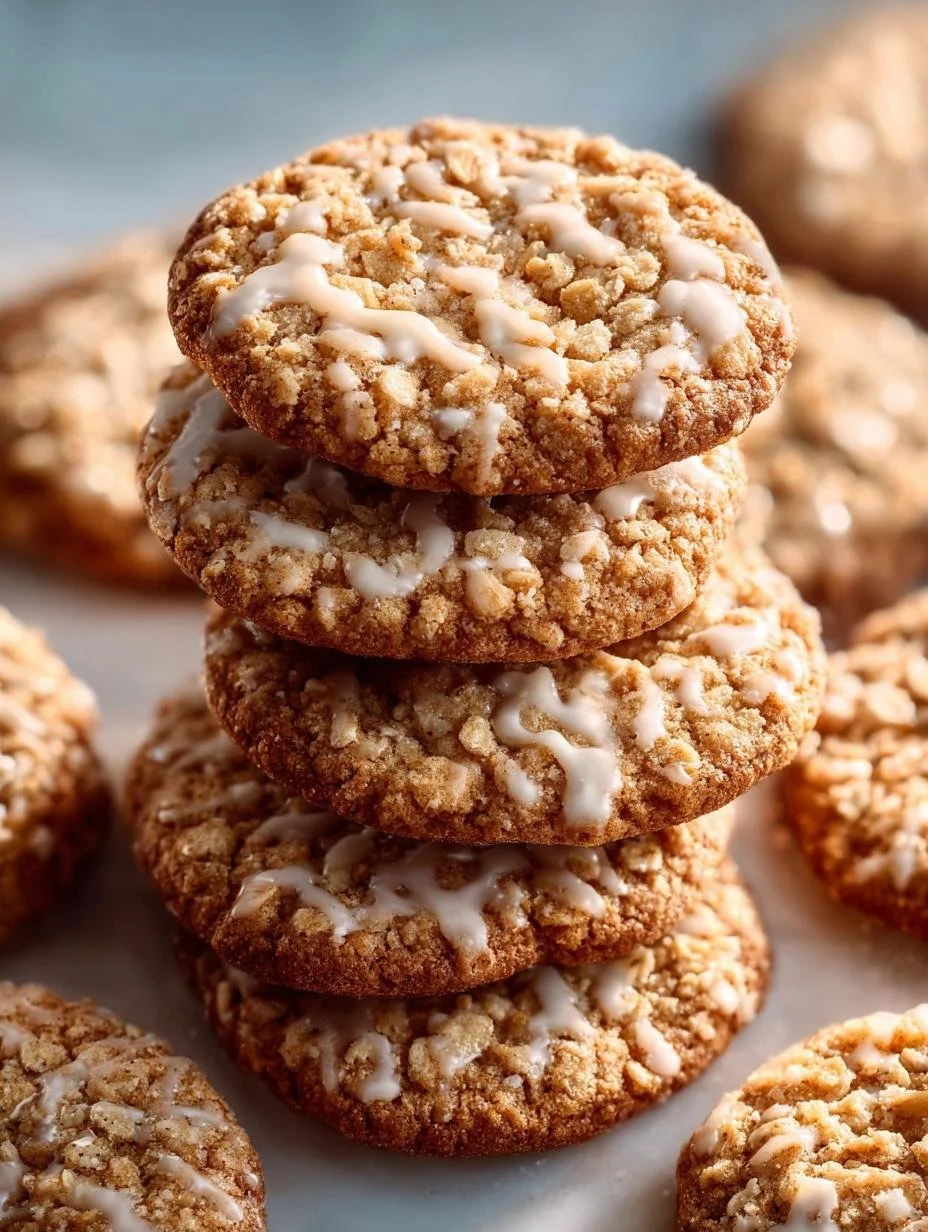
Traditional Iced Oatmeal Cookies guide
If you love the cozy warmth of oats and the bright finish of a sweet glaze, this Traditional Iced Oatmeal Cookies guide is written for you. Read on and you’ll move from curious beginner to confident baker who understands not only how to make these cookies, but why each step matters.
By the end of this guide you’ll know the cookie’s history and variations, master core techniques, troubleshoot common issues, and be able to adapt the recipe for dietary needs, scale, or presentation. Think of this as a definitive reference you’ll return to whenever you want reliably delicious iced oatmeal cookies.
Background & Context
Oatmeal cookies are a staple of many baking traditions. Their origins mix practical pantry cooking with family traditions, and when iced, they bridge the gap between rustic comfort and party-ready treats.
Authentic Iced Oatmeal Cookies origin traces back to the practical use of oats in regions where wheat was costlier or less common. Oats provided a hearty, shelf-stable ingredient that produced dense, satisfying cookies. The addition of icing came later as sugar became more available and as home cooks embraced decorative finishing touches for holidays and celebrations.
Classic Iced Oatmeal Cookies history is a story of adaptation. Early recipes were simple oat-and-suet biscuits. Over time, butter, refined sugar, baking powder, and flavorings like cinnamon and vanilla transformed the cookie into the softer, chewier form most of us know today. The iced version became popular because a thin sugar glaze adds sweetness and a contrasting texture while allowing for a quick, attractive finish.
From a cultural perspective, these cookies are versatile: rural kitchens favored them for nourishment; urban homes appreciated their quickness; community bakesales and school functions adopted iced oatmeal cookies because they travel well and look festive.
Personal note: cookies that get passed down often carry variations—one family uses golden raisins, another swaps molasses for brown sugar, a third adds lemon zest to the glaze. That variety is part of what makes this cookie enduring.
Why This Approach Works
This guide emphasizes methodical understanding over rote steps. You’ll learn why creaming makes cookies lighter, why oat type changes texture, and why chilling dough controls spread.
- Predictability: Following technique-based reasoning helps you get predictable results, not just one good batch.
- Accessibility: The core recipe uses pantry staples and straightforward equipment, keeping it attainable for all home bakers.
- Flexibility: Knowing why changes work lets you adapt for dietary needs or flavor preferences without breaking the outcome.
Common doubts addressed:
- “Do I need special equipment?” No—most essentials are found in a basic kitchen.
- “Are oats difficult to bake with?” Not if you understand old-fashioned versus quick oats and how they affect moisture and structure.
- “Is icing necessary?” No. Icing finishes the cookies beautifully, but you can skip or substitute it for other toppings.
Core Concepts Explained
Understanding a few fundamental components demystifies cookie baking.
Structure: Flour, eggs, and oats
- Flour forms the protein matrix (gluten) that gives structure.
- Eggs add moisture, binding, and richness.
- Oats add fiber, chewiness, and flavor; they don’t form gluten but affect crumb and moisture retention.
- Example: More all-purpose flour yields firmer cookies; more oats yields denser, chewier cookies.
Tenderness: Fats and sugars
- Butter (or shortening) coats flour proteins and provides flavor.
- Sugar affects spread, texture, and browning; brown sugar adds moisture and chew.
- Example: Using all brown sugar produces chewier cookies than all granulated sugar.
Leavening and texture
- Baking soda contributes lift and browning when acid is present; baking powder adds neutral lift.
- The creaming method traps air between fat and sugar grains, creating lift.
- Example: Undercreamed butter yields flatter cookies.
Oat varieties and their roles
- Old-fashioned (rolled) oats: whole, toothier texture, more chew.
- Quick oats: smaller pieces, softer texture, quicker hydration.
- Steel-cut oats: not recommended for standard cookie batter without pre-soaking.
- Substitution: Swap quick oats for rolled oats by adjusting for hydration and slightly reducing mixing time.
Icing and finishing
- Simple glaze (powdered sugar + liquid) adds sweetness and slight chew when set.
- Royal icing (egg white or meringue powder-based) gives a firm decorative finish.
- Flavoring the icing (vanilla, lemon, orange) introduces contrast and balance.
Tools, Resources, or Foundations
Essentials:
- Mixing bowls (one large, one small)
- Hand mixer or stand mixer (helpful but not required)
- Measuring cups and spoons
- Baking sheets and parchment or silicone mat
- Cooling rack
Optional enhancements:
- Digital scale for precision
- Cookie scoop for uniform shape
- Offset spatula for transferring cookies
- Piping bags and tips for decorative icing
Budget-friendly alternatives:
- Use a fork or whisk if you don’t own an electric mixer.
- Reuse a flat-bottomed glass for measuring brown sugar by packing.
- Aluminum foil or greased pans substitute parchment but require careful monitoring to prevent sticking.
Commentary on usefulness:
Invest in a digital scale if you bake frequently; it eliminates measuring variances and improves consistency, especially when scaling recipes.
Step-by-Step Process
Below is a practical recipe framework with explanations and time estimates. This is a template—tweak ratios or mix-ins based on preference.
Ingredients (yields ~36 cookies)
- 1 cup (2 sticks) unsalted butter, softened
- 1 cup packed brown sugar
- 1/2 cup granulated sugar
- 2 large eggs
- 1 tsp vanilla extract
- 1 1/2 cups all-purpose flour
- 1 tsp baking soda
- 1/2 tsp salt
- 1 tsp ground cinnamon (optional)
- 3 cups old-fashioned rolled oats
- 1 cup add-ins (raisins, chopped nuts, shredded coconut) optional
Icing
- 2 cups powdered sugar
- 2–3 tbsp milk, cream, or citrus juice
- 1/2 tsp vanilla or other extract
- Zest or food coloring as desired
Total Active Time: 30–45 minutes
Total Time (including chilling and baking): 1.5–2 hours
H3: Mixing the Dough — Why and How
- Cream butter and sugars (4–6 minutes).
- Purpose: Incorporate air and dissolve sugar; creates lighter texture.
- Add eggs and vanilla, mixing until combined (1 minute).
- Eggs add structure; don’t overmix after adding flour.
- Whisk flour, baking soda, salt, cinnamon in a separate bowl.
- Why: Even distribution of leavening prevents pockets of uneven lift.
- Fold dry ingredients into wet until nearly combined.
- Pro tip: Stop when you still see streaks of flour; overmixing toughens cookies.
- Stir in oats and mix-ins by hand.
- Note: Fold gently to preserve oats’ texture.
H3: Shaping and Chilling
- Use a tablespoon or cookie scoop to portion dough onto prepared baking sheets.
- Flatten slightly with palm or the back of a spoon for even baking.
- Chill for 20–30 minutes (optional but recommended).
- Why: Chilling solidifies fats, reducing spread for thicker cookies.
- Time note: For minimal chilling, 15 minutes is adequate; overnight chill enhances flavor.
H3: Baking
- Preheat oven to 350°F (175°C).
- Bake 9–12 minutes; edges should be lightly browned, centers soft.
- Cool on pan 2 minutes then transfer to a rack to cool completely before icing.
- Baking tip: Rotate pan halfway for even color.
H3: Icing the Cookies
- Whisk powdered sugar and liquid until smooth; adjust thickness.
- For thin glaze, use more liquid; for piping, keep thicker.
- Drizzle or pipe onto cooled cookies; allow to set 30–60 minutes depending on humidity.
- Pro tip: Warm glaze slightly to make it pourable without thinning the set quality.
Common mistakes + how to avoid them
- Flat, greasy cookies: Too much butter or under-chilled dough. Weigh ingredients and chill.
- Dry, crumbly cookies: Overbaked or too much flour. Watch baking time and measure flour correctly.
- Soggy centers: Underbaked or too much liquid in dough. Bake until edges are firm.
- Icing that slides off: Apply icing to fully cooled cookies; adjust icing thickness.
Expert Techniques & Insights
Advanced bakers can further refine texture and presentation.
- Autolyse-like rest: After mixing dry and wet, rest dough 20–30 minutes before adding oats. This allows flour to hydrate and oats to soften, improving cohesion.
- Two-stage sugar: Use half brown sugar, half turbinado or demerara for deeper flavor and crisp edges.
- Brown butter for complexity: Clarify and brown butter for a nutty, caramel note. Cool before incorporating.
- Oven temperature profiling: Start at 375°F for the first 3 minutes to set edges, then reduce to 350°F to control browning and interior set.
- Dual-texture icing: Use a thin flood for the center and a thicker outline to contain it—borrow techniques from cookie decorating.
Lessons from experience:
- Oat quality matters. Freshly toasted oats have a faint nutty aroma and tolerate longer storage.
- Humidity affects icing set times and cookie chew. In humid climates reduce liquid slightly in icing.
Variations & Adaptations
Oatmeal cookies are an adaptable canvas.
- Gluten-free: Use a cup-for-cup GF flour blend and certified gluten-free oats.
- Vegan: Replace butter with a firm plant-based butter and eggs with flax egg (1 tbsp ground flax + 3 tbsp water per egg). Texture will be denser.
- Low-sugar: Use a sugar substitute formulated for baking and reduce icing or use a light dusting of powdered sugar instead.
- Flavor twists: Add orange zest to the dough and lemon to the glaze for citrus oatmeal cookies.
- Textural shifts: Swap raisins for dried cranberries and chopped pecans for crunch.
Skill-level adaptations:
- Beginner: Stick to the base recipe and a simple glaze.
- Intermediate: Experiment with brown butter and chilling times.
- Advanced: Master piping and two-tone icing for professional presentation.
Cultural flexibility:
- Spice it up with chai spices, or add molasses for a nod to British oat-bakes.
- Serve with tea, milk, or coffee depending on regional preferences.
Analysis & Benefits Breakdown
Here’s a compact comparative view of common choices and their effects.
| Choice | Effect on Texture | Flavor Impact | Practical Considerations |
|—|—:|—|—|
| Old-fashioned oats | Chewy, toothy | Mild oat flavor | Best for traditional texture |
| Quick oats | Softer, less chew | Less oat prominence | Faster hydration; good for tender cookies |
| Brown sugar | Moist, chewy | Caramel/ molasses notes | Retains moisture longer |
| Granulated sugar | Crisp edges | Clean sweetness | Promotes spread |
| Brown butter | Slightly firmer | Nutty, caramel | Requires cooling before use |
| Chilled dough | Thicker cookies, less spread | Slightly more developed flavor | Needs planning time |
| No icing | Focus on oat flavor | Less sweet finish | Easier storage and transport |
Strengths:
- Balanced nutrition (oats add fiber)
- Visual appeal with icing
- Adaptability for diets
Limitations:
- Icing adds sugar and fragility in humid conditions
- Oatmeal cookies can be dense if misbalanced
Considerations:
- For shipping or bake sales, use firmer icings or pack with padding.
- If making ahead, freeze un-iced cookies and ice after thawing for best appearance.
Preparation, Retention & Long-Term Use
Preparing effectively:
- Mise en place: Measure ingredients before starting to prevent overmixing or missed steps.
- Preheat oven before shaping to ensure correct bake timing.
Retention and reuse strategies:
- Dough can be frozen in portions. Freeze scooped dough on a tray, then transfer to a bag. Bake from frozen, adding 1–2 minutes to baking time.
- Baked, un-iced cookies freeze well for up to 3 months. Thaw at room temperature before icing.
Longevity of knowledge:
- Once you internalize the role of oats, sugars, and fats, you can adjust recipes across cookie types.
- Practice builds intuition: after a few batches you’ll know at a glance when dough is overmixed or under-chilled.
Troubleshooting & Common Problems
Problem → Cause → Solution
Cookies spread too thin
- Cause: Too warm dough or too little flour; overcreamed butter
- Solution: Chill dough 30 minutes; check measurements; slightly reduce butter or increase flour by 1–2 tbsp.
Centers collapse after baking
- Cause: Underbaked or too much leavening
- Solution: Bake until edges set; reduce baking soda by 1/4 tsp if needed.
Icing remains tacky
- Cause: High humidity or insufficient powdered sugar ratio
- Solution: Add more powdered sugar; allow longer drying in a cool, dry area.
Cookies taste flat
- Cause: Lack of salt or poor-quality vanilla
- Solution: Add 1/4–1/2 tsp more salt and ensure vanilla is fresh.
Chewy cookies gone hard in storage
- Cause: Exposure to air or incorrect cooling
- Solution: Store in an airtight container with a piece of bread to maintain moisture; allow cookies to cool completely before storage.
Oats are grainy
- Cause: Using steel-cut oats or not hydrating
- Solution: Use rolled or quick oats; if using coarser oats, soak briefly in warm liquid before mixing.
FAQ Section
Q1: Can I make these cookies ahead for a party?
A1: Yes. Bake and freeze un-iced cookies up to 3 months. Thaw and ice the day of the event for best presentation.
Q2: Can I substitute quick oats for rolled oats?
A2: Yes. Quick oats yield a softer texture and hydrate faster. Reduce mixing time slightly to prevent overworking.
Q3: Do iced cookies need refrigeration?
A3: No. If iced with a simple powdered sugar glaze, room temperature storage in an airtight container is fine for 3–4 days. Refrigerate if using perishable icings.
Q4: My glaze is too runny. How do I fix it?
A4: Add more powdered sugar in small increments until it reaches the desired consistency. Let it rest to see final thickness.
Q5: Can I use oil instead of butter?
A5: You can, but texture will differ. Oil produces a softer, cake-like cookie without the flavor depth of butter.
Q6: How do I make the icing set firm?
A6: Use a stiffer ratio (more powdered sugar) or royal icing with meringue powder. Drying time depends on humidity.
Q7: Is there a vegan version that tastes good?
A7: Yes. Use plant-based butter and flax eggs. Brown sugar and flavorings help maintain a rich taste.
Q8: How do I get cookies to be uniformly sized?
A8: Use a cookie scoop or weigh portions on a digital scale for consistent results.
Related Topics & Next Steps
If you enjoyed this guide, consider exploring:
- Advanced cookie decorating and royal icing techniques for professional finishes.
- Bread and breakfast bakes using oats, like oat scones or granola bars.
- Pastry science: how gluten development and sugar types change baked-good textures.
Complementary skills:
- Precision measuring with digital scales.
- Flavor pairing—learn how spices and citrus enhance oat-based bakes.
- Food safety basics for storage and transport of iced goods.
Quick Reference Summary
- Key ingredients: butter, brown sugar, rolled oats, flour, eggs, baking soda, salt.
- Texture control: old-fashioned oats = chewy; quick oats = softer.
- Technique essentials: cream properly, avoid overmixing, chill dough for thicker cookies.
- Icing basics: powdered sugar + liquid; thicken for piping, thin for drizzling.
- Storage: freeze dough or baked cookies; ice after thawing for best finish.
- Troubleshooting mantra: examine cause (ingredient, technique, environment) and adjust one variable at a time.
Conclusion
You now have a complete Traditional Iced Oatmeal Cookies guide that covers history, fundamentals, recipe technique, troubleshooting, and advanced adaptations. Use this as your reference when experimenting with flavors, adjusting textures, or preparing for events. If you want a tested recipe to follow when you practice your technique or compare textures, try a modern home-baker’s take on the cookie from a trusted source like Sally’s Iced Oatmeal Cookies recipe. For an old-fashioned, family-style variation that highlights the classic iced finish, consider comparing notes with Lil’ Luna’s Old-Fashioned Iced Oatmeal Cookies recipe.
I encourage you to bake deliberately: change one element at a time, record the outcome, and adapt the method to your kitchen and taste. If you’d like, I can convert this into a printable checklist, a step-by-step card for your kitchen, or a system prompt to generate more recipe variations. Which would you prefer next?
Print
Traditional Iced Oatmeal Cookies
- Total Time: 120 minutes
- Yield: 36 cookies 1x
- Diet: Vegetarian
Description
Delicious cookies combining the hearty texture of oats with a sweet icing finish, perfect for any occasion.
Ingredients
- 1 cup (2 sticks) unsalted butter, softened
- 1 cup packed brown sugar
- 1/2 cup granulated sugar
- 2 large eggs
- 1 tsp vanilla extract
- 1 1/2 cups all-purpose flour
- 1 tsp baking soda
- 1/2 tsp salt
- 1 tsp ground cinnamon (optional)
- 3 cups old-fashioned rolled oats
- 1 cup add-ins (raisins, chopped nuts, shredded coconut) optional
- 2 cups powdered sugar (for icing)
- 2–3 tbsp milk, cream, or citrus juice (for icing)
- 1/2 tsp vanilla or other extract (for icing)
- Zest or food coloring as desired (for icing)
Instructions
- Cream butter and sugars until light and fluffy (4–6 minutes).
- Add eggs and vanilla; mix until combined (1 minute).
- In a separate bowl, whisk together flour, baking soda, salt, and cinnamon.
- Fold dry ingredients into the wet mixture until just combined.
- Stir in oats and any mix-ins by hand.
- Portion dough onto prepared baking sheets and flatten slightly.
- Chill for 20–30 minutes.
- Preheat oven to 350°F (175°C) and bake for 9–12 minutes until edges are lightly browned.
- Cool on pan for 2 minutes, then transfer to a rack to cool completely.
- For icing, whisk powdered sugar with liquid until smooth, then drizzle or pipe onto cooled cookies.
- Allow icing to set for 30–60 minutes.
Notes
Chilling the dough is recommended for thicker cookies. Remember to adjust icing thickness based on your preference.
- Prep Time: 30 minutes
- Cook Time: 12 minutes
- Category: Dessert
- Method: Baking
- Cuisine: American
Nutrition
- Serving Size: 1 cookie
- Calories: 150
- Sugar: 12g
- Sodium: 100mg
- Fat: 8g
- Saturated Fat: 4g
- Unsaturated Fat: 4g
- Trans Fat: 0g
- Carbohydrates: 18g
- Fiber: 1g
- Protein: 2g
- Cholesterol: 30mg