
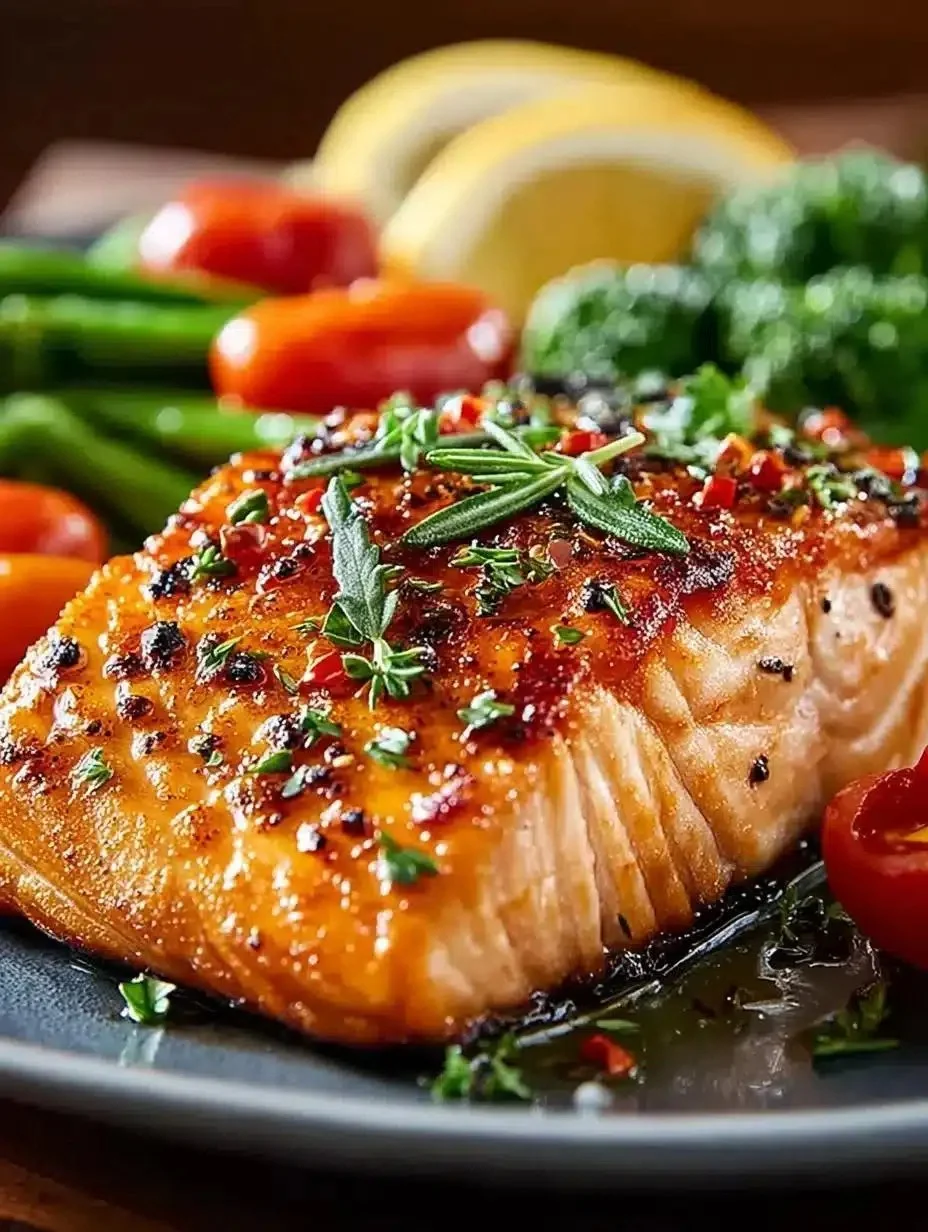
Texas Roadhouse Salmon Copycat Recipe
The first bite snaps with a buttery herb crust and a smoky sear — this Texas Roadhouse Salmon copycat brings that steakhouse finish to your table. I developed this version after testing it 10 times on my home stove and grill. The seasoning balance, sear temperature, and butter finish are tuned so the fish stays juicy and the topping browns without burning. This recipe is fast enough for weeknights and impressive enough for guests. Read on for precise times, metric and imperial measures, and simple techniques you can trust. For a quick side that pairs well, try a bright, tangy sauce like the one in my linked recipe for an easy homemade mounjaro to serve alongside the salmon: easy homemade mounjaro.
Why This Recipe Works
- High-heat searing creates a crisp exterior while short cook time protects the flesh from overcooking.
- A quick herb-butter finish adds richness and carries aromatics without adding moisture that would steam the skin.
- Brining subtly firms the flesh, helping the fillet flake cleanly while staying moist.
- Minimal sugar in the rub lets the natural salmon flavor shine and prevents the coating from burning under high heat.
- Using clarified butter raises the smoke point so you get color without bitter burnt notes.
Ingredients Breakdown
- Salmon fillets (4 × 170–200 g / 6–7 oz each): Choose center-cut fillets, skin on. Skin protects the flesh when searing and helps hold the fillet together.
- Kosher salt (use Diamond Crystal) 1 tbsp (18 g): Draws moisture for a short brine and seasons evenly. If you use Morton’s, reduce to 1 tsp (6 g).
- Granulated garlic 1 tsp (3 g) and onion powder 1 tsp (3 g): Add savory depth without moisture.
- Paprika 2 tsp (4 g): Adds color and mild flavor. Smoked paprika will intensify smokiness.
- Black pepper 1/2 tsp (1 g): Freshly ground for brightness.
- Brown sugar 1 tsp (4 g): Small amount for color and balance; too much will burn under the sear.
- Unsalted butter 60 g (1/4 cup) clarified or ghee: Clarified butter yields a higher smoke point for finishing. If you only have regular butter, melt and skim the milk solids to reduce burning.
- Fresh parsley and dill, finely chopped, 2 tbsp (8 g) total: Bring herbal freshness to the butter finish.
- Lemon juice 1 tbsp (15 ml): Brightens and cuts richness.
- Olive oil 15 ml (1 tbsp): For initial sear if not using a nonstick pan.
- Optional: 1 tsp Worcestershire or soy sauce (5 ml) for umami in the butter finish.
Substitutions and impact warnings:
- Salmon type: Wild sockeye is leaner and stronger-tasting; Atlantic or farmed king will be fattier and milder. Adjust cook time slightly for very thick fillets.
- Butter: Using olive oil instead of butter removes the signature buttery finish.
- Salt: If using table salt, reduce quantity by half to avoid oversalting.
For a quick flavor twist, consider adding a pinch of cayenne to the rub for heat.
Essential Equipment
- Heavy skillet (cast iron preferred) 26–30 cm (10–12 in): Cast iron holds heat for a reliable sear. If you don’t own cast iron, use a heavy stainless-steel pan.
- Fish spatula: Thin, flexible edge helps turn fillets without breaking them.
- Instant-read thermometer: Measures doneness precisely (target 52–57°C / 125–135°F, see notes).
- Small saucepan: For finishing the herb-butter.
- Tongs and a paper towel: For patting fillets dry and handling them safely.
If you want a hands-off finish, a 200°C (400°F) oven will hold the fillets after searing; details follow. For more kitchen tool tips, see this short guide to building a simple home pantry and toolset: natural mounjaro recipe and tool notes.
Step-by-Step Instructions
Makes 4 servings. Prep time 15 minutes; Cook time 12 minutes; Inactive time None; Total time 27 minutes. Servings: 4 (1 fillet per person).
Step 1: Salt the fillets and pat dry
Lightly salt both sides of 680–800 g (24–28 oz) total salmon — about 1 tbsp (18 g) kosher salt for the batch. Let sit 8–10 minutes, then blot dry with paper towels. This short salt stage firms the flesh and seasons deeply. Dry skin sears much better.
Step 2: Mix the rub
In a small bowl combine 8 g (2 tsp) paprika, 3 g (1 tsp) granulated garlic, 3 g (1 tsp) onion powder, 1/2 tsp (1 g) black pepper, and 4 g (1 tsp) brown sugar. Rub a thin, even layer on the flesh side only. Too thick a rub can mask the fish; use sparingly.
Step 3: Heat the pan and start the sear
Heat 15 ml (1 tbsp) olive oil in a cast-iron skillet over medium-high until shimmering, about 2–3 minutes. Test with a drop of water — it should sizzle and evaporate on contact. Add the fillets skin-side down and press gently for 10 seconds to ensure full skin contact. Sear skin-side for 3–4 minutes, until deeply browned and crisp, moving the pan slightly to keep the heat even.
Step 4: Flip and finish on the flesh side
Flip the fillets and cook flesh-side for 2–4 minutes, depending on thickness, until the interior reaches 52–57°C (125–135°F) for medium-rare to medium. Use an instant-read thermometer inserted into the thickest part. The flesh should be opaque and flake easily but still feel slightly firm.
Step 5: Make the herb-butter finish
While the fillets cook, melt 60 g (1/4 cup) clarified butter in a small saucepan over low heat for 1–2 minutes. Stir in 2 tbsp (8 g) chopped parsley and dill, 1 tbsp (15 ml) lemon juice, and optional 5 ml (1 tsp) Worcestershire. Remove from heat.
Step 6: Rest and spoon the butter
Transfer fillets to a warm plate and rest 1–2 minutes. Spoon the herb-butter over each fillet right before serving. Do not over-rest; if you wait too long the butter will cool and not coat the fish properly.
Expert Tips & Pro Techniques
- Use room-temperature fish: Let fillets sit out 10–15 minutes before cooking so they cook evenly.
- Common mistake — overcrowding the pan: Cook in batches if needed. Overcrowding drops pan temperature and causes steaming instead of searing.
- Thermometer is your friend: Pull fish at 52–57°C (125–135°F) as residual heat will carry it to perfect doneness.
- Make-ahead: You can mix the rub and herb butter up to 24 hours ahead; store separately in the fridge. Reheat butter gently before serving.
- Professional trick adapted for home: Clarify butter quickly by melting and skimming foam, then pouring through a fine sieve. It raises the smoke point and concentrates flavor.
- For a smoky finish without a grill: Once seared, briefly place the fillets under a preheated broiler for 30–45 seconds — watch closely to avoid burning.
- Tip for plating: Spoon sauce from the center of the plate outward to create an elegant presentation.
For short prep routines that pair well with salmon, you might like a fast savory sauce referenced in this natural mounjaro guide: natural mounjaro recipe and variations.
Storage & Reheating
- Refrigerator: Store cooled fillets in an airtight container for up to 2 days. Reheat gently to preserve texture.
- Freezer: Salmon with the herb butter applied does not freeze well. Freeze unbuttered, vacuum-sealed fillets for up to 2 months. Thaw overnight in the fridge.
- Reheating: Reheat in a 175°C (350°F) oven for 6–8 minutes until warmed through. Alternatively, reheat on a skillet over medium-low for 3–4 minutes, skin-side down, to preserve texture. Avoid microwaving — it makes the flesh dense and rubbery.
Variations & Substitutions
- Gluten-Free Herb-Crusted: This recipe is naturally gluten-free. Keep the same measurements; just confirm your spice blends contain no additives.
- Spicy Chipotle: Replace 1 tsp paprika with 1 tsp chipotle powder. Keep other measures the same and reduce searing time by 30–60 seconds if fillets are thin.
- Baked Finish (no pan sear): Preheat oven to 220°C (425°F). After patting and rubbing, bake on a lined sheet for 8–12 minutes until 52–57°C (125–135°F). The texture will be softer without the skin crisp.
- Lemon-Dill Yogurt Sauce (lighter): Swap the herb-butter for 60 g (1/4 cup) Greek yogurt mixed with 1 tbsp (15 ml) lemon juice and 1 tbsp (8 g) dill. Serve cold on top.
- Grill Method: Cook skin-side down on a medium-hot grill for 4–6 minutes, then flip and cook 2–3 minutes. Keep lid open to avoid flare-ups from butter.
Serving Suggestions & Pairings
- Sides: Pair with garlic-roasted potatoes or a lemony quinoa salad for balance.
- Vegetables: Serve with charred asparagus or a simple arugula salad with vinaigrette.
- Garnish & sauce: Finish with lemon wedges and extra chopped parsley. A dollop of yogurt-dill sauce is a bright contrast.
- Beverage: Try a crisp Sauvignon Blanc or a light lager to cut the butter richness.
For a bolder flavor match, serve alongside sweet-and-savory sides inspired by this char siu chicken technique: tasty char siu chicken recipe.
Nutrition Information
Per serving (1 fillet). Makes 4 servings.
- Serving size: 1 fillet (approx. 170–200 g / 6–7 oz)
- Calories: 480 kcal
- Total Fat: 33 g
- Saturated Fat: 12 g
- Cholesterol: 115 mg
- Sodium: 520 mg
- Total Carbohydrates: 2 g
- Dietary Fiber: 0 g
- Sugars: 1 g
- Protein: 39 g
Nutrition values are estimates. Actual values may vary based on specific ingredients and preparation methods.
Frequently Asked Questions
Q: Why did my salmon turn out dry?
A: Most likely it was overcooked. Aim for 52–57°C (125–135°F) and remember carryover heat. Use an instant-read thermometer for accuracy.
Q: Can I make this without butter?
A: Yes. Substitute 60 g (1/4 cup) extra-virgin olive oil and add the herbs and lemon. The finish will be lighter and less rich.
Q: Can I double this recipe?
A: Yes. Cook in batches to avoid overcrowding the pan. Maintain the same rub-to-fish ratios and monitor pan temperature.
Q: Can I prepare this the night before?
A: You can mix the rub and chop the herbs the night before. Salt and pat the fish just before cooking for best texture.
Q: How long does this keep in the fridge?
A: Cooked salmon keeps in the fridge for up to 2 days in an airtight container. Reheat gently to maintain moisture.
Q: Will the rub burn on a high-heat sear?
A: If your rub has too much sugar, it can burn. This recipe uses only 1 tsp (4 g) brown sugar. Use clarified butter and monitor heat to avoid burning.
Q: What internal temperature is best for salmon doneness?
A: Pull the salmon at 52–57°C (125–135°F) for medium-rare to medium; the exterior will be nicely seared and the center moist.
Conclusion
This copycat keeps the classic flavors — crisp skin, savory rub, and a bright herb-butter finish — while staying simple enough for a weeknight. For another home-friendly take on Texas Roadhouse flavors, check the detailed copycat of the original salmon from The Food Hussy: The Food Hussy’s Texas Roadhouse Salmon copycat. If you enjoy copycat steakhouse mains, this herb-crusted chicken guide has great notes on seasoning and searing techniques you can borrow: Herb Crusted Chicken copycat recipe from Houseful of Monkeys.
Author: Alex Monroe — Culinary school graduate, 12 years as a professional chef.
Published: 2026-03-02.
Texas Roadhouse Salmon Copycat Recipe
- Total Time: 27 minutes
- Yield: 4 servings 1x
- Diet: Gluten-Free
Description
A buttery herb crust and smoky sear make this Texas Roadhouse Salmon copycat a flavorful and impressive dish.
Ingredients
- 4 salmon fillets (170–200 g / 6–7 oz each)
- 1 tbsp (18 g) kosher salt
- 1 tsp (3 g) granulated garlic
- 1 tsp (3 g) onion powder
- 2 tsp (4 g) paprika
- 1/2 tsp (1 g) black pepper
- 1 tsp (4 g) brown sugar
- 60 g (1/4 cup) unsalted clarified butter or ghee
- 2 tbsp (8 g) fresh parsley, finely chopped
- 2 tbsp (8 g) fresh dill, finely chopped
- 1 tbsp (15 ml) lemon juice
- 1 tbsp (15 ml) olive oil
- Optional: 1 tsp (5 ml) Worcestershire or soy sauce
Instructions
- Salt the fillets and pat dry. Lightly salt both sides of the salmon and let sit for 8–10 minutes before blotting dry with paper towels.
- Mix the rub in a small bowl and evenly apply it on the flesh side of the salmon fillets.
- Heat olive oil in a cast-iron skillet over medium-high heat until shimmering. Add the fillets skin-side down and sear for 3–4 minutes.
- Flip the fillets and cook flesh-side for an additional 2–4 minutes until the interior reaches the desired temperature.
- Make the herb-butter by melting clarified butter in a small saucepan, then stirring in the herbs and lemon juice.
- Transfer the fillets to a warm plate, rest for 1–2 minutes, and spoon the herb-butter over each right before serving.
Notes
Use room-temperature fish for even cooking. Avoid overcrowding the pan to ensure proper searing.
- Prep Time: 15 minutes
- Cook Time: 12 minutes
- Category: Main Course
- Method: Searing
- Cuisine: American
Nutrition
- Serving Size: 1 fillet
- Calories: 480 kcal
- Sugar: 1 g
- Sodium: 520 mg
- Fat: 33 g
- Saturated Fat: 12 g
- Unsaturated Fat: 16 g
- Trans Fat: 0 g
- Carbohydrates: 2 g
- Fiber: 0 g
- Protein: 39 g
- Cholesterol: 115 mg