
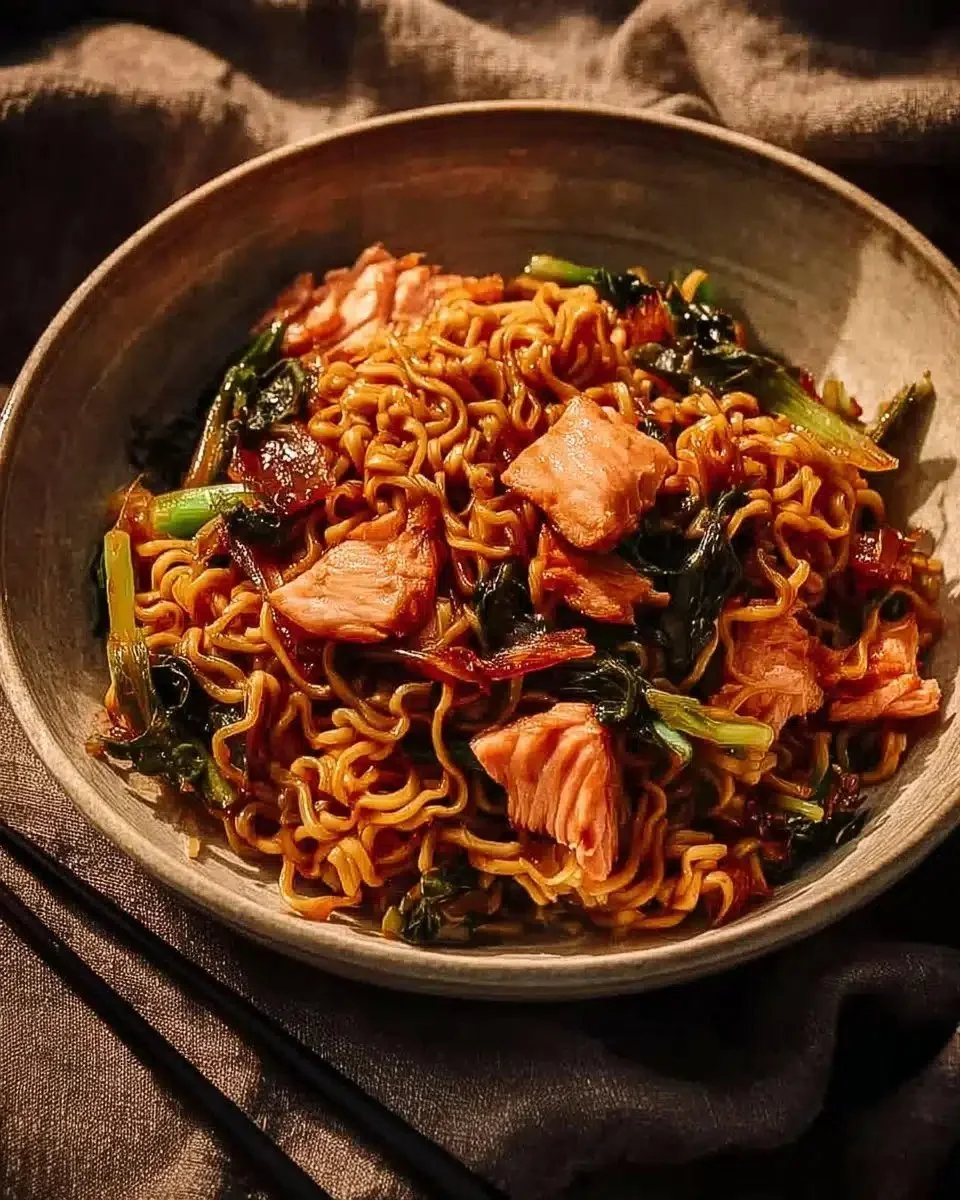
Teriyaki Salmon Noodles with Sesame Veggies
The first bite sings: sticky-sweet glaze, tender salmon, and springy noodles with toasted sesame vegetables. Teriyaki Salmon Noodles appear simple, but balancing the sauce, fish doneness, and noodle texture matters. I perfected this version after testing it eight times, tweaking the sauce ratio and cooking order in a busy restaurant kitchen to make it reliable at home. The result is a 30-minute weeknight meal that keeps the salmon moist and the noodles glossy without getting gummy. Read on for exact measurements, timing, and pro tips so you hit the same result every time. For a fruit-forward twist, you can compare the flavor balance to this mango teriyaki salmon during prep.
Why This Recipe Works
- A quick, high-heat sear locks juices in the salmon while the gentle pan sauce finishes the glaze without overcooking.
- Toasting sesame and vegetables first layers nutty aroma into the dish so the sauce tastes deeper without extra sugar.
- A cornstarch slurry at the end creates a shiny, clingy sauce that coats noodles and fish evenly.
- Briefly undercooking noodles by 30–60 seconds keeps them springy so they don’t soften further when tossed with sauce.
- Separating sauce reduction and final thickening prevents burnt sugar taste and gives consistent viscosity.
Ingredients Breakdown
- Salmon fillets (680 g / 1.5 lb total; about 4 × 170 g / 6 oz portions): Use center-cut fillets for even cooking. Skin-on helps the fillets hold together; crisp the skin if you like. If you must use frozen, thaw completely and pat dry.
- Soy sauce (120 ml / ½ cup): The salty backbone. Use a naturally brewed soy for better depth. For low-sodium, choose a reduced-sodium soy and expect a milder glaze.
- Mirin (60 ml / ¼ cup) and sake (60 ml / ¼ cup): These add sweetness and umami. If you only have dry sherry, use it but cut sugar by half.
- Brown sugar (60 g / ¼ cup packed): Balances soy; light brown for molasses notes. You can swap coconut sugar, but color and depth will change.
- Garlic (2 cloves, minced) and fresh ginger (20 g / 1 tbsp, grated): Fresh aromatics are essential. Powdered forms will taste flatter.
- Cornstarch slurry (1 tbsp cornstarch + 2 tbsp water): Thickens the sauce quickly. Do not substitute with flour directly in the pan.
- Dried noodles (225 g / 8 oz rice noodles or wheat noodles): Rice vermicelli or chow mein-style wheat noodles both work — use rice for a lighter texture. If using wheat noodles, toss with a teaspoon neutral oil to prevent clumping.
- Broccoli florets (300 g / 10.5 oz) and red bell pepper (1 medium / ~150 g): Provide crunch and color. Cut broccoli small for even cooking.
- Scallions (4, sliced), sesame oil (15 ml / 1 tbsp), toasted sesame seeds (2 tbsp): Finish for aroma and texture.
- Neutral oil (e.g., canola or vegetable) for searing: Use a high-smoke-point oil to get a good sear.
- Salt: Use Diamond Crystal kosher salt if available — if you use Morton’s, use roughly half the amount since Morton’s is denser.
Ingredient substitutions with impact warnings:
- Gluten-free: Use tamari (gluten-free soy) and rice noodles; mirin often contains alcohol and sugar but is GF — check label.
- Vegetarian: Use firm tofu (press and pan-fry) in place of salmon; the sauce works the same, but cooking times change.
- Make-ahead sauce: You can double the sauce and store separately, but reheating sauce with raw fish will overcook the salmon.
Essential Equipment
- Large nonstick or stainless-steel skillet (12-inch / 30 cm): You need space for searing salmon and stir-frying vegetables without crowding.
- Medium pot for noodles: Boil noodles in plenty of water so they don’t stick.
- Fine grater or microplane for ginger: Fresh ginger grates more evenly than chopping.
- Small bowl for cornstarch slurry.
- Tongs and a fish spatula or wide spatula to flip fillets gently.
- Colander and large mixing bowl for tossing noodles.
- Workaround: If you don’t have a large skillet, sear salmon in batches in a smaller pan and keep warm on a tray in a 90°C (200°F) oven.
Step-by-Step Instructions
Prep Time: 15 minutes | Cook Time: 15 minutes | Inactive Time: None | Total Time: 30 minutes | Servings: 4
Step 1: Prep the salmon and vegetables
Pat 680 g (1.5 lb) salmon dry and season lightly with salt; leave at room temperature for 10 minutes. Cut 300 g (10.5 oz) broccoli into small florets and slice 1 medium red bell pepper; slice 4 scallions on the bias. This short rest reduces temperature shock and helps even cooking.
Step 2: Make the teriyaki sauce
Whisk 120 ml (½ cup) soy sauce, 60 ml (¼ cup) mirin, 60 ml (¼ cup) sake, 60 g (¼ cup) packed brown sugar, 2 minced garlic cloves, and 20 g (1 tbsp) grated ginger in a small bowl. Taste — it should be boldly savory with an obvious sweet edge; adjust with a pinch more sugar for extra shine. Keep 1 tbsp cornstarch mixed with 2 tbsp water nearby to thicken later.
Step 3: Toast the sesame and cook the vegetables
Heat 1 tbsp neutral oil and 15 ml (1 tbsp) sesame oil in a large skillet over medium-high heat until shimmering (about 180°C / 350°F surface temp). Add broccoli and red pepper and sauté for 3–4 minutes, stirring every 30 seconds, until edges char slightly and vegetables smell toasted. Transfer vegetables to a bowl and reserve.
Step 4: Cook the noodles
Bring a medium pot of salted water to a boil and cook 225 g (8 oz) dried noodles according to package but stop 30–60 seconds before "al dente" time; for most wheat noodles this is 5–7 minutes total, so remove at 4–6 minutes. Drain and toss gently with 1 tsp neutral oil to prevent sticking. Under-cooking slightly keeps noodles springy when mixed with sauce.
Step 5: Sear the salmon
Heat 1 tbsp neutral oil in the skillet over medium-high heat until smoking lightly. Place fillets skin-side down and sear 3–4 minutes without moving to crisp skin; flip and cook 1–2 minutes more for medium (internal 54°C / 130°F) — cook to 57°C (135°F) for medium-well. Do not overcook — remove when the center is slightly translucent; residual heat will finish it.
Step 6: Finish the sauce and assemble
Return vegetables to the skillet and pour the teriyaki mixture in, reduce heat to medium, and simmer 2–3 minutes until slightly reduced. Stir the cornstarch slurry and add it to the pan; simmer 30–60 seconds until the sauce thickens and becomes glossy. Toss in drained noodles and scallions and mix for 1 minute to coat; serve noodles topped with salmon and a sprinkle of toasted sesame seeds. Serve immediately.
Expert Tips & Pro Techniques
- Mistake to avoid: Crowding the pan steams the salmon and vegetables; cook in batches if needed to maintain a good sear.
- Noodle texture: Always undercook noodles by 30–60 seconds; they’ll soften the rest of the way when tossed with sauce.
- Make-ahead: You can prepare the sauce up to 3 days ahead and refrigerate in an airtight jar; reheat gently and finish with cornstarch before tossing with noodles.
- Professional trick (home-friendly): Sear skin-side down on high heat for a crisp skin—press gently with a spatula for the first 15 seconds to keep contact. Finish in the pan off heat to avoid drying the flesh.
- Flavor boost: Add 1 tsp toasted sesame oil at the end for aroma; too much during cooking will burn and taste bitter.
- Cross-application: For a noodle technique reference on quick tosses and handling, see how noodles are treated in this garlic butter steak with lightning noodles recipe.
Storage & Reheating
- Refrigerator: Store leftovers in an airtight container for up to 2 days; fish texture softens after that. Keep sauce and noodles together for best flavor.
- Freezer: Fully assembled salmon noodles do not freeze well — the fish turns mealy and noodles get mushy. Instead, freeze extra sauce only for up to 3 months; thaw overnight in the fridge.
- Reheating: Reheat refrigerated servings gently in a 175°C (350°F) oven for 6–8 minutes to warm through, or reheat in a skillet on medium-low covered for 3–4 minutes. Avoid microwaving if you want to keep the salmon texture intact.
Variations & Substitutions
- Gluten-Free Version: Replace soy with 120 ml tamari, use rice noodles (225 g / 8 oz). Keep mirin and sake or substitute 60 ml (¼ cup) rice vinegar + 1 tbsp sugar; no other changes. Noodle cook time is usually 3–4 minutes for rice vermicelli.
- Vegetarian / Tofu: Use 400 g (14 oz) firm tofu, pressed and pan-fried until golden (3–4 min per side). Keep sauce amounts the same; reduce final sauce simmer to 1–2 minutes so it clings to tofu.
- Spicy Teriyaki: Add 1–2 tsp gochujang or ½–1 tsp chile paste to the sauce before reducing; balance with a splash more mirin if it tastes too salty.
- Citrus Teriyaki (bright): Add 30 ml (2 tbsp) orange juice and 1 tsp orange zest to the sauce; reduce for 2–3 minutes and finish with a squeeze of fresh orange. (This echoes the flavor profile in some orange teriyaki variants.)
- Sheet-pan method (one-pan): Arrange salmon and vegetables on a sheet tray, roast at 220°C (425°F) for 10–12 minutes, then toss roasted veg and noodles with heated teriyaki sauce; salmon should be cooked to 57°C (135°F) and brushed with sauce.
Serving Suggestions & Pairings
- Light soup starter: Pair with a coconut curry rice noodle soup for a contrasting warm broth; it balances the sweet-salty glaze. Try our companion recipe: coconut curry soup with rice noodles.
- Crunchy side: Quick cucumber salad (thin-sliced cucumber, rice vinegar, a pinch sugar) cuts the richness.
- Beverage pairing: A dry Riesling or a cold Japanese lager complements the sweet-salty glaze.
- Garnish ideas: Pickled ginger, extra scallions, or a small drizzle of chili oil for heat.
Nutrition Information
Per serving (serving size: 1 bowl; recipe makes 4 servings)
- Calories: 610 kcal
- Total Fat: 24 g
- Saturated Fat: 4 g
- Cholesterol: 95 mg
- Sodium: 920 mg
- Total Carbohydrates: 54 g
- Dietary Fiber: 4 g
- Sugars: 18 g
- Protein: 40 g
Nutrition values are estimates. Actual values may vary based on specific ingredients and preparation methods.
Frequently Asked Questions
Q: Why did my salmon turn out dry?
A: Most drying comes from overcooking. Aim for 54–57°C (130–135°F) internal temperature and remove the fish when the center is slightly translucent. Resting for 2 minutes off the heat finishes cooking gently.
Q: Can I make this without eggs?
A: This recipe does not use eggs, so it’s naturally egg-free. If you’re adapting to egg-free sides (like an egg-based fried rice), simply omit the egg and add extra scallions or tofu.
Q: Can I double this recipe?
A: Yes. Double the sauce and ingredients, but cook in batches so the pan isn’t crowded. Crowding causes steaming and prevents proper searing.
Q: Can I prepare this the night before?
A: Yes — cook the noodles and sauce separately and store in airtight containers. Reheat sauce and toss with noodles, then quickly warm the seared salmon in a 160°C (325°F) oven for 6–8 minutes just before serving.
Q: How long does this keep in the fridge?
A: Store in an airtight container and use within 2 days for best quality. The salmon texture declines after that.
Q: Can I use the sauce for other proteins?
A: Absolutely. The sauce works with chicken, pork, or tofu. Adjust simmer time: chicken pieces should reach 74°C (165°F) internally.
Q: My noodles got sticky — how do I fix that next time?
A: Use plenty of boiling water and a quick toss with 1 tsp neutral oil after draining. Undercook by 30–60 seconds and finish in the pan with sauce to prevent sticking.
Conclusion
If you want a different presentation or inspiration, Sailor Bailey offers a related take on Teriyaki Salmon Noodles with helpful plating ideas. For a bowl-style variation that adds avocado and sesame greens, see this riff on Teriyaki Salmon Bowls with Sesame Greens and Avocado.
Print
Teriyaki Salmon Noodles with Sesame Veggies
- Total Time: 30 minutes
- Yield: 4 servings 1x
- Diet: Gluten-Free
Description
A quick and delicious weeknight meal featuring tender salmon, springy noodles, and a sticky-sweet teriyaki glaze with toasted sesame vegetables.
Ingredients
- 680 g salmon fillets (1.5 lb total; about 4 × 170 g / 6 oz portions)
- 120 ml soy sauce (½ cup)
- 60 ml mirin (¼ cup)
- 60 ml sake (¼ cup)
- 60 g brown sugar (¼ cup packed)
- 2 cloves garlic (minced)
- 20 g fresh ginger (grated)
- 1 tbsp cornstarch + 2 tbsp water (for slurry)
- 225 g dried noodles (8 oz rice or wheat noodles)
- 300 g broccoli florets (10.5 oz)
- 150 g red bell pepper (1 medium)
- 4 scallions (sliced)
- 15 ml sesame oil (1 tbsp)
- 2 tbsp toasted sesame seeds
- Neutral oil (for searing)
- Salt (to taste)
Instructions
- Prep the salmon and vegetables: Pat salmon dry and season lightly with salt; leave at room temperature for 10 minutes. Cut broccoli into small florets and slice red bell pepper and scallions.
- Make the teriyaki sauce: Whisk together soy sauce, mirin, sake, brown sugar, minced garlic, and grated ginger in a bowl. Keep cornstarch slurry nearby.
- Toast the sesame and cook the vegetables: Heat neutral and sesame oil in a large skillet, then sauté broccoli and red pepper until charred.
- Cook the noodles: Boil noodles according to package instructions, stopping 30–60 seconds before al dente, then drain and toss with neutral oil.
- Sear the salmon: Heat oil in the skillet, sear salmon skin-side down until crispy, then flip and cook to desired doneness.
- Finish the sauce and assemble: Return vegetables to skillet, pour in sauce, then add cornstarch slurry and cook until thickened. Toss noodles with sauce and serve topped with salmon and sesame seeds.
Notes
Avoid overcrowding the pan to ensure proper searing of salmon and veggies.
- Prep Time: 15 minutes
- Cook Time: 15 minutes
- Category: Main Course
- Method: Stir-Frying
- Cuisine: Asian
Nutrition
- Serving Size: 1 bowl
- Calories: 610
- Sugar: 18g
- Sodium: 920mg
- Fat: 24g
- Saturated Fat: 4g
- Unsaturated Fat: Unknown
- Trans Fat: 0g
- Carbohydrates: 54g
- Fiber: 4g
- Protein: 40g
- Cholesterol: 95mg