
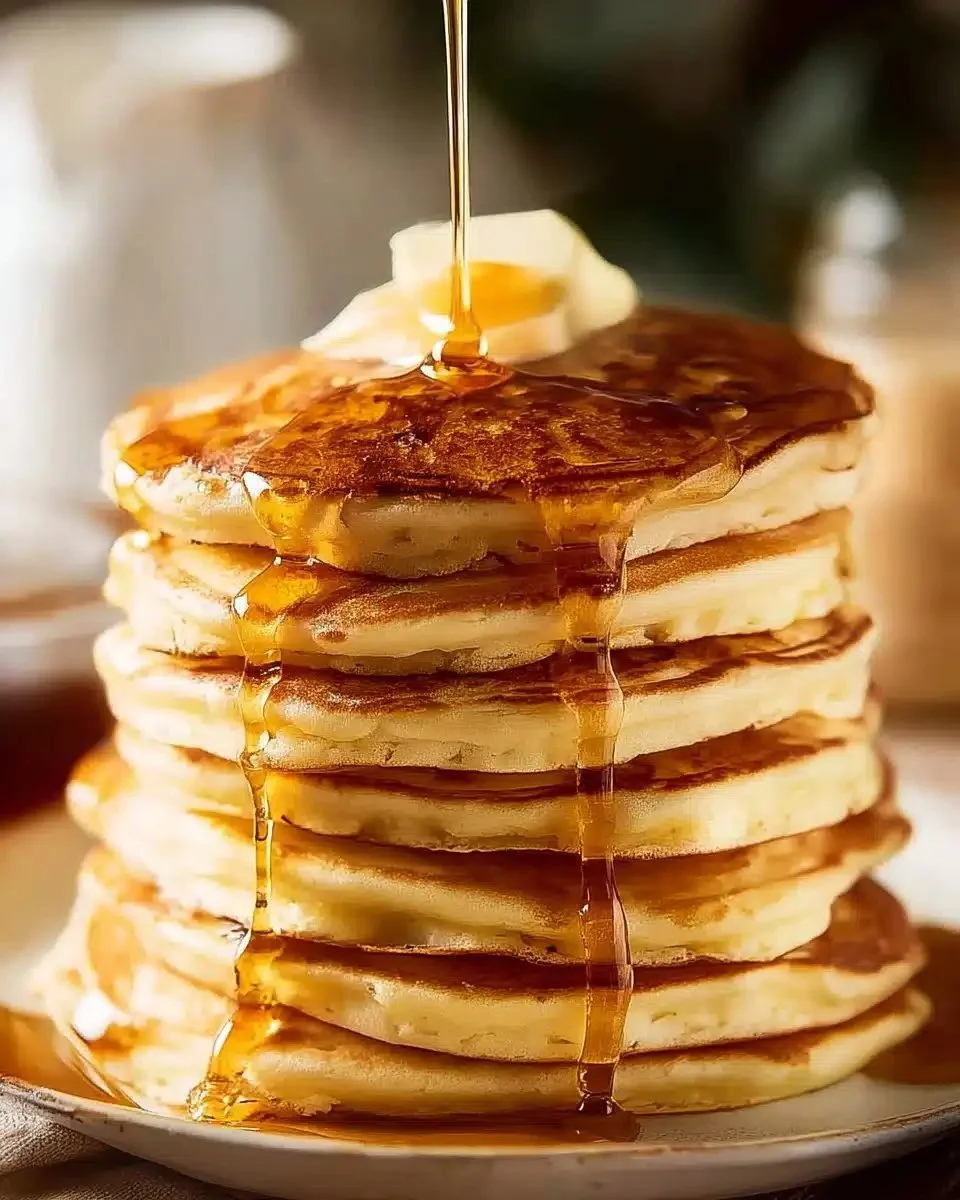
Fluffy Pancakes — 20-Minute Breakfast
Steam of warm butter and a sweet, eggy scent hits the kitchen in the first minute you cook these Simple Fluffy Pancakes, and the centers stay light and tender. I developed this version after testing the batter eight times with different flours and milk ratios to find a mix that puffs without becoming gummy. The texture comes from a balance of leaveners and just enough liquid to make a bubbly batter that spreads slowly on the griddle. This method works whether you use whole milk or buttermilk and it includes clear metric weights and imperial volumes so you can be confident on the first try. Read on for the exact technique, tools, and storage tips that make busy mornings easier and pancakes reliably great.
Why This Recipe Works
- Baking powder and a small amount of baking soda give lift and quick rise without a heavy taste.
- A slightly thick batter holds its shape on the griddle so pancakes brown without flattening.
- Letting batter rest briefly (10 minutes) hydrates the flour and reduces toughness.
- Melted butter folded in at the end coats flour proteins, giving a tender crumb.
- A gentle cook temperature ensures a golden exterior while the centers stay moist.
Ingredients Breakdown
- 250 g (2 cups) all-purpose flour — provides structure. For a lighter result, sift before measuring. Do not use self-rising flour unless you omit the baking powder and salt.
- 25 g (2 tbsp) granulated sugar — feeds the browning reaction and adds slight sweetness. You can reduce to 1 tbsp for less sweet pancakes.
- 10 g (2 tsp) baking powder and 3 g (1/2 tsp) baking soda — baking powder gives lift; baking soda reacts with buttermilk to boost rise and browning. Do not double the leaveners or the batter will collapse.
- 3 g (1/2 tsp) fine salt — balances flavor. Use Diamond Crystal kosher salt for the amount listed; if you use Morton, halve the quantity because it’s denser.
- 240 ml (1 cup) buttermilk — tang and acidity react with baking soda for height. If you don’t have buttermilk, use 240 ml (1 cup) whole milk plus 1 tbsp lemon juice or white vinegar and rest for 5 minutes.
- 120 ml (1/2 cup) whole milk — thins batter to the right pouring consistency. Use milk at room temperature for even mixing.
- 2 large eggs, room temperature — give structure and aid browning.
- 60 g (4 tbsp) unsalted butter, melted and cooled slightly — adds richness and keeps pancakes tender. For dairy-free, substitute neutral oil (no butter flavor).
- 5 ml (1 tsp) vanilla extract — optional but recommended for warmth and aroma.
Essential Equipment
- Large mixing bowl and whisk — for dry and wet mixing.
- Digital scale — for accurate dry weights (highly recommended).
- 20–25 cm (8–10 inch) nonstick skillet or griddle — a large flat surface gives even browning; use cast-iron for steady heat.
- Spatula with a thin edge — flips cleanly without tearing.
- Measuring spoons and liquid measuring cup — use the proper tool for accuracy.
- If you don’t have a scale, spoon flour into cups and level with a knife as a workaround.
Step-by-Step Instructions
Makes 4 servings (about 12 pancakes, 3 pancakes per serving). Prep time: 10 minutes. Cook time: 10 minutes. Inactive time: 10 minutes resting. Total time: 30 minutes.
Step 1: Combine the dry ingredients
In a large bowl, whisk 250 g (2 cups) all-purpose flour, 25 g (2 tbsp) sugar, 10 g (2 tsp) baking powder, 3 g (1/2 tsp) baking soda, and 3 g (1/2 tsp) fine salt for 20–30 seconds until evenly mixed. This ensures the leaveners are distributed so pancakes rise uniformly. Break up any clumps with the whisk.
Step 2: Mix the wet ingredients
In a separate bowl, whisk 240 ml (1 cup) buttermilk, 120 ml (1/2 cup) whole milk, 2 large eggs, and 5 ml (1 tsp) vanilla for 20–30 seconds until combined and slightly frothy. Whisking aerates the eggs and helps a lighter texture.
Step 3: Combine wet and dry, then add butter
Pour the wet ingredients into the dry and stir gently with a spatula until just combined, 20–30 strokes. Do not overmix — stop as soon as no dry flour streaks remain. Fold in 60 g (4 tbsp) melted butter until the batter is glossy. Batter should be thick but pourable; add up to 1–2 tbsp (15–30 ml) extra milk if it seems too stiff.
Step 4: Rest the batter
Let the batter rest at room temperature for 10 minutes. Resting hydrates the flour and lets air bubbles form, which helps lift. If you can, rest for up to 20 minutes for even better texture.
Step 5: Preheat the pan and test
Heat your skillet or griddle over medium (about 180°C / 350°F surface). Brush lightly with butter or oil. Drop one 60 ml (1/4 cup) test pancake; cook until bubbles appear and edges look set, about 2–3 minutes. Flip and cook 1–2 minutes until golden. Adjust heat if it browns too fast or too slowly.
Step 6: Cook the pancakes
Spoon or pour 60 ml (1/4 cup) batter per pancake onto the hot surface, leaving space between pancakes. Cook for 2–3 minutes on the first side until bubbles form and the underside is golden brown; flip and cook 1–2 minutes more. Transfer to a warm plate and keep in a low oven (90°C / 200°F) while you finish cooking the batch.
Expert Tips & Pro Techniques
- Use a scale. Measuring flour by weight (250 g) removes guesswork and prevents heavy pancakes.
- Common mistake: overmixing the batter. Overmixing develops gluten and yields dense pancakes. Mix until just combined.
- Keep the griddle temperature steady. If pancakes brown too quickly, lower the heat by one notch and wait 1 minute for the pan to stabilize.
- Make-ahead: Prepare the batter and refrigerate in an airtight container for up to 8 hours. Resting time will increase after refrigeration; bring to room temperature for 15–20 minutes before cooking.
- Professional trick adapted for home cooks: let butter cool to warm (not hot) before folding in. Hot butter will cook eggs and make lumps.
- Flip only once. Wait until many bubbles pop and edges look set for a clean flip and taller pancakes.
Storage & Reheating
- Refrigerator: Store cooled pancakes in an airtight container or resealable bag for up to 3 days.
- Freezer: Flash-freeze pancakes in a single layer on a sheet tray for 1 hour, then transfer to a freezer bag. They keep well for up to 2 months.
- Reheating: Reheat frozen or refrigerated pancakes in a 175°C (350°F) oven for 8–12 minutes until warmed through. Alternatively, reheat individual pancakes in a nonstick skillet over medium heat for 1–2 minutes per side. Avoid the microwave when possible — it makes pancakes rubbery.
Variations & Substitutions
- Gluten-Free Version: Replace 250 g all-purpose flour with 250 g (2 cups) 1:1 GF flour blend and add 1/2 tsp xanthan gum if your blend lacks it. Cook the same time; texture will be slightly more fragile.
- Dairy-Free Version: Substitute 240 ml (1 cup) dairy-free yogurt or 240 ml (1 cup) almond milk plus 1 tbsp lemon juice for buttermilk; replace butter with 60 g (4 tbsp) neutral oil. Flavor will be less rich.
- Protein-Packed: Fold 60 g (1/2 cup) cottage cheese into the wet mix and reduce whole milk by 30 ml (2 tbsp). Expect a denser, more custard-like pancake and slightly longer cooking time.
- Blueberry or Chocolate Chip: Fold in 75–100 g (1/2–2/3 cup) fresh blueberries or chocolate chips right before portioning. Do not mix them into batter early; that can weight it down.
- Thinner Crepe-Like Pancakes: Add 60–120 ml (1/4–1/2 cup) extra milk to reach a thinner pourable batter and cook at slightly higher heat, flipping sooner.
Serving Suggestions & Pairings
- Classic: Serve with butter and warm maple syrup and a dusting of powdered sugar.
- Fruit-forward: Top with warmed mixed berries and a dollop of plain yogurt. You can link to a riffed version of cinnamon-and-sweet pancakes like fluffy cinnamon-roll pancakes for inspiration.
- Savory pairing: Serve with bacon or smoked salmon and a simple herb yogurt for contrast; see savory bowl ideas at flavorful cottage cheese taco bowl recipes for complementary textures.
- Beverage pairing: A bright coffee or a milky chai pairs well; for brunch, serve with fresh orange juice or a mimosa. For a healthy side, try ideas from our simple healthy taco bowls which share quick, balanced plate ideas.
Nutrition Information (per serving)
Serving size: 3 pancakes. Servings: 4.
- Calories: 440 kcal
- Total Fat: 19 g
- Saturated Fat: 11 g
- Cholesterol: 93 mg
- Sodium: 460 mg
- Total Carbohydrates: 55 g
- Dietary Fiber: 1.9 g
- Sugars: 9 g
- Protein: 14 g
Nutrition values are estimates. Actual values may vary based on specific ingredients and preparation methods.
Frequently Asked Questions
Q: Why did my pancakes turn out flat and dense?
A: Flat, dense pancakes usually mean the batter was overmixed or the leavening was old. Mix only until combined and check baking powder/soda freshness. Also be sure to preheat the griddle.
Q: Can I make this without eggs?
A: Yes. For each egg, use 60 g (1/4 cup) plain unsweetened applesauce or 60 g (1/4 cup) mashed banana. Expect a slightly moister and softer pancake with subtle fruit flavor.
Q: Can I double this recipe?
A: Yes — double all ingredients. Work in batches on the griddle and keep finished pancakes warm in a 90°C (200°F) oven. Do not double in a single bowl if you lack space; mix in two bowls for even distribution.
Q: Can I prepare the batter the night before?
A: You can refrigerate the batter for up to 8 hours. Take it out 15–20 minutes before cooking to warm slightly. Note: longer rests may thicken the batter; stir gently and adjust with milk.
Q: How long do leftover pancakes keep in the fridge?
A: Store in an airtight container for up to 3 days. For longer storage, freeze as described above for up to 2 months.
Q: Is buttermilk necessary?
A: Buttermilk adds tang and reacts with baking soda for lift. If you don’t have it, use 240 ml (1 cup) whole milk plus 1 tbsp lemon juice or vinegar and let sit 5 minutes.
Q: What’s the ideal griddle temperature?
A: Aim for a surface around 180°C (350°F). On medium heat most home stoves will reach this; test with a small pancake and adjust as needed.
Conclusion
These Simple Fluffy Pancakes are fast, forgiving, and designed for reliable results. If you want a different technique or video demonstration, try Laura Fuentes’s fluffy pancake method for a helpful visual guide. For more variations and a different take on fluffy stacks, see the tested recipes at Cafe Delites’ best fluffy pancakes.
Recipe notes
- Author: Alex Rivera — Culinary school graduate and recipe developer with 12 years of testing breakfasts.
- Difficulty: Easy. Diet: Vegetarian. Cuisine: American. Date published: 2026-03-12.
Fluffy Pancakes
- Total Time: 30 minutes
- Yield: 4 servings 1x
- Diet: Vegetarian
Description
Delicious and simple fluffy pancakes that are light, tender, and perfect for a quick breakfast.
Ingredients
- 250 g (2 cups) all-purpose flour
- 25 g (2 tbsp) granulated sugar
- 10 g (2 tsp) baking powder
- 3 g (1/2 tsp) baking soda
- 3 g (1/2 tsp) fine salt
- 240 ml (1 cup) buttermilk
- 120 ml (1/2 cup) whole milk
- 2 large eggs, room temperature
- 60 g (4 tbsp) unsalted butter, melted
- 5 ml (1 tsp) vanilla extract
Instructions
- Combine the dry ingredients – whisk flour, sugar, baking powder, baking soda, and salt until evenly mixed.
- Mix the wet ingredients – whisk buttermilk, whole milk, eggs, and vanilla until combined.
- Pour the wet ingredients into the dry and stir gently until just combined, then fold in melted butter.
- Rest the batter for 10 minutes to hydrate the flour.
- Heat your skillet or griddle over medium heat and test with a small pancake.
- Cook the pancakes by pouring batter onto the hot surface and flipping when bubbles form, cooking until golden brown.
Notes
For lighter pancakes, sift flour before measuring. Adjust cooking time based on griddle heat; ensure a steady temperature for even cooking.
- Prep Time: 10 minutes
- Cook Time: 10 minutes
- Category: Breakfast
- Method: Cooking
- Cuisine: American
Nutrition
- Serving Size: 3 pancakes
- Calories: 440
- Sugar: 9g
- Sodium: 460mg
- Fat: 19g
- Saturated Fat: 11g
- Unsaturated Fat: 6g
- Trans Fat: 0g
- Carbohydrates: 55g
- Fiber: 1.9g
- Protein: 14g
- Cholesterol: 93mg