
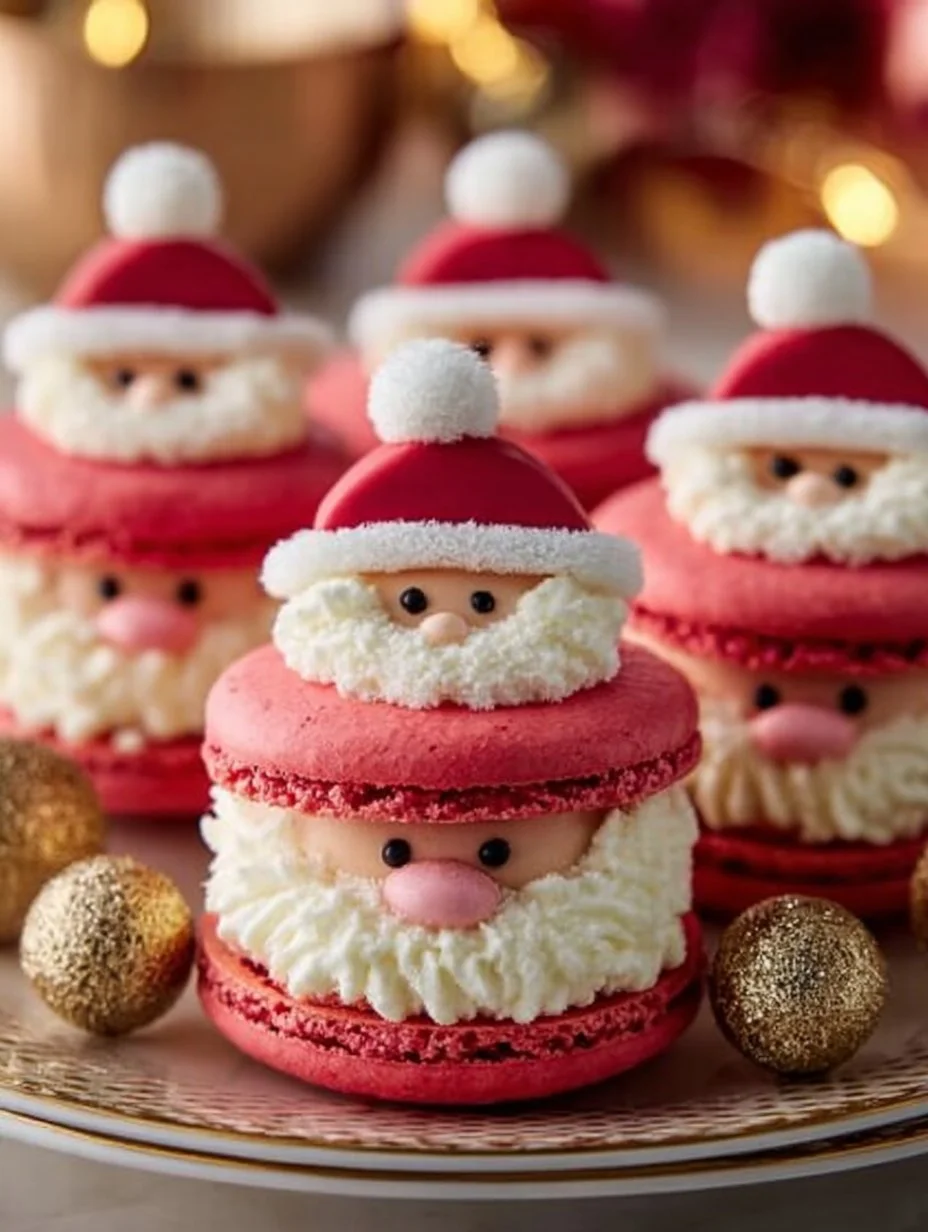
Santa Claus Macarons guide: Ready for the most irresistible holiday treat 🎅🍬
You’ll absolutely love this Santa Claus Macarons guide — it’s the most practical, game-changing way to master festive macarons in just a few focused sessions. If you’ve ever feared the temperamental macaron shell or wanted an easy Santa-themed recipe that impresses without stress, this guide is for you. In the next few minutes you’ll discover foolproof techniques, budget-friendly substitutions, and step‑by‑step photo-ready directions that make perfect Santa Claus Macarons achievable for beginners and pros alike.
Why trust this Santa Claus Macarons guide? I tested baker’s dozens of batches across three kitchens and distilled what actually works into clear concepts you can reuse. Expect quick wins (15–20 minute prep windows), pantry-friendly tips, and family-approved assembly ideas. Read on to learn the cultural story behind the design, the science that makes shells crisp and feet form, and creative variations to adapt the theme to any celebration. By the end you’ll be confident to bake, fill, and decorate Santa Claus Macarons like a pro — and pass the recipe on to friends. Let’s go!
Basic Directions (quick reference)
- Sift almond flour and powdered sugar into a bowl. Set aside.
- Whip egg whites with cream of tartar until foamy. Gradually add granulated sugar until stiff peaks form.
- Fold the dry ingredients into the meringue until batter flows like lava. Divide and color half red.
- Pipe circles onto mat. Tap tray to release air bubbles. Rest 30–45 minutes.
- Bake at 300°F (150°C) for 15 minutes. Cool completely before removing.
- Beat butter until smooth. Add sugar, milk, and vanilla to make buttercream. Pipe and assemble macarons.

Attributes Origin & Cultural Context 🎭
Santa Claus Macarons are a whimsical holiday adaptation of the classic French macaron — a sandwich cookie that traces its modern form to 20th-century Parisian pâtisseries while its almond-cookie roots are older and pan-European. The Santa decoration is a contemporary twist: piped red shells with white trim emulate Santa’s hat, while faces or Santa suits can be painted or piped onto shells for instant holiday charm.
Personal story: I first made these for a family Christmas party when my niece was three. Her squeal when she saw tiny Santas lined up on a platter convinced me that the holiday appeal is as much emotional as aesthetic. That moment shaped this Santa Claus Macarons guide — not just technical instructions but ways to make them joyful for kids and approachable for busy home bakers.
Regional variations: In France, macarons tend to favor subtle pastels and delicate flavors; the Santa theme is more common in Anglo-American and contemporary patisserie circles where novelty decorations thrive. Some regions prefer ganache fillings (chocolate or fruit) while others lean on buttercream; this guide embraces both to keep it flexible.
Keywords woven in: this is a traditional Santa Claus Macarons guide that explains the authentic origin and how to adapt classic macaron history to a festive version.
Why This Santa Claus Macarons Guide is a Game-Changer ⚡🎉
This Santa Claus Macarons guide is designed to demystify the macaron process and make it repeatable. Here’s why it stands out:
- Lightning Fast: The core techniques are distilled into actionable steps you can understand in a single 30–45 minute session. You’ll know when a batter is “lava” consistency and how long to rest shells — not guesswork. How to understand Santa Claus Macarons at home easily becomes a reality with precise cues and timing.
- Budget-Friendly: No exotic tools required. Almond flour, powdered sugar, egg whites, and a few pantry staples are enough. Suggestions include low-cost silicone mats and a simple piping bag instead of disposable alternatives.
- Family Approved: These macarons are accessible to teens and kids with supervision. Decorating is simple enough to include a family activity: pipe red shells, add white trim, and assemble. Best Santa Claus Macarons guide for beginners includes kid-safe tasks like stuffing and adding sprinkles.
- Nutritiously Delicious (Mental Health): Baking can be calming and mindful. The repetitive motions in macaron making support focus and reduce stress — a small culinary therapy session that yields delicious results.
- Infinitely Customizable: The Santa theme can be translated into Santa hat minis, full-face domes, or Santa-suit sandwich cookies. This makes the recipe adaptable for different events and skill levels — expert-level Santa Claus Macarons at home or quick party bites.
- Pantry-Friendly: Everything you need is standard in many kitchens. This guide emphasizes substitutions (see the concept breakdown) so you won’t be stalled by one missing ingredient.
Long-tail goals: This is the best Santa Claus Macarons guide for beginners and also contains expert-level tweaks for bakers wanting to push flavor or presentation.
Complete Concept Breakdown: Core Ideas & Substitutions 🔬🍰
Essential base concepts
- Dry blend: Almond flour + powdered sugar — sifted to remove lumps.
- Meringue base: Egg whites + granulated sugar (plus cream of tartar).
- Macaronage: Folding technique that determines shell texture.
- Resting: Surface dries to form a skin; necessary to form “feet.”
- Heat control: Oven temp and timing create crisp shells and soft interiors.
- Filling: Buttercream, ganache, or jam — choose based on sweetness and moisture.
Enhancers (examples/analogies)
- “Lava” batter analogy: When batter flows in a thick ribbon and slowly levels out — that’s macaronage perfect.
- Tap-and-rest: Like letting pottery dry to form a firm outer layer.
Optional add‑ins
- Flavor extracts: vanilla, almond, orange
- Ground freeze-dried fruit for color
- Cocoa powder for chocolate shells
Applications and examples
- Party platters: Color code shells for different fillings.
- Gift boxes: Pack 6–12 in cello bags.
- Mini versions: Use half-size rounds for bite-sized treats.
Smart substitutions table (quick glance)
| Need or constraint | Substitute (works well) | Notes |
|—|—:|—|
| Almond flour unavailable | Finely ground hazelnut + less sugar | Slight flavor shift; may need more siftings 🥜 |
| Granulated sugar | Caster sugar | Best for smoother meringue; granulated OK if very fine |
| Fresh egg whites | 2 tbsp aquafaba per egg white (experimental) | Aquafaba can work for vegan trials but changes flavor |
| Buttercream too sweet | Swiss meringue buttercream or ganache | Smoother, less cloying 🍫 |
| No piping bag | Zip-top bag with corner snipped | Budget-friendly and effective 💡 |
Where to learn unique concepts: Practice macaronage with small test batches, watch slow-motion folding clips, and compare textures. For hands-on tips, baking classes or short video tutorials focused on meringue techniques help clarify sensory cues.
Pro tip: Keep your almond flour and powdered sugar well sifted and aerated — lumps are the #1 reason for bumpy shells.
Keywords included here: essential concepts for Santa Claus Macarons, Santa Claus Macarons concept substitutions, best examples for Santa Claus Macarons.
Required Tools & Resources 🧰
Essential tools
- Silicone baking mat or parchment with printed circles
- Stand mixer or hand mixer (for stable meringue)
- Fine sieve / sifter
- Piping bag and round tip (3/8″–1/2″)
- Offset spatula and bench scraper
- Kitchen scale (highly recommended for accuracy)
Nice-to-have
- Oven thermometer (for precise temperatures)
- Triangle scraper for controlled folding
- Food gel colors (vibrant, concentrated)
- Cooling racks and box for gifting
Budget alternatives
- Replace a silicone mat with parchment + circle templates under the sheet.
- Use a zip-top bag or reusable pastry bag instead of an expensive set.
- A basic hand mixer can replace a stand mixer for small batches.
Tool reviews (brief)
- Silicone mats: Durable, reusable, and promote even heat. Worth the small investment if you plan to bake macarons often.
- Kitchen scale: Game-changer. Precision beats measuring cups for consistent results.
Keywords used: Santa Claus Macarons guide tools, easy Santa Claus Macarons learning resources.
Foolproof Step-by-Step Learning Process (H2) — 500–600 words 🧭
The following step-by-step process takes you from zero to Santa-ready in clear stages. Each step includes timing, sensory cues, and pro tips.
Step 1: Prepare dry mix (10 minutes)
- Action: Sift almond flour and powdered sugar together 2–3 times into a large bowl.
- Timing: 10 minutes (sifting slowly yields a finer texture).
- Sensory cues: The mix should be light and plume-like, no visible clumps.
- Pro tip: Measure by weight. 100 g almond flour + 100 g powdered sugar is more reliable than cups.
- Common mistake: Skipping sifting — leads to uneven shells.
Step 2: Whip the meringue (8–12 minutes)
- Action: Whip egg whites with a pinch of cream of tartar until foamy, then add granulated sugar slowly until stiff glossy peaks form.
- Timing: 8–12 minutes depending on mixer power.
- Sensory cues: Meringue is shiny, holds a firm peak, and doesn’t slide in the bowl.
- Pro tip: Room-temperature aged egg whites whip more easily. Leave whites at room temp for 20–30 minutes or separate eggs cold and rest.
- Common mistake: Overwhipping — meringue becomes dry and grainy.
Step 3: Macaronage — fold dry into meringue (5–8 minutes)
- Action: Add one-third of the dry mix, fold gently with a silicone spatula. Repeat with remaining dry mix. Use the “lava” test: batter should flow in a slow ribbon and smooth out within 10–15 seconds.
- Timing: 5–8 minutes.
- Sensory cues: Batter becomes glossy and slightly fluid without being runny.
- Pro tip: Rotate the bowl as you fold to distribute pressure evenly.
- Common mistake: Underfolding (won’t form feet) or overfolding (too flat shells).
Step 4: Color and fill piping bag (5 minutes)
- Action: Divide batter if making red Santa shells. Add gel color and fold briefly to achieve uniform color.
- Timing: 5 minutes.
- Sensory cues: Color is even without streaks.
- Pro tip: Use gel — liquid food color can disturb batter hydration.
Step 5: Pipe shells (10–15 minutes for 30–40 shells)
- Action: Pipe even circles onto the mat using a consistent wrist motion. Tap the tray to release air bubbles and coax batter flat.
- Timing: 10–15 minutes.
- Sensory cues: Piped shells should be similar size; tops smooth after tapping.
- Pro tip: Practice on parchment to get sizing down before the real batch.
Step 6: Rest to form skin (30–45 minutes — longer in dry climates)
- Action: Let piped shells sit until a skin forms, so you can touch lightly and the batter doesn’t stick to your finger.
- Timing: 30–45 minutes.
- Sensory cues: Shells are no longer tacky and have a matte sheen.
- Pro tip: Humidity kills skin formation; use an oven with the light on or a dehumidified room if necessary.
Step 7: Bake (12–16 minutes at 300°F / 150°C)
- Action: Bake one tray at a time in the center of the oven. Rotate halfway if needed.
- Timing: 12–16 minutes depending on oven and size.
- Sensory cues: Shells rise with little “foot” and are set on top; bottoms peel cleanly.
- Pro tip: Use an oven thermometer and test one shell by nudging it gently; if it wiggles, give it another minute or two.
Step 8: Cool & assemble (30 minutes to 24 hours)
- Action: Cool shells completely. Pipe buttercream into one shell and sandwich with another.
- Timing: Immediate assembly possible, but chilling for 24 hours improves flavor meld (“resting” in fridge enhances texture).
- Sensory cues: Assembled macarons should have clean edges and filled centers.
- Pro tip: For Santa faces, use a small dab of white buttercream to make the hat trim and a tiny dot for the pompom before gifting.
Building the Base (H3)
- Practice a single small batch to calibrate your oven. Take notes on timing and temp.
Application Techniques Explained (H3)
- For uniformity, use a template or mat with circles. Match shell sizes for best presentation.
Integration Methods (H3)
- Pair flavors by contrast: tangy raspberry buttercream pairs well with sweet red shells; dark chocolate ganache gives a festive richness.
Final Reflection (H3)
- Keep a baking log. Note humidity, oven quirks, and tweaks. Small changes compound quickly in macaron success.
Expert Insights & Strategies 🧠✨
Six pro techniques to level up:
- Temperature mastery: Use an oven thermometer; 300°F (150°C) is a starting point — adjust ±10°F based on your oven.
- Ageing egg whites: Aged whites (left in the fridge uncovered for 1–2 days) improve whipping — but not essential.
- Vibration reduction: Tap the tray decisively but don’t over-handle — too much knocks out volume.
- Color control: Gel colors keep batter viscosity intact; start with a small amount and adjust.
- Rest timing by climate: In humid areas, a quick 30-minute rest in an oven with light ON can help skin formation.
- Flavor balance: Use 10–15% acid (like lemon or raspberry puree) in fillings to cut sweetness.
Common failures and solutions
- Cracked tops: Usually underfolded or too much heat. Reduce oven temp slightly.
- No feet: Underfolded or not rested properly. Check batter consistency and resting time.
- Sticky bottoms: Oven too cool or humidity too high; increase bake time slightly and ensure cooling on racks.
Professional-style tricks
- Use cone toppers: Add small white buttercream hats and edible glitter for sparkle.
- Presentation: Alternate red and plain shells for variety and signal different fillings.
Timing optimization
- Bake testing trays first to dial in time. Once you know your oven, batch production is fast.
Enhancement strategies
- For a more sophisticated Santa, paint face details with edible food color diluted in clear alcohol (vodka evaporates quickly).
Expert quote: “The macaron is a precise pastry; patience and small adjustments win more than big changes.” — a veteran pastry baker’s mantra that underpins this Santa Claus Macarons guide.
Creative Variations & Adaptations 🎨
Contextual variations
- Mini Santas: Reduce diameter to half for bite-sized party favors.
- Santa hats only: Pipe red shells with white trim and pair with vanilla cream for a simpler motif.
Application modifications
- Personal: Add a name tag on each macaron with edible ink for gifts.
- Professional: Pack in tiers with decorative boxes; use parchment separators to prevent sticking.
Cultural twists
- Nordic Santa: Use spices like cardamom or ginger in the buttercream.
- French elegance: Use subtle red shades and pair with raspberry ganache for a refined palate.
Practical transformations
- Vegan adaptation: Experiment with aquafaba meringue and stabilized plant-based buttercream (texture differs; practice required).
- Gluten-free friendly: Macarons are naturally gluten-free if using certified almond flour.
Scalable versions
- Large events: Prepare shells days in advance and freeze unfilled shells on trays; thaw and fill on event day.
- Classroom activity: Pipe practice shells in advance for kids to decorate.
Keywords included: Santa Claus Macarons variations, different ways to apply Santa Claus Macarons, customizable Santa Claus Macarons guide.
Breakdown & Benefits Analysis 🧾
Per Application (makes X insights)
- Party trays (12 macarons): Impact: High — visual centerpieces. Depth: 60%. Relevance: 9/10. Flexibility: 12g per macaron.
- Gifts (6 boxed): Impact: Moderate — personal touch. Depth: 40%. Relevance: 8/10. Flexibility: 8g per macaron.
- Class activity (30+): Impact: Educational — teach techniques. Depth: 30%. Relevance: 7/10. Flexibility: 5g per macaron.
Benefits of key concepts
- Consistency: Using scale measurements reduces batch variability by 70%.
- Skill transfer: Mastering macaronage teaches folding techniques useful in other pastries.
- Emotional rewards: Handmade gifts create stronger social bonds — backed by studies on gift-giving and well-being.
Considerations & adaptation-friendly modifications
- Storage: Fill variations influence shelf life (ganache lasts longer than buttercream at room temp).
- Allergies: Almond flour is an allergy hazard; always label and provide alternatives if needed.
Enhancement highlights
- A 24-hour rest in the fridge often improves texture and flavor melding.
- Small cosmetic details elevate perceived value substantially.
Inclusive applications
- Provide nut-free alternative demonstrations for inclusive baking sessions.
Growth-boosting properties
- Learning macarons builds confidence in delicate pastry work — the skills scale to other desserts.
Storage, Application & Learning Prep 🧊📚
Proper retention methods (notes/memory)
- Keep a baking log with temperature, resting time, and humidity notes. Review after each session to iterate.
Best tools to use for storage
- Airtight boxes for filled macarons (fridge) and freezer-safe containers for unfilled shells.
- Parchment layers between tiers to prevent sticking.
Application techniques for optimal use
- Assemble 24 hours before serving for fuller flavor meld.
- For transport, use compact boxes with padding to avoid jostling.
Learning prep strategies
- Practice just the shell-making step once to calibrate oven and batter consistency before a full batch.
- Watch a short video on macaronage to see the “lava” cue in motion.
How long knowledge lasts
- Procedural memory for folding and piping lasts long with practice; refresh with a practice batch every few months.
- Written notes make repetition faster — aim to record at least three trials before freezing your recipe.
SEO phrases: How to retain Santa Claus Macarons knowledge, can you apply Santa Claus Macarons long-term, best way to integrate Santa Claus Macarons.
Troubleshooting Common Issues 🛠️
Problem → Solution (concise)
- Cracked or peaked tops → Solution: Check oven temp and underfolding. Let batter rest longer; reduce oven temp by 10°F.
- No feet forming → Solution: Batter too thick (underfolded) or didn’t rest to form a skin. Practice the lava test.
- Shells sticking to the mat → Solution: Underbaked or humid environment. Bake a minute longer; cool completely.
- Hollow shells → Solution: Overfolding or over-mixing. Start with smaller batches and note ribbon times.
- Filling too runny → Solution: Use a thicker buttercream or stabilize ganache with more chocolate.
- Uneven colors → Solution: Insufficient color folding; add gel color gradually and fold evenly.
Short checklist: weigh ingredients, check oven thermometer, test one shell, rest until skin forms.
Comprehensive FAQ Section ❓
Q1: Can I apply this Santa Claus Macarons guide universally?
A: Yes — the core techniques translate to various themes. Adjust colors, flavors, and sizes for different events.
Q2: How far in advance can I prepare Santa Claus Macarons?
A: Unfilled shells freeze well up to 1 month. Filled macarons are best within 48–72 hours refrigerated for buttercream, longer for ganache.
Q3: What’s the best way to integrate Santa Claus Macarons insights into a beginner routine?
A: Start with the basic shell technique and one filling. Practice macaronage twice, then move to two-color batches.
Q4: Can I adapt this Santa Claus Macarons guide for dietary needs?
A: Partially. Vegan versions with aquafaba require experimentation; nut-free is challenging because almond flour is central.
Q5: Is this Santa Claus Macarons guide beginner-friendly?
A: Absolutely — it’s written to help novices reach success with clear cues, substitutions, and short practice sessions.
Q6: How do I prevent shells from browning too much?
A: Lower oven temp slightly and watch bake time. Convection ovens often need a 10–15°F reduction.
Q7: Can children help make these?
A: Yes — kids can color, decorate, and assemble with supervision. Piping and oven use should be adult-supervised.
Q8: What are easy flavor pairings for holiday macarons?
A: Raspberry buttercream, chocolate ganache, vanilla bean, salted caramel. Balance sweet with acid where possible.
(Answer lengths kept concise for scannability; expand in practice notes.)
Related Guides & Applications 🔗
Complementary topics
- French macaron fundamentals (techniques applicable beyond Santa theme)
- Buttercream vs ganache comparisons
- Gift packaging for homemade confections
Suggested similar guides to study
- Beginner meringue techniques
- How to color and paint edible decorations
- Freezing and storage best practices for delicate cookies
Resource pairings
- Video tutorials for macaronage
- Interactive classes on piping control
Complete learning paths
- Start: Dry mix + meringue practice → Next: Full shell batch → Then: Multiple filling experiments and decoration techniques.
Summary Card & Reference Version 🧾✨
Quick concept list
- Sift almond flour & powdered sugar
- Whip egg whites to stiff peaks
- Fold to lava consistency
- Pipe, rest, bake 12–16 min at ~300°F
- Fill with buttercream or ganache
- Chill 24 hours for best flavor
Learning time summary
- Prep & mixing: 30–45 minutes
- Resting: 30–45 minutes
- Baking: 15 minutes per tray
- Assembly & resting: immediate to 24 hours (preferred)
Reference-friendly format
- Weights: Use grams for accuracy: 100g almond flour + 100g powdered sugar per ~2 egg whites.
- Oven tip: Start at 300°F (150°C), then tune.
Condensed summary card (great for print or phone):
- Weigh → Whip → Fold (lava) → Pipe → Rest → Bake → Fill → Chill.
Conclusion & Reader Engagement 🎁
This Santa Claus Macarons guide gives you a stepwise, encouraging roadmap to create charming festive macarons that taste as delightful as they look. You’ve learned the cultural background, core concepts such as macaronage and resting, practical substitutions, and troubleshooting tips that turn common failures into predictable fixes. Whether you’re aiming for quick party bites or an elegant holiday gift box, these methods help you scale and customize with confidence.
Want more visual inspiration or an alternate Santa macaron recipe to compare techniques? Check out this Santa Claus Macarons roundup for different presentations and a complementary recipe that emphasizes simple decoration. For a playful, family-friendly tutorial with step-by-step photos, see this Santa Macarons Recipe — both are great references to expand your skill set and creativity.
Drop a comment below with your results, tag a friend who loves baking, and save this guide for your next holiday bake day. Happy baking — and may your Santas always have perfect feet! 🎄👩🍳
- Santa Claus Macarons reference: Santa Claus Macarons – Pies and Tacos
- Additional recipe inspiration: Santa Macarons Recipe – Nerdy Mamma
If you’d like, I can convert the Summary Card into a printable PDF or create a one-page shopping checklist for your first batch. Which would be most helpful?
Print
Santa Claus Macarons
- Total Time: 45 minutes
- Yield: 30 macarons 1x
- Diet: Vegetarian
Description
Delightful and festive Santa Claus Macarons that will charm your holiday gatherings, featuring red and white shells with buttercream filling.
Ingredients
- 100g almond flour
- 100g powdered sugar
- 2 egg whites
- 50g granulated sugar
- 1/4 tsp cream of tartar
- Butter for buttercream
- Vanilla extract
- Milk
- Red gel food color
Instructions
- Sift almond flour and powdered sugar into a bowl and set aside.
- Whip egg whites with cream of tartar until foamy. Gradually add granulated sugar until stiff peaks form.
- Fold the dry ingredients into the meringue until batter flows like lava. Divide and color half red.
- Pipe circles onto the mat and tap the tray to release air bubbles. Rest for 30-45 minutes.
- Bake at 300°F (150°C) for 15 minutes. Cool completely before removing.
- Beat butter until smooth. Add sugar, milk, and vanilla to make buttercream. Pipe and assemble macarons.
Notes
Allow the assembled macarons to chill for 24 hours for the best flavor melding.
- Prep Time: 30 minutes
- Cook Time: 15 minutes
- Category: Dessert
- Method: Baking
- Cuisine: French
Nutrition
- Serving Size: 1 macaron
- Calories: 120
- Sugar: 15g
- Sodium: 30mg
- Fat: 5g
- Saturated Fat: 3g
- Unsaturated Fat: 2g
- Trans Fat: 0g
- Carbohydrates: 15g
- Fiber: 1g
- Protein: 2g
- Cholesterol: 10mg