

Traditional Salisbury Steak guide
Salisbury steak is more than a comfort-food staple — it’s a culinary story that bridges science, history, and home cooking. This Traditional Salisbury Steak guide will teach you how to make dependable, flavorful Salisbury steak, understand where it comes from, and grow your skills from weeknight dinners to confident entertaining.
By the end of this guide you will have: clear historical context on the dish, a practical step‑by‑step method, troubleshooting tactics, advanced techniques to upgrade flavors and texture, and variations to match dietary needs. Read it start to finish or use the Quick Reference for a fast refresh.
Background & Context
Salisbury steak occupies an interesting place in culinary history. It’s often associated with mid‑20th‑century American home cooking, but its lineage blends medicine, meat science, and practical cookery.
Dr. James H. Salisbury, a 19th‑century physician, promoted a meat‑based diet for health reasons. The dish named after him originally emphasized finely minced beef formed into a patty and cooked plainly — part medicinal prescription, part early processed‑food era. Over time, cooks added pan gravy, seasonings, and binding agents, turning the original into the comfort food many recognize today.
Understanding the Authentic Salisbury Steak origin helps you respect the core: a well‑seasoned ground‑beef patty served with a savory gravy. The Classic Salisbury Steak history influences how we balance flavor (umami from meat and gravy) and texture (tender patty that holds together). When you cook with that context in mind, your results will feel both authentic and intentional.
Personal note: I’ve watched this dish evolve in family kitchens — from basic skillet dinners to refined, restaurant-quality plates. The adaptations you’ll see later preserve the essence while expanding technique and flavor.
Why This Approach Works
This guide focuses on technique first, recipe second. Why? Because Salisbury steak success relies on understanding three things: meat composition, binding and moisture balance, and sauce chemistry. When you know why each step matters, you can adapt recipes confidently.
Benefits:
- Predictable texture: controlling fat, binders, and gentle handling prevents toughness.
- Layered flavor: basic caramelization plus an intentional gravy gives depth beyond “meat and sauce.”
- Flexible method: you can adapt for stovetop, oven, sous‑vide, or skillet pan‑frying.
Common objection: “Isn’t Salisbury steak just hamburger steak with gravy?” Not quite. The traditional approach emphasizes a specific seasoning profile, binder use, and a gravy that complements, not covers, the patty. This guide demystifies those distinctions.
Core Concepts Explained
Break the dish into logical components so you can master and adapt each part.
- Meat blend: Use ground beef with enough fat for flavor and moisture. A 80/20 or 85/15 blend is typical. Leaner meat needs compensating fat or extra moisture.
- Binders: Breadcrumbs, crushed crackers, or oats provide structure. They absorb juices and prevent dense texture when balanced correctly.
- Moisture agents: Milk, beaten egg, or mayonnaise add tenderness by lubricating proteins and helping with steam during cooking.
- Seasoning: Salt and pepper are essential. Onion powder, Worcestershire sauce, mustard, garlic, and herbs build savory complexity.
- Maillard reaction: Browning the patties creates flavor compounds that the gravy can lift into a fuller profile.
- Gravy base: Pan deglaze with liquid (stock, wine, or water), then thicken with a roux or cornstarch slurry for a glossy sauce.
Alternatives and simplifications:
- For gluten-free: use crushed gluten‑free crackers or almond flour as binder.
- Vegetarian alternative: use textured vegetable protein + mushrooms and a similar gravy formula.
- Simplest version: preformed patties pan‑seared, finished with a packet gravy mix — acceptable for beginners but less control of flavor.
Tools, Resources, or Foundations
Essentials:
- A sturdy mixing bowl for patties.
- Cast-iron skillet or heavy‑bottomed pan for consistent browning.
- Instant‑read thermometer for finishing temperature control.
- Wooden spoon or spatula sturdy enough to deglaze and stir gravy.
Optional enhancements:
- Meat thermometer probe to avoid overcooking.
- Food processor to finely pulse onions or crackers for a smoother binder.
- Fine mesh strainer for ultra‑smooth gravy.
Budget-friendly or beginner alternatives:
- Use a nonstick skillet if cast iron isn’t available.
- Pre‑made beef stock can replace homemade stock without losing much flavor.
- Use store‑bought Worcestershire and mustard rather than making concentrated reductions.
Commentary on usefulness:
Each tool increases precision, but the essentials (bowl, skillet, spoon) are enough to produce great results. Focus on technique before gear.
Step-by-Step Process
This section walks through an adaptable, reliable method. Total active time: about 30–45 minutes. Passive finishing time: 10–15 minutes.
Ingredients (baseline, serves 4):
- 1.5 lb ground beef (80/20)
- 1 small onion, finely chopped (or 1 tsp onion powder)
- 1 egg, beaten
- 3/4 cup breadcrumbs or crushed crackers
- 1 tbsp Worcestershire sauce
- 1 tsp Dijon mustard
- Salt (1 tsp) and black pepper (1/2 tsp)
- 2 tbsp vegetable oil or butter for searing
For gravy:
- 2 tbsp butter
- 2 tbsp all‑purpose flour
- 2 cups beef stock (or 1 cup stock + 1 cup water)
- 1 tbsp Worcestershire sauce
- Salt and pepper to taste
Time estimates:
- Prep (mixing + shaping): 10–15 minutes
- Searing: 8–10 minutes
- Gravy and finish: 10–15 minutes
- Total: 30–40 minutes
H3 Forming the patties
Gently combine meat, onion, egg, breadcrumbs, Worcestershire, mustard, salt, and pepper. Use your hands or a spoon but don’t overmix — overworking develops gluten and makes patties tough.
Shape into 4 evenly sized oblong patties about 3/4‑inch thick. Press a shallow indentation in the center of each patty to minimize bulging while cooking.
H3 Searing the patties
Heat oil in a skillet over medium‑high heat until shimmering. Add patties without crowding the pan. Sear undisturbed for 3–4 minutes per side until a deep brown crust forms.
Remove patties to a plate; reserve the fond (browned bits) in the pan — this is flavor for the gravy.
H3 Making the pan gravy
Lower heat to medium. Add butter to the pan and melt, scraping fond into the fat. Sprinkle flour evenly and whisk to form a roux; cook 1–2 minutes to remove raw flour taste.
Slowly whisk in beef stock, scraping the pan. Add Worcestershire and adjust salt and pepper. Simmer until slightly thickened, about 3–5 minutes. Return patties to the pan, spoon sauce over them, cover, and simmer for 5–8 minutes to finish cooking and meld flavors.
H3 Finishing and resting
Check internal temperature — aim for 160°F (71°C) for typical ground beef safety standards, or 155°F (68°C) if using a slightly lower target for juiciness and you’re comfortable with food safety practices (note: USDA recommends 160°F). Remove patties and rest 5 minutes before serving to let juices redistribute.
Common mistakes + how to avoid them
- Overmixing meat: mix until just combined to avoid dense patties.
- Cooking at wrong heat: too high and the interior undercooks; too low and you don’t get good browning. Aim for medium‑high to get a Maillard crust then lower to finish.
- Thin patties: very thin patties overcook. Make them around 3/4‑inch thick.
- Skipping deglaze: those browned bits are concentrated flavor — always deglaze.
Pro tips
- Chill patties briefly before cooking to maintain shape.
- Use a mix of fresh onion and onion powder for better balance of texture and deep flavor.
- Add a teaspoon of soy sauce or mushroom powder to the meat for extra umami.
Expert Techniques & Insights
Once you’re comfortable with the baseline, small technical changes yield big improvements.
- Meat blend tuning: Blend 80/20 ground chuck with 90/10 sirloin 50/50 for slightly leaner but flavorful patties. Meat with at least 15% fat is ideal.
- Cold assembly: Keep meat and pans cold until searing — cold patties hold shape and brown more predictably.
- Pre-browning onions: Sautéing the onions until translucent before mixing reduces moisture and intensifies sweetness.
- Deglazing with wine: A splash of dry red wine adds acidity and complexity to the gravy. Reduce first to concentrate.
- Finishing butter: Finish gravy with a small knob of butter off the heat for sheen and mouthfeel.
- Sous‑vide method: Seal patties and cook sous‑vide to precise doneness (e.g., 135°F for medium) then sear quickly for crust. This yields consistent texture but requires equipment.
- Texture contrasts: Add sautéed mushrooms or caramelized onions on the patty for texture and flavor contrast.
Lessons learned:
- Flavor layers matter. Build umami in meat and sauce separately.
- Temperature control beats guessing. A thermometer is the most reliable upgrade you can buy.
Variations & Adaptations
Salisbury steak adapts well to different diets and culinary contexts.
Different contexts:
- Weeknight comfort: quick skillet method, simpler gravy.
- Dinner party: double the seasoning, finish with wine, serve on warm plates.
- Batch cooking: sear patties, cool, freeze on a tray, then place frozen patties in sauce to reheat thoroughly.
Skill-level adaptations:
- Beginner: use pre-chopped onion, canned beef stock, and follow the basic recipe.
- Intermediate: brown onions, deglaze with wine, use homemade stock.
- Advanced: sous‑vide patties, make a demi‑glace gravy, use a blend of meats (beef + pork) for complexity.
Dietary adaptations:
- Gluten-free: use cornstarch or gluten‑free flour for gravy, substitute gluten‑free breadcrumbs.
- Low-carb: replace breadcrumbs with crushed pork rinds or almond flour, thicken gravy with xanthan gum lightly.
- Vegetarian: combine cooked lentils, finely chopped mushrooms, egg or flax binder, and follow similar searing/gravy method using vegetable stock and soy sauce.
Cultural or practical flexibility:
- Swap seasonings for regional profiles: add smoked paprika and chipotle for a southwestern twist, or use Dijon and fresh thyme for a French‑leaning version.
Analysis & Benefits Breakdown
Comparing common methods clarifies tradeoffs.
| Method | Flavor | Texture Control | Time | Best For |
|—|—:|—:|—:|—|
| Skillet sear + pan gravy | High (good browning) | Good | 30–45 min | Everyday dinners |
| Oven finish (sear then bake) | Moderate | Very good | 40–60 min | Batch cooking, hands-off |
| Sous‑vide then sear | Very high (consistent) | Excellent | 1–2 hrs | Precision cooking, entertaining |
| Shortcut (pre-made gravy mix) | Low | Variable | 15–25 min | Beginners, time-pressed |
Strengths, limitations, considerations:
- Skillet method balances speed and flavor best for most home cooks.
- Sous‑vide gives reliability but requires equipment and planning.
- Oven finishing helps when cooking many patties simultaneously.
This breakdown helps you choose a method based on priorities: speed, flavor complexity, or precision.
Preparation, Retention & Long-Term Use
How to prepare effectively:
- Mise en place: measure stock, pre‑chop onions, and portion meat before mixing.
- Preheat pans: a properly heated pan ensures even browning.
- Use a small ramekin for thickening slurry if using cornstarch.
Retention or reuse strategies:
- Leftover patties keep 3–4 days refrigerated in sauce.
- Freeze single portions on a tray, then store in vacuum bags or airtight containers for up to 3 months. Reheat gently in sauce to avoid drying.
Longevity of knowledge or skills:
- Once you internalize the meat-to-binder ratios and searing-to-gravy workflow, you can adapt the technique to other patty dishes (meatloaf, burger variants, meatballs), broadening your kitchen skillset.
Troubleshooting & Common Problems
Format: Problem → Cause → Solution
Problem: Patties fall apart when cooking.
Cause: Too little binder or wet mixture; overmixing creates weak structure.
Solution: Add 1–2 tbsp extra breadcrumbs, chill patties 15 minutes before cooking, handle gently.
Problem: Dry, crumbly patties.
Cause: Lean meat and/or overcooking.
Solution: Increase fat ratio (add 1/4 lb ground pork or beef with higher fat) or reduce cooking time/temperature slightly. Add a moisture agent like 1 tbsp mayonnaise to the mix.
Problem: Gravy too thin or cloudy.
Cause: Not enough reduction/thickener or not whisked properly.
Solution: For thin gravy, simmer to reduce or whisk in 1 tsp cornstarch mixed with cold water. For cloudy gravy, strain through a fine sieve.
Problem: Bitter or burnt flavor in gravy.
Cause: Roux browned too far or fond burned.
Solution: Lower heat; deglaze immediately with liquid to lift fond. If burnt, start fresh — slightly scorched flavors are hard to mask.
Problem: Patties puff up and lose shape.
Cause: No center indentation; uneven heat.
Solution: Press a shallow dimple in the center of patties before cooking; cook over steady medium‑high heat.
FAQ Section
Q: Is Salisbury steak the same as a hamburger?
A: Not exactly. Both use ground beef, but Salisbury steak is seasoned differently, bound, shaped into steaks, and served with a distinctive gravy.
Q: Can I make Salisbury steak ahead of time?
A: Yes. You can prepare patties and refrigerate for up to 24 hours or freeze. Cook from chilled for best shape retention, or reheat patties in sauce.
Q: What meat is best?
A: Ground chuck at 80/20 provides flavor and juiciness. Mixing cuts can fine-tune texture and fat content.
Q: How do I make gluten‑free gravy?
A: Use a cornstarch slurry (1 tbsp cornstarch + 1 tbsp cold water) instead of flour for thickening, and use gluten‑free breadcrumbs.
Q: Can I bake instead of pan‑searing?
A: Yes. Sear for color, then finish in a 350°F oven for even cooking when handling multiple patties. Baking alone will give less intense browning.
Q: How do I know when the patties are done?
A: Use an instant‑read thermometer: 160°F is safe for ground beef per USDA. For juicier results, many chefs target 155°F and rest before serving.
Q: Is Worcestershire necessary?
A: Not strictly, but it adds umami and complexity. Soy sauce or mushroom powder can be alternatives.
Q: Why add breadcrumbs if I want a tender patty?
A: Breadcrumbs absorb and redistribute juices, preventing the meat proteins from tightening too much and producing a dry texture.
Related Topics & Next Steps
After mastering Salisbury steak, consider these complementary skills:
- Classic pan sauces and deglazing techniques to expand gravy repertoire.
- Meat blending and charcuterie basics for deeper protein understanding.
- Sous‑vide cooking for precision in texture control.
- Side dishes: mashed potatoes, buttered noodles, or roasted root vegetables pair naturally.
Recommended learning order: nail the skillet‑to‑gravy workflow → experiment with seasoning and meat blends → try sous‑vide or oven finishes.
Quick Reference Summary
- Meat: 80/20 ground beef, 1.5 lb for 4 servings.
- Binder: 3/4 cup breadcrumbs, 1 egg.
- Season: Salt, pepper, 1 tbsp Worcestershire, 1 tsp Dijon.
- Sear: Medium‑high, 3–4 min per side for crust.
- Gravy: 2 tbsp butter + 2 tbsp flour, 2 cups beef stock, simmer 3–5 min.
- Finish: Return patties to sauce, simmer 5–8 min, rest 5 min.
- Troubleshoot: Chill patties, don’t overmix, deglaze pan.
Bookmark this summary for quick weeknight use.
Conclusion & Engagement
You now have a robust Traditional Salisbury Steak guide that covers the Authentic Salisbury Steak origin, Classic Salisbury Steak history, and, most importantly, the techniques and judgment calls that make a home cook look—and taste—professional in their kitchen.
If you want practical recipe templates to try right away, here are two well-tested recipes to compare with the methods in this guide: Easy Homemade Salisbury Steak Recipe – Belly Full and Salisbury Steak Recipe.
Try the basic method once, then experiment with one variation per week (mushroom gravy, mixed meats, or sous‑vide finish). Share your results, questions, or favorite twists — I’ll help you refine technique and explore deeper variations. If you’d like, I can convert this guide into a printable checklist or adaptive recipe card for your kitchen.
Print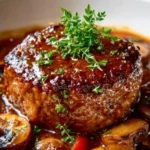
Traditional Salisbury Steak
- Total Time: 40 minutes
- Yield: 4 servings 1x
- Diet: None
Description
Learn how to make dependable, flavorful Salisbury steak with this comprehensive guide that includes historical context, troubleshooting tactics, and advanced techniques.
Ingredients
- 1.5 lb ground beef (80/20)
- 1 small onion, finely chopped (or 1 tsp onion powder)
- 1 egg, beaten
- 3/4 cup breadcrumbs or crushed crackers
- 1 tbsp Worcestershire sauce
- 1 tsp Dijon mustard
- Salt (1 tsp) and black pepper (1/2 tsp)
- 2 tbsp vegetable oil or butter for searing
- For gravy:
- 2 tbsp butter
- 2 tbsp all-purpose flour
- 2 cups beef stock (or 1 cup stock + 1 cup water)
- 1 tbsp Worcestershire sauce
- Salt and pepper to taste
Instructions
- Gently combine ground beef, onion, egg, breadcrumbs, Worcestershire sauce, mustard, salt, and pepper. Shape into 4 oblong patties.
- Heat oil in a skillet over medium-high heat. Sear patties for 3-4 minutes per side until browned.
- Remove patties and prepare gravy: lower heat, melt butter, add flour, whisk for 1-2 minutes, then whisk in beef stock and simmer for 3-5 minutes.
- Return patties to the gravy, spoon sauce over them, cover, and simmer for 5-8 minutes.
- Check internal temperature (aim for 160°F), remove patties, and let rest for 5 minutes before serving.
Notes
Chill patties briefly before cooking to maintain shape and avoid overmixing the meat for tender results.
- Prep Time: 15 minutes
- Cook Time: 25 minutes
- Category: Main Course
- Method: Stovetop
- Cuisine: American
Nutrition
- Serving Size: 1 patty
- Calories: 400
- Sugar: 2g
- Sodium: 600mg
- Fat: 20g
- Saturated Fat: 8g
- Unsaturated Fat: 10g
- Trans Fat: 0g
- Carbohydrates: 32g
- Fiber: 2g
- Protein: 25g
- Cholesterol: 90mg