
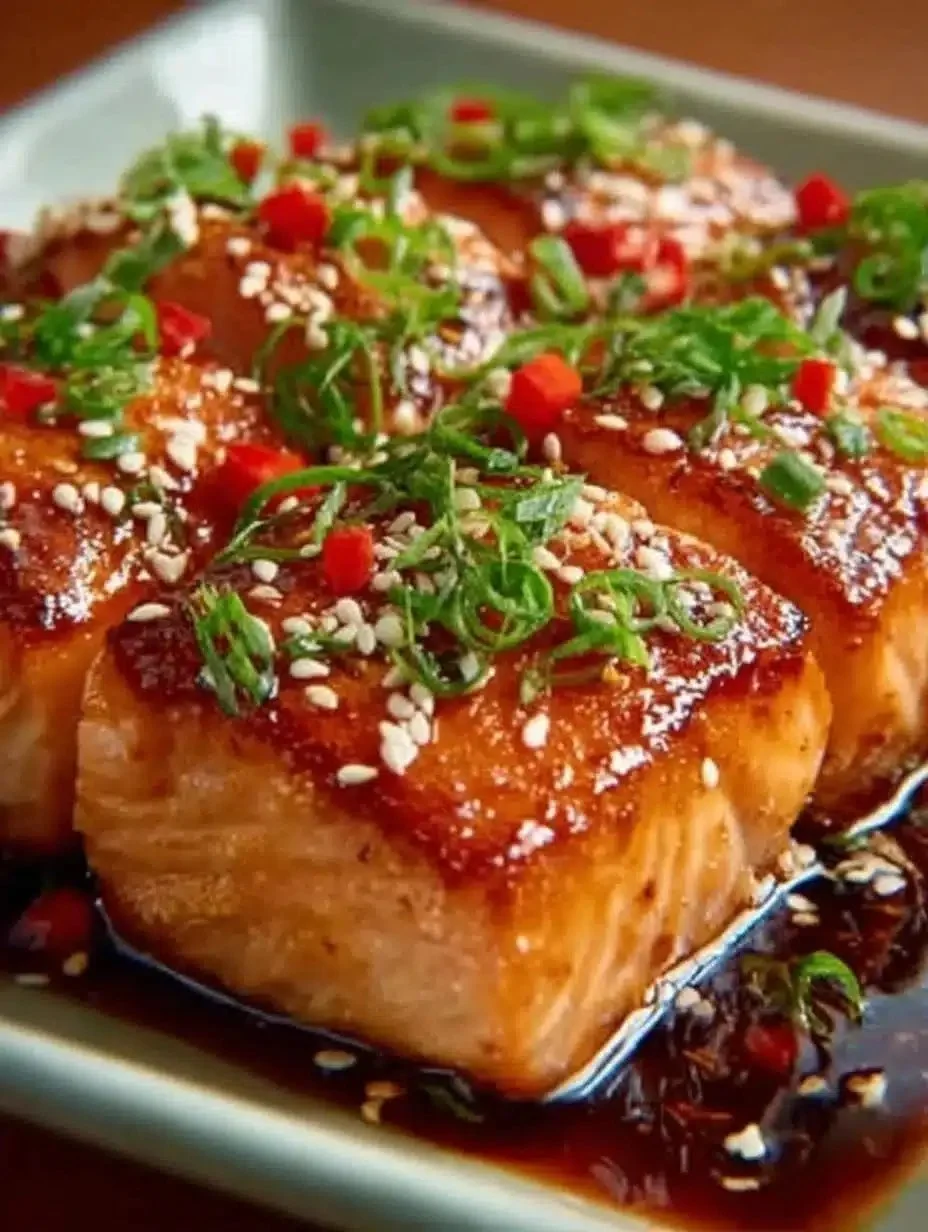
Orange Teriyaki Salmon — Sticky Citrus Glaze
Bright, sticky, and fragrant, Orange Teriyaki Salmon caramelizes into a glossy finish in under 30 minutes. This recipe brings a citrus lift to classic teriyaki, balancing sweet orange, soy umami, and toasted sesame. I refined the glaze over many tests in a small restaurant kitchen and again at home until the balance stayed bright without becoming cloying. After testing this version eight times with different citrus ratios and honey-for-maple swaps, I settled on the combination below for steady results and an easy weeknight rhythm. If you like a fruit-forward teriyaki, you’ll also enjoy a fruity cousin like Mango Teriyaki Salmon. Read on for a clear ingredient breakdown, precise timings, and pro tips so your fillets come out glossy every time.
Why This Recipe Works
- Balanced acid-to-sugar ratio: fresh orange juice and a touch of rice vinegar cut the honey’s sweetness so the glaze brightens the salmon rather than masking it.
- Reduced and thickened glaze: simmering concentrates flavor and allows the glaze to stick and caramelize instead of running off.
- High-heat finish: broiling or searing creates Maillard browning at the surface for texture and flavor.
- Cornstarch slurry stabilizes the glaze so it clings to the fish when glazed; no runny sauce.
- Simple technique with repeatable cues: timings and internal temp guidance reduce guesswork.
Ingredients Breakdown
- Salmon fillets, skin-on, 680 g (24 oz) total — four 170 g (6 oz) portions. Skin-on helps protect the flesh from overcooking and crisps under high heat. Pat dry for better browning.
- Fresh orange juice, 120 ml (½ cup) — brightens and provides citrus aromatics. Fresh juice is essential; concentrate will taste flat.
- Soy sauce, 60 ml (¼ cup) — the salt and umami backbone. For lower sodium, use low-sodium soy sauce but taste before adding salt.
- Mirin, 30 ml (2 Tbsp) — adds sweet acidity and shine. If unavailable, replace with 1 Tbsp rice vinegar + 1 Tbsp sugar.
- Honey, 30 g (2 Tbsp) — natural sweetener that helps caramelize. You can use maple syrup, but the glaze will have a deeper flavor.
- Rice vinegar, 15 ml (1 Tbsp) — balances sweetness.
- Fresh ginger, 10 g (2 tsp) grated — adds warmth and bite.
- Garlic, 2 cloves (6 g) minced — savory depth.
- Sesame oil, 5 ml (1 tsp) — finish for aroma.
- Cornstarch slurry: 8 g (1 tsp) cornstarch + 15 ml (1 Tbsp) water — thickens glaze. Do not skip; otherwise the glaze will be too thin.
- Toasted sesame seeds, 1 Tbsp (optional) — garnish for texture.
- Neutral oil for searing, 15 ml (1 Tbsp) — high smoke point (grapeseed or canola).
- Salt: 1–2 g (1/4–1/2 tsp) to season fillets. Use Diamond Crystal kosher salt if possible; if you use Morton’s, halve the quantity as Morton’s is denser.
Substitutions and impact warnings:
- Gluten-free: use tamari instead of soy sauce. The flavor will be similar but slightly less sweet.
- Paleo: swap coconut aminos for soy sauce and maple syrup for honey. The glaze will be darker and less salty.
- No mirin: use rice vinegar + sugar; the finish will be slightly less glossy.
Air-fryer teriyaki chicken uses similar glaze ideas if you want to reuse this sauce for other proteins.
Essential Equipment
- Baking sheet and wire rack — a rack allows air to circulate and crisp the skin. If you don’t have a rack, use a foil-lined sheet and flip halfway through.
- Small saucepan — to reduce the glaze.
- Whisk and heatproof spoon — for mixing and stirring.
- Instant-read thermometer — essential for precise doneness.
- Small bowl for cornstarch slurry.
- Nonstick or stainless skillet (if pan-searing) — stainless gives better fond for glazing.
- Tongs or fish spatula — to handle fillets gently.
If you only have an air fryer, you can adapt times (see Variations).
Step-by-Step Instructions
This recipe makes 4 servings. It takes about 15 minutes prep, 12 minutes active cooking, 15 minutes inactive (resting/marinade), total time roughly 42 minutes.
Step 1: Score and season the fish
Lightly score the skin of 4 salmon fillets (170 g / 6 oz each) with 1–2 shallow cuts. Pat the fillets very dry and season both sides with 1–2 g (1/4–1/2 tsp) kosher salt. Let sit 10–15 minutes to draw out surface moisture; this promotes crisping. This is a quick, important step for texture.
Step 2: Make the orange teriyaki glaze
In a small saucepan combine 120 ml (1/2 cup) fresh orange juice, 60 ml (1/4 cup) soy sauce, 30 ml (2 Tbsp) mirin, 30 g (2 Tbsp) honey, 15 ml (1 Tbsp) rice vinegar, 10 g (2 tsp) grated ginger, and 2 cloves (6 g) minced garlic. Bring to a gentle simmer over medium heat, then reduce to medium-low and simmer 6–8 minutes until fragrant and slightly reduced. Stir frequently for even reduction.
Step 3: Thicken and finish the glaze
Whisk 8 g (1 tsp) cornstarch with 15 ml (1 Tbsp) cold water. Slowly whisk the slurry into the simmering glaze. Cook 1–2 minutes until the glaze thickens and coats the back of a spoon. Remove from heat and whisk in 5 ml (1 tsp) sesame oil. Taste and adjust: add 1/4 tsp more soy for salt, or 1 tsp honey for more sweetness. Do not over-reduce — the glaze will continue to thicken as it cools.
Step 4: Broil or sear the salmon
Preheat your broiler on high and place an oven rack 10–12 cm (4–5 inches) from the heat. If broiling: place fillets skin-side down on a wire rack set over a baking sheet. Brush each fillet with 15–20 ml (1–1¼ Tbsp) glaze. Broil for 6–8 minutes, watching closely. Finish with another thin brush of glaze and broil 30–60 seconds to caramelize the top. Salmon is done at 60°C (140°F) for medium, or 63°C (145°F) for fully cooked; expect about 6–9 minutes total under the broiler depending on thickness.
If pan-searing: heat 15 ml (1 Tbsp) neutral oil in a skillet over medium-high until shimmering. Place fillets skin-side down and cook 3–4 minutes without moving, until the skin is crisp and the side is opaque about two-thirds of the way up. Flip and cook 1–2 minutes more. Brush with glaze and cook 30–60 seconds to set.
Step 5: Rest and finish
Remove salmon from heat and let rest 2–3 minutes. Brush once more with glaze and sprinkle with 1 Tbsp toasted sesame seeds and thinly sliced scallions if desired. Resting lets juices redistribute and the glaze adhere. Serve immediately.
Expert Tips & Pro Techniques
- Salt early, but sparingly: salt draws moisture. Pat dry and salt 10–15 minutes before cooking for crisp skin without drying the flesh.
- Common mistake: glazing too early. If you brush on glaze and immediately broil, sugars can burn. Apply a thin coat, broil, then apply a final brush for shine.
- Use an instant-read thermometer: cook to 60°C (140°F) for moist, slightly rosy salmon. Overcooking is the most common failure.
- Make-ahead: reduce the glaze fully and refrigerate up to 4 days. Reheat gently and add a splash of orange juice if it’s too thick.
- Home pro trick: for an even crust, finish under a hot broiler for 30–60 seconds rather than extended broiling; you get caramelization without overcooking the interior.
- For crispy skin when pan-searing: press the fillet gently with a spatula for the first 20 seconds to ensure full skin contact.
- Reuse the glaze: simmer leftover glaze to a boil for one minute to kill bacteria if it contacted raw fish, then cool. Or reserve a separate portion before glazing to use as a garnish sauce.
BBQ salmon cooks with a similar glaze principle if you want to take this to the grill.
Storage & Reheating
- Refrigerator: Store cooled salmon in an airtight container for up to 3 days. Store glaze separately in a sealed jar for up to 4 days.
- Freezer: Salmon freezes okay for 2 months. Wrap each fillet tightly in plastic wrap and place in a freezer bag. Thaw overnight in the fridge before reheating.
- Reheating: Reheat gently in a 175°C (350°F) oven for 8–10 minutes until warmed through. To retain texture, re-glaze during the final minute. Avoid microwaving — it makes the flesh rubbery and the glaze runny.
Variations & Substitutions
- Gluten-Free Version: Use 60 ml (1/4 cup) tamari instead of soy sauce. Keep all other ratios the same. No cornstarch changes required for thickening.
- Spicy Orange Teriyaki: Add 1–2 tsp sriracha or 10 g (1 Tbsp) gochujang to the glaze while simmering. Flavor becomes bolder; balance with an extra 1 tsp honey if too hot.
- Air-Fryer Adaptation: Preheat air fryer to 200°C (400°F). Brush fillets with glaze and air-fry skin-side down for 7–9 minutes, checking doneness at 60°C (140°F). The texture is slightly different but quick.
- Citrus Swap: Replace half the orange juice with 60 ml (1/4 cup) pineapple juice for a tropical note. The glaze will be sweeter; reduce honey to 15 g (1 Tbsp).
- Baked (Gentle Finish): Bake at 200°C (400°F) for 8–10 minutes; finish with a 1-minute broil to caramelize the top if desired. Baking yields a more even cook and less char.
Serving Suggestions & Pairings
- Rice and greens: Serve with steamed jasmine rice and quickly sautéed bok choy for an easy dinner. For a twist, pair with our Chili-Lime Baked Salmon sides like cilantro-lime slaw.
- Salad bowl: Flake warm salmon over mixed greens, cucumber, and shredded carrot; drizzle leftover glaze as dressing.
- Beverage pairing: A crisp Riesling or a citrusy light beer matches the glaze’s sweetness.
- Garnish ideas: Sliced scallions, toasted sesame seeds, and thin orange zest strips add color and aroma.
Nutrition Information
Per serving (serving size: 1 fillet, recipe makes 4 servings)
- Calories: 430 kcal
- Total Fat: 22 g
- Saturated Fat: 5 g
- Cholesterol: 105 mg
- Sodium: 720 mg
- Total Carbohydrates: 18 g
- Dietary Fiber: 0.5 g
- Sugars: 15 g
- Protein: 36 g
Nutrition values are estimates. Actual values may vary based on specific ingredients and preparation methods.
Frequently Asked Questions
Q: Why did my salmon glaze burn under the broiler?
A: Sugars burn quickly. Apply a thin initial coat and broil for short bursts (30–60 seconds). Add a final glaze after broiling. Also watch the distance from the broiler; move the rack down if it chars too fast.
Q: Can I make this without honey or sweetener?
A: Yes. Reduce the orange juice by 30 ml (2 Tbsp) and increase mirin to 45 ml (3 Tbsp) for sweetness. The glaze will be less viscous and slightly less caramelized.
Q: Can I double this recipe for a crowd?
A: Yes. Double all ingredients and simmer the glaze a bit longer to reduce. If broiling many fillets, cook in batches or use multiple racks to avoid crowding; timing per fillet stays the same.
Q: Can I prepare this the night before?
A: Make the glaze the night before and keep it refrigerated. Salt and score the fish and keep it wrapped on a tray in the fridge. Bring the fish to room temp for 10–15 minutes before cooking.
Q: How long does cooked glazed salmon keep in the fridge?
A: Store in an airtight container for up to 3 days. If you plan to keep pieces longer, freeze within 24 hours.
Q: Is it safe to reuse glaze that touched raw salmon?
A: No. If the glaze contacted raw fish, bring it to a rolling boil for at least one minute to kill bacteria, then cool before using. Safer: reserve a separate portion of glaze before glazing raw fish.
Q: My salmon is dry. How do I avoid that?
A: Overcooking is the usual cause. Use an instant-read thermometer and remove at 60°C (140°F) for moist results. Thinner fillets need less time; maintain high initial heat for crisping and short finish times.
Conclusion
This Orange Teriyaki Salmon is a quick way to add bright, sticky citrus to your weeknight rotation. If you want a shorter prep or a slightly different take, see this Easy Orange Glazed Salmon (20 Minute Meal!) – Chef Savvy for a rapid variation. For a paleo-friendly baked approach that uses similar flavors, try this Orange Teriyaki Baked Salmon – Cooked & Loved. Enjoy the glossy finish and the bright orange notes — and don’t forget the thermometer for perfect results.
Print
Orange Teriyaki Salmon
- Total Time: 42 minutes
- Yield: 4 servings 1x
- Diet: Gluten-Free, Dairy-Free
Description
Bright and sticky, this Orange Teriyaki Salmon features a delicious citrus glaze that caramelizes beautifully, ready in under 30 minutes.
Ingredients
- 680 g (24 oz) skin-on salmon fillets, cut into 4 portions
- 120 ml (½ cup) fresh orange juice
- 60 ml (¼ cup) soy sauce
- 30 ml (2 Tbsp) mirin
- 30 g (2 Tbsp) honey
- 15 ml (1 Tbsp) rice vinegar
- 10 g (2 tsp) grated fresh ginger
- 2 cloves (6 g) minced garlic
- 5 ml (1 tsp) sesame oil
- 8 g (1 tsp) cornstarch + 15 ml (1 Tbsp) water (for slurry)
- 1 Tbsp toasted sesame seeds (optional)
- 15 ml (1 Tbsp) neutral oil for searing
- 1–2 g (1/4–1/2 tsp) salt to season fillets
Instructions
- Score the skin of the salmon fillets with shallow cuts and pat them dry. Season with salt and let sit for 10–15 minutes.
- Combine orange juice, soy sauce, mirin, honey, rice vinegar, ginger, and garlic in a small saucepan over medium heat. Bring to a gentle simmer.
- Simmer the glaze for 6–8 minutes, stirring frequently.
- Whisk cornstarch with water and stir into the glaze. Cook for 1–2 minutes until thickened.
- Broil or sear the salmon: For broiling, bake skin-side down on a wire rack set over a baking sheet and glaze. Broil for 6–8 minutes. For pan-searing, cook skin-side down in heated oil until crispy, then flip and glaze.
- Rest the salmon for 2–3 minutes before serving, garnished with sesame seeds if desired.
Notes
For best results, use fresh orange juice and an instant-read thermometer to avoid overcooking the salmon.
- Prep Time: 15 minutes
- Cook Time: 12 minutes
- Category: Main Course
- Method: Broiling or Searing
- Cuisine: Asian
Nutrition
- Serving Size: 1 fillet
- Calories: 430
- Sugar: 15g
- Sodium: 720mg
- Fat: 22g
- Saturated Fat: 5g
- Unsaturated Fat: 15g
- Trans Fat: 0g
- Carbohydrates: 18g
- Fiber: 0.5g
- Protein: 36g
- Cholesterol: 105mg