
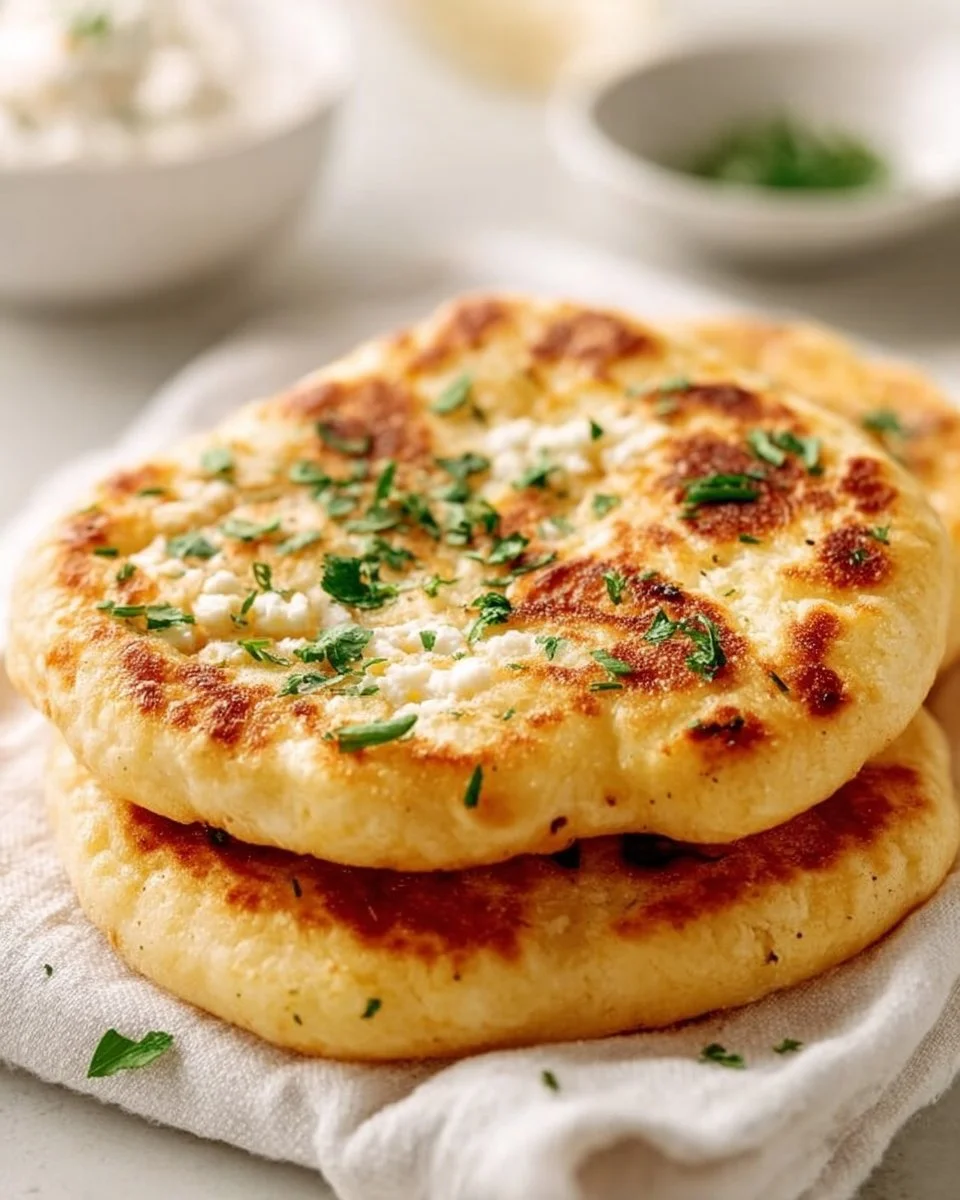
Cottage Cheese Flatbread — Healthy High-Protein Flatbread
Warm, golden, and slightly tangy — this cottage cheese flatbread is crisp at the edges and soft in the middle. After testing this version 8 times with different cottage cheeses and flours, I settled on a mix that gives the best texture and flavor. I developed this during menu testing for a small café, and it’s a reliable, fast way to get a high-protein bread substitute on the table. It’s great for breakfast, a light lunch, or a snack. If you want topping ideas, try the savory combos in this cottage cheese flatbread variations article for inspiration. Read on for the full recipe, clear technique notes, and storage tips so you can make these any night of the week.
Why this recipe works
- The simple batter combines cottage cheese and egg to create structure without yeast, yielding a tender crumb and fast cook time.
- A small amount of baking powder gives lift and light air pockets while keeping the flatbread thin enough to crisp.
- Using part all-purpose and part whole wheat adds flavor and color without heaviness.
- A hot skillet (or griddle) creates a quick Maillard reaction for crisp, golden edges.
- Resting the batter briefly hydrates the flour and makes the dough easier to handle.
Ingredients breakdown
- Dry mix
- 200 g (1 1/2 cups) all-purpose flour — provides structure. You can use 170 g (1 1/2 cups) of 1:1 gluten-free blend for a gluten-free version, but expect slightly more fragility.
- 30 g (1/4 cup) whole-wheat flour — adds nuttiness and color. You may omit for a softer, paler flatbread.
- 1 tsp baking powder (4 g) — gives a little lift; do not increase or the crumb becomes cakey.
- 1/2 tsp Diamond Crystal kosher salt (or 3/8 tsp Morton’s) — salt enhances flavor. If you use Morton’s, reduce to half because it is denser.
- Wet mix
- 225 g (1 cup) full-fat cottage cheese — brings moisture, tang, and protein. Low-fat cottage cheese will make a slightly drier crumb.
- 1 large egg (50 g) — binds and enriches the dough. For an egg-free option, see Variations.
- 30 ml (2 tbsp) extra-virgin olive oil — tenderizes and crisps the crust.
- Optional toppings and flavorings
- Fresh herbs, sliced cherry tomatoes, crumbled feta, za’atar, or a light smear of pesto. Add toppings after cooking or finish under a broiler for 1–2 minutes if you want melted cheese.
Essential equipment
- 10–12 inch heavy skillet or cast-iron pan (not a lightweight nonstick) — holds and distributes heat for even browning.
- Mixing bowl and rubber spatula.
- Kitchen scale (recommended) — for accurate dry measurements.
- Rolling pin or your hands for patting dough thin.
- Baking sheet or cooling rack.
- If you don’t have a cast-iron pan, use a heavy stainless steel skillet or preheat a griddle; a pizza stone is a good alternative on a hot oven.
Step-by-step instructions
Prep Time: 10 minutes — Cook Time: 12 minutes — Inactive Time: None — Total Time: 22 minutes — Servings: 4 flatbreads
Step 1: Measure and mix dry ingredients
Weigh 200 g (1 1/2 cups) all-purpose flour, 30 g (1/4 cup) whole-wheat flour, 1 tsp baking powder (4 g), and 1/2 tsp kosher salt into a bowl. Whisk for 20–30 seconds until uniform. This ensures even rise and consistent seasoning.
Step 2: Blend cottage cheese and wet ingredients
In a separate bowl, combine 225 g (1 cup) full-fat cottage cheese, 1 large egg (50 g), and 30 ml (2 tbsp) olive oil. Pulse with a fork or whisk until mostly smooth, about 30–45 seconds. Small curds are fine — they add light texture.
Step 3: Combine wet and dry
Pour wet into dry and fold with a spatula until a shaggy dough forms, about 20–30 seconds. Do not overmix — stop as soon as no dry flour is visible. The dough will be slightly sticky but workable.
Step 4: Shape the flatbreads
Divide dough into 4 equal pieces (about 150 g / 5.3 oz each). On a lightly floured surface, press or roll each piece to a 7–8 inch (18–20 cm) circle, about 4–6 mm thick. If dough resists, let rest 5 minutes. Resting relaxes the gluten and makes shaping easier.
Step 5: Heat the pan and cook
Preheat a 10–12 inch cast-iron skillet over medium-high until hot, about 3 minutes. Brush with 5 ml (1 tsp) olive oil. Cook one flatbread at a time for 2–3 minutes per side, pressing gently with a spatula, until golden brown and crisp at the edges. Repeat. Total cook time per flatbread: 4–6 minutes.
Step 6: Add toppings and finish
If using melting cheese or delicate toppings, transfer cooked flatbreads to a baking sheet and broil 1–2 minutes at 230°C (450°F) until cheese melts. For fresh toppings like herbs or tomatoes, add immediately after cooking. Serve warm.
Expert Tips & Pro Techniques
- Common mistake: Overworking the dough. If you knead or mix too long it becomes tough. Mix just until combined.
- Use a hot heavy pan. A cold pan yields pale, soft flatbread. Heat the skillet for 3 minutes to get a good sear.
- Make-ahead: Shape the dough into discs, wrap tightly, and refrigerate up to 24 hours. Cook straight from the fridge; add 30–60 seconds to the cook time.
- Professional trick: For extra airiness, fold a tablespoon of lightly beaten egg white into the batter before shaping. This adds light bubbles without changing flavor.
- For a crisper crust, finish the cooked flatbreads briefly on a baking stone in a 230°C (450°F) oven for 3 minutes.
- If toppings make the flatbread soggy, serve them on the side or add fresh items just before eating.
Storage & reheating
- Refrigerator: Store cooled flatbreads in an airtight container or zip-top bag for up to 3 days. Separate layers with parchment to avoid sticking.
- Freezer: Yes — these freeze well. Cool completely, wrap individually in plastic, and freeze up to 2 months. Thaw overnight in the fridge.
- Reheating: Reheat in a 175°C (350°F) oven for 6–8 minutes or in a skillet over medium for 2–3 minutes per side. Avoid microwaving — it makes the bread chewy and limp.
Variations & substitutions
- Gluten-Free Version: Replace the 200 g all-purpose + 30 g whole-wheat with 230 g (2 cups) 1:1 gluten-free flour blend. Add 1/4 tsp xanthan gum if your blend lacks it. Baking time is the same, but handle gently.
- Vegan Option: Replace egg with 60 g (1/4 cup) aquafaba (chickpea liquid) whipped slightly, and use a firm vegan cottage-cheese alternative or blended silken tofu (225 g / 1 cup). Texture will be softer; cook a little longer per side.
- Pizza-Style Flatbread: Top with 60 g (1/4 cup) tomato sauce, 60 g (1/2 cup) shredded mozzarella, and bake at 230°C (450°F) for 4–6 minutes until cheese melts.
- Herb & Garlic: Add 1 tsp dried oregano and 1 minced garlic clove to the wet mix. Keep flour ratios the same. This adds aromatic depth without extra steps.
- High-Fiber Boost: Replace 30 g whole-wheat flour with 30 g oat bran. The dough will absorb more moisture; add 1–2 tbsp water if it feels too dry.
Serving suggestions & pairings
- Serve with a crisp salad and lemon vinaigrette for a light meal.
- Top with smoked salmon, capers, and dill for a brunch-ready plate.
- Pair with roasted vegetables or our 10 cottage cheese bowl ideas for extra protein and color.
- For a taco-style meal, roll the flatbread around spiced fillings inspired by our protein taco bowl combos.
Nutrition information (per serving)
Serving size: 1 flatbread — Serves 4
- Calories: 290 kcal
- Total Fat: 12 g
- Saturated Fat: 3 g
- Cholesterol: 95 mg
- Sodium: 420 mg
- Total Carbohydrates: 32 g
- Dietary Fiber: 3 g
- Sugars: 3 g
- Protein: 16 g
Nutrition values are estimates. Actual values may vary based on specific ingredients and preparation methods.
Frequently asked questions
Q: Why did my flatbread turn out dense?
A: Dense flatbreads often mean the dough was overmixed or the pan wasn’t hot enough. Mix until just combined and heat the skillet for 3 minutes before cooking.
Q: Can I make this without eggs?
A: Yes. Replace the egg with 60 g (1/4 cup) aquafaba or 60 g (1/4 cup) mashed banana for a binder. Texture will be different; aquafaba is closest to egg.
Q: Can I double this recipe?
A: Yes. Double all ingredients and cook in batches. If making a large batch, divide dough before shaping to keep handling easy.
Q: Can I prepare this the night before?
A: Absolutely. Shape the dough into discs, wrap tightly, and store in the fridge for up to 24 hours. Add 30–60 seconds to the cook time if cooking cold.
Q: How long does this keep in the fridge?
A: Stored airtight, flatbreads keep 3 days in the fridge. For longer storage, freeze up to 2 months.
Q: What cottage cheese is best to use?
A: Full-fat small-curd cottage cheese gives the creamiest texture and best flavor. Low-fat types work but can yield a drier crumb.
Q: Will these crisp up again after freezing?
A: Yes. Reheat in a skillet or oven rather than the microwave for best crispness. A quick 2–3 minutes per side in a hot pan restores texture.
Conclusion
If you want to compare technique notes or try a viral variant, see this tested Cottage Cheese Flatbread Recipe by The Protein Chef for another straightforward version. For a social-media-tested take with topping ideas, check the Viral Cottage Cheese Flatbread Recipe from Andy’s East Coast Kitchen.
Print
Cottage Cheese Flatbread
- Total Time: 22 minutes
- Yield: 4 flatbreads 1x
- Diet: Vegetarian
Description
Warm, golden, and slightly tangy cottage cheese flatbread that is crisp at the edges and soft in the middle, perfect for a high-protein bread substitute.
Ingredients
- 200 g (1 1/2 cups) all-purpose flour
- 30 g (1/4 cup) whole-wheat flour
- 1 tsp baking powder (4 g)
- 1/2 tsp Diamond Crystal kosher salt
- 225 g (1 cup) full-fat cottage cheese
- 1 large egg (50 g)
- 30 ml (2 tbsp) extra-virgin olive oil
Instructions
- Measure and mix dry ingredients: Combine flour, whole-wheat flour, baking powder, and salt in a bowl and whisk until uniform.
- Blend cottage cheese and wet ingredients: In a separate bowl, whisk together cottage cheese, egg, and olive oil until mostly smooth.
- Combine wet and dry: Pour the wet mixture into the dry ingredients and fold until just combined.
- Shape the flatbreads: Divide dough into 4 equal pieces and roll each piece into a circle about 7–8 inches in diameter.
- Heat the pan and cook: Preheat a skillet over medium-high heat, brush with olive oil, and cook each flatbread for 2–3 minutes per side until golden brown.
- Add toppings and finish: Optionally, broil cooked flatbreads with toppings for 1–2 minutes and serve warm.
Notes
Avoid overmixing to prevent tough flatbreads. Resting the dough can help with handling.
- Prep Time: 10 minutes
- Cook Time: 12 minutes
- Category: Bread
- Method: Cooking
- Cuisine: American
Nutrition
- Serving Size: 1 flatbread
- Calories: 290
- Sugar: 3g
- Sodium: 420mg
- Fat: 12g
- Saturated Fat: 3g
- Unsaturated Fat: 7g
- Trans Fat: 0g
- Carbohydrates: 32g
- Fiber: 3g
- Protein: 16g
- Cholesterol: 95mg