
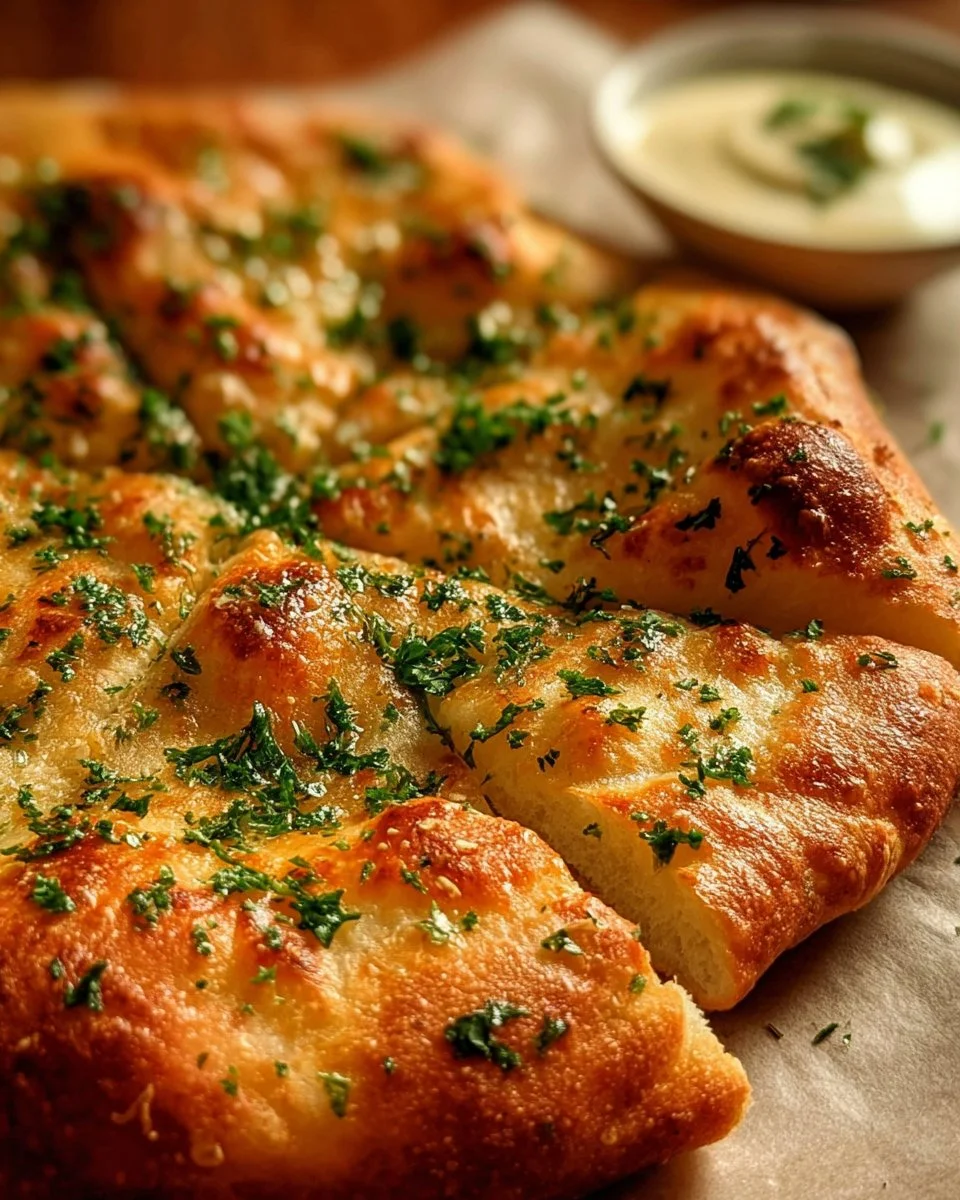
Cottage Cheese Flatbread — Simple High-Protein Recipe
Warm, golden flatbreads with a tender, slightly tangy crumb and a crisp edge make a weeknight meal feel special. Cottage Cheese Flatbread is surprising: it uses cottage cheese and eggs to build moisture and protein while keeping the dough light. After testing this version eight times with different flours and resting times, I landed on a reliable ratio that makes six medium flatbreads with minimal fuss. I developed and refined this technique while teaching quick-bread labs in a small bistro kitchen, so it works under pressure and for home cooks. If you want a quick no-yeast flatbread that doubles as sandwich bread, pizza base, or a dip vehicle, this is it — and you can find a few inspiring variations on a related collection here: cottage cheese flatbread ideas. Read on for precise measures, timing, and pro tips to get it right the first time.
Why This Recipe Works
- Cottage cheese hydrates the dough while adding protein; curds break down and create tender pockets.
- Eggs act as both binder and leavening, producing a lift without yeast or long fermentation.
- A short rest (10 minutes) lets flour absorb liquid for a better texture and easier rolling.
- Pan-searing builds a crisp, caramelized exterior while keeping the interior soft.
- A small amount of baking powder gives consistent rise across different flour brands.
Ingredients Breakdown
- 250 g (1 cup) full-fat cottage cheese — Moisture and tang. Use well-drained if your cottage cheese is very wet; excess liquid will make the dough too sticky. Low-fat cottage cheese works but produces a firmer crumb.
- 2 large eggs (about 100 g / 3.5 oz total) — Bind and help the bread rise. For an egg-free swap, see the variations below.
- 200 g (1 1/2 cups) all-purpose flour — Structure and chew. You can replace up to 25% with whole-wheat flour for nuttiness; expect a denser texture.
- 8 g (1 tsp) baking powder — Ensures lightness. Do not skip.
- 3 g (1/2 tsp) fine salt — Seasoning. If using Diamond Crystal kosher salt, use 1 tsp instead.
- 15 ml (1 tbsp) olive oil, plus extra for cooking — Fat for tenderness and to crisp the crust.
- Optional: 15 g (1/4 cup) grated Parmesan or 10 g (2 tbsp) chopped fresh herbs — For flavor.
Substitutions with impact warnings:
- Greek yogurt can replace cottage cheese 1:1, but the bread will be tangier and less textured.
- Gluten-free: use a 1:1 gluten-free flour blend and add 1/2 tsp xanthan gum; baking time may increase by 2–4 minutes.
- For low-sodium, reduce added salt to 1/4 tsp and use a salty cheese sparingly.
For more cottage-cheese-centric recipes and bowls, see this curated list: 10 delicious cottage cheese bowl recipes.
Essential Equipment
- Large mixing bowl — For combining wet and dry ingredients.
- Whisk and rubber spatula — For breaking down curds and folding.
- Kitchen scale (recommended) — Weighing flour gives consistent results.
- Nonstick skillet or cast-iron pan (10–12-inch / 25–30 cm) — For even browning.
- Rolling pin or your hands for flattening dough — A rolling pin gives a thinner, more even flatbread.
- Measuring cups/spoons — For liquids and small amounts.
- Baking sheet (optional) — If you prefer to finish the breads in the oven.
If you don’t have a scale, use the volume equivalents listed above. If you lack a cast-iron pan, a heavy stainless skillet works well; a thin pan will brown too quickly.
Prep time 15 minutes, Cook time 10 minutes (active), Inactive time 10 minutes, Total time about 35 minutes. Makes 6 medium flatbreads; serving size 1 flatbread.
Step 1: Drain and mash the cottage cheese
Place 250 g (1 cup) cottage cheese in a fine mesh sieve for 5 minutes if it’s very wet, or tip it into a bowl and mash with a fork until mostly smooth, about 1–2 minutes. Add 2 large eggs and whisk until uniform, about 30 seconds. The mixture should be homogeneous with small curd pieces remaining as texture cues.
Step 2: Combine dry ingredients
In a separate bowl, whisk together 200 g (1 1/2 cups) all-purpose flour, 8 g (1 tsp) baking powder, and 3 g (1/2 tsp) salt for 10–15 seconds. Sifting is optional but helps aerate the flour. Mixing the dry ingredients first guarantees even distribution of the leavening.
Step 3: Form the dough
Fold the dry mix into the cottage-cheese-and-egg mixture with a spatula until a shaggy dough forms, about 30–45 seconds. Add 15 ml (1 tbsp) olive oil and stir for 10 seconds. Do not overmix — stop as soon as no dry pockets remain. The dough will be slightly sticky but manageable.
Step 4: Rest and portion
Let the dough rest for 10 minutes at room temperature to allow the flour to hydrate and the baking powder to begin reacting. Divide the dough into 6 equal portions (about 100 g / 3.5 oz each) and shape each into a ball, 2–3 minutes. Resting makes the dough easier to roll and improves interior texture.
Step 5: Shape and preheat the pan
Heat a 10–12-inch (25–30 cm) skillet over medium heat until a drop of water dances, about 3 minutes. Lightly flour your work surface and roll each ball to 5–6 mm (about 1/4 inch) thick, or press into rounds with your fingers for a rustic look, about 1–2 minutes per flatbread. If using a cast-iron pan, reduce heat slightly after preheating to avoid scorching.
Step 6: Cook until golden
Add 1 tsp oil to the pan and cook each flatbread 2–3 minutes per side until golden-brown and puffed in places; total cooking time about 4–6 minutes per bread, flipping once. Transfer cooked breads to a wire rack to keep them crisp. If the center is dense after cooking, lower the heat and cook an extra 30–60 seconds per side.
Expert Tips & Pro Techniques
- Resting tip: Letting the dough rest 10 minutes hydrates the flour. Skipping this step often yields gummy centers.
- Common mistake: Cooking on too-high heat scorches the outside before the inside cooks. Use medium heat and preheat thoroughly.
- Make-ahead: Cook the flatbreads fully, cool completely, then stack with parchment between layers and refrigerate up to 3 days or freeze up to 2 months.
- Pro technique for home: After pan-searing, finish two breads at 180°C (350°F) for 3–4 minutes to ensure even heat without extra oil.
- Flavor hack: Add 10 g (2 tbsp) finely chopped rosemary or 15 g (1/4 cup) grated Parmesan for immediate depth.
- Texture control: For chewier breads, swap 50 g (1/3 cup) AP flour for 50 g (1/3 cup) bread flour.
Storage & Reheating
- Refrigerator: Cool completely, then store in an airtight container or zip-top bag for up to 3 days.
- Freezer: Stack cooled flatbreads with parchment between each, place in a freezer-safe bag, and freeze up to 2 months. Thaw in the refrigerator overnight.
- Reheating: Reheat in a 175°C (350°F) oven for 6–8 minutes or in a skillet over medium for 1–2 minutes per side. Avoid microwaving for long — it makes them rubbery; 10–15 seconds can help if you’re in a rush.
Variations & Substitutions
- Gluten-Free Version: Replace all-purpose flour with a 1:1 gluten-free blend (such as Bob’s Red Mill) and add 1/2 tsp xanthan gum. Shape slightly thicker; bake/pan-fry 1–2 minutes longer per side.
- Herb & Garlic: Add 10 g (2 tbsp) chopped fresh herbs and 1 small clove minced garlic to the dough. Everything else stays the same; flavor intensifies slightly, so omit salty cheese.
- Egg-Free Option: Use a flax "egg" (1 tbsp ground flax + 3 tbsp water for each egg) and add 1/2 tsp baking soda on top of the baking powder. Texture will be denser and the color slightly darker.
- Mini Flatbreads (for dips): Divide dough into 12 smaller pieces and cook 1–2 minutes per side; these are perfect for snacking. No other changes.
- Bowl-Friendly Topping Swap: Use these flatbreads as a base for cottage-cheese bowls; see related taco-bowl combinations for inspiration: cottage cheese taco bowl combos.
Serving Suggestions & Pairings
- Quick meal: Top a warm flatbread with hummus, grilled vegetables, and a spoonful of cottage cheese for a protein-rich lunch. For more bowl ideas, check these protein-forward options: protein taco bowl ideas.
- Breakfast: Fold with smoked salmon, dill, and lemon zest.
- Appetizer: Cut into wedges and serve with tzatziki, roasted pepper dip, or a simple olive oil and za’atar drizzle.
- Beverage pairing: A crisp white wine or a bright, herbal iced tea complements the tang of the cottage cheese.
Nutrition Information
Per serving (1 flatbread). Recipe makes 6 servings.
- Calories: 210 kcal
- Total Fat: 10 g
- Saturated Fat: 3 g
- Cholesterol: 95 mg
- Sodium: 220 mg
- Total Carbohydrates: 18 g
- Dietary Fiber: 1 g
- Sugars: 2 g
- Protein: 12 g
Nutrition values are estimates. Actual values may vary based on specific ingredients and preparation methods.
Frequently Asked Questions
Q: Why did my flatbread turn out dense or gummy?
A: Dense centers come from insufficient resting or undercooking. Let the dough rest 10 minutes and cook at medium heat until golden; lower heat if the outside browns too fast.
Q: Can I make this without eggs?
A: Yes. Use a flax egg (1 tbsp ground flax + 3 tbsp water per egg) and add 1/2 tsp baking soda. Expect a slightly denser, darker bread.
Q: Can I double this recipe?
A: Yes. Double all ingredients and divide the dough into more portions. Work in batches when cooking to avoid crowding the pan.
Q: Can I prepare this the night before?
A: You can mix the dough and refrigerate for up to 12 hours. Bring to room temperature before shaping and cook as directed; resting time indoors may change slightly.
Q: How long does this keep in the fridge?
A: Stored in an airtight container, cooked flatbreads keep 3 days in the refrigerator.
Q: Is this recipe suitable for high-protein diets?
A: Yes. Cottage cheese and eggs give each flatbread about 12 g protein, making it a solid choice for higher-protein meals.
Q: What flour works best if I want a chewier or crisper result?
A: Bread flour (higher protein) yields chewier texture; all-purpose makes tender breads. For crispier edges, roll thinner and cook slightly longer on medium heat.
Conclusion
These flatbreads are a fast, flexible way to put cottage cheese front and center in your meals. They’re ideal for sandwiches, pizza bases, or simply as a dipper for spreads. If you want to compare another tested version, see the Cottage Cheese Flatbread Recipe – The Protein Chef for a slightly different technique. For a viral take and extra inspiration, check out Viral Cottage Cheese Flatbread Recipe | Andy’s East Coast Kitchen.
Print
Cottage Cheese Flatbread
- Total Time: 35 minutes
- Yield: 6 servings 1x
- Diet: Vegetarian
Description
Warm and golden flatbreads made with cottage cheese and eggs, perfect for sandwiches or as a dip vehicle.
Ingredients
- 250 g (1 cup) full-fat cottage cheese
- 2 large eggs
- 200 g (1 1/2 cups) all-purpose flour
- 8 g (1 tsp) baking powder
- 3 g (1/2 tsp) fine salt
- 15 ml (1 tbsp) olive oil, plus extra for cooking
- Optional: 15 g (1/4 cup) grated Parmesan or 10 g (2 tbsp) chopped fresh herbs
Instructions
- Drain and mash the cottage cheese and whisk with eggs until uniform.
- In a separate bowl, whisk together flour, baking powder, and salt.
- Fold the dry ingredients into the cottage cheese mixture and add olive oil, mixing until a shaggy dough forms.
- Let the dough rest for 10 minutes, then divide into 6 portions and shape each into a ball.
- Heat a skillet over medium heat, roll each ball into a flatbread, and cook for 2–3 minutes per side until golden.
- Transfer cooked flatbreads to a wire rack.
Notes
For best results, allow the dough to rest and do not skip the baking powder.
- Prep Time: 15 minutes
- Cook Time: 10 minutes
- Category: Bread
- Method: Pan-Frying
- Cuisine: International
Nutrition
- Serving Size: 1 flatbread
- Calories: 210
- Sugar: 2g
- Sodium: 220mg
- Fat: 10g
- Saturated Fat: 3g
- Unsaturated Fat: 7g
- Trans Fat: 0g
- Carbohydrates: 18g
- Fiber: 1g
- Protein: 12g
- Cholesterol: 95mg