
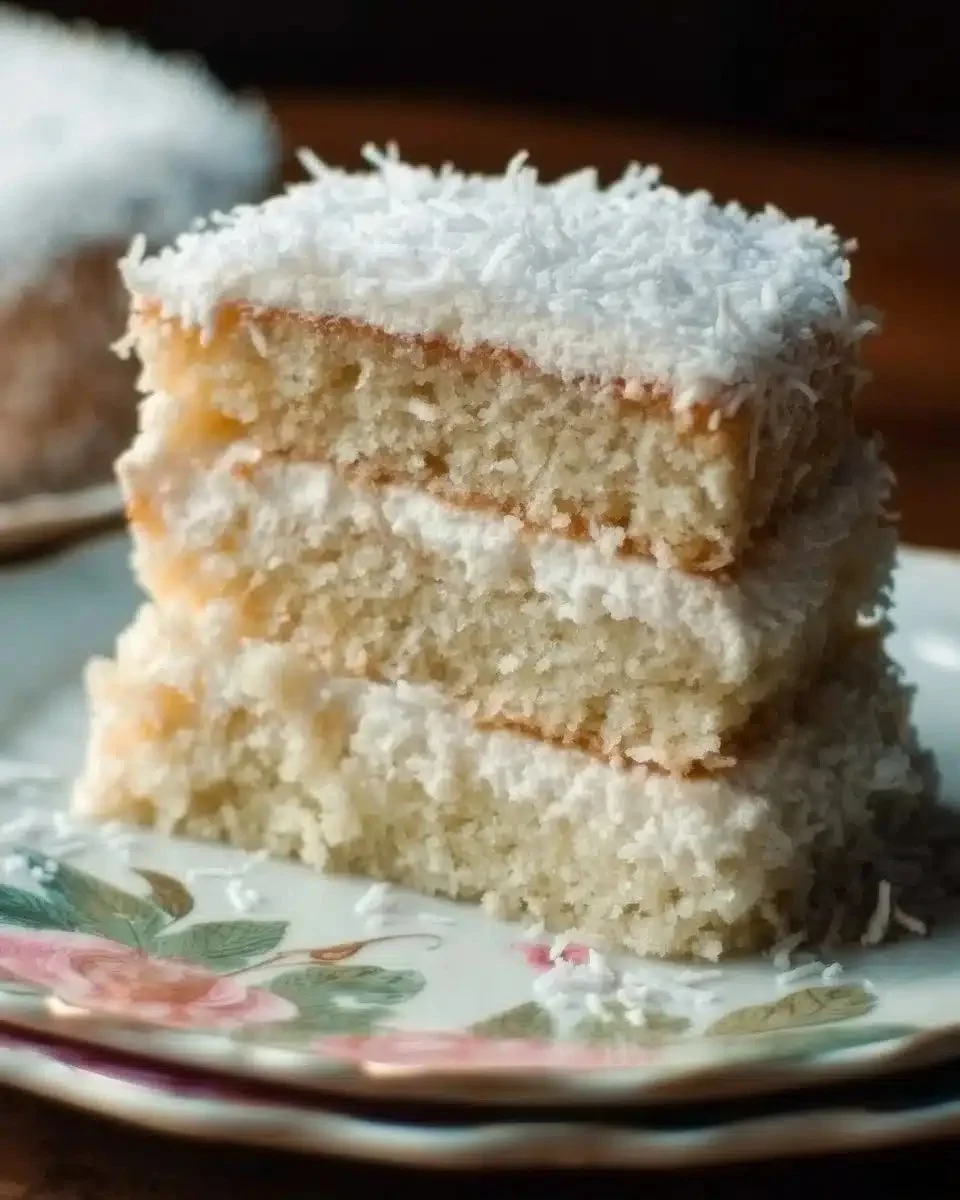
Classic Coconut Cake — Light, Fluffy Slice
The first bite is all coconut perfume and pillowy crumb — this classic coconut cake is bright, tender, and not too sweet. After testing this recipe eight times with different flours and coconut varieties, I landed on a balance of rich butter, tangy buttermilk, and shredded coconut that gives moist crumb without greasiness. I refined the frosting while working in pastry kitchens, and the straight-forward method here works for home bakers who want an impressive dessert without fuss. If you love coconut desserts, you might also enjoy my take on a Mango Coconut Cheesecake, which uses similar coconut flavoring and texture principles. Read on for an easy timeline, precise measurements, and professional tips to ensure success.
Why This Recipe Works
- Balanced fat and acid: butter plus buttermilk gives richness and tender crumb while the acid slightly breaks down gluten for softness.
- Layered coconut flavor: coconut milk in the batter and sweetened shredded coconut in the frosting reinforce coconut without sogginess.
- Controlled sugar: enough to caramelize the edges for color while letting coconut shine.
- Simple creaming method: beating butter and sugar creates a stable emulsion for even rise and fine crumb.
- Chill-and-level trick: resting the layers makes clean, even stacking and neater frosting.
Ingredients Breakdown
- All-purpose flour (300 g / 2 1/2 cups): Provides structure. Measure by weight for consistent results. Do not pack cups.
- Substitution: Use 300 g (2 1/2 cups) 1:1 gluten-free blend plus 1/2 tsp xanthan gum; texture will be slightly denser.
- Granulated sugar (400 g / 2 cups): Sweetens and helps with browning. Reducing sugar will produce a paler crust and less caramel flavor.
- Unsalted butter (227 g / 1 cup), room temperature: Fat and flavor. Using salted butter will add extra sodium — adjust salt accordingly.
- Eggs (4 large, 200 g without shells): Provide structure and emulsification. For egg-free version, see Variations.
- Buttermilk (240 ml / 1 cup): Adds acidity and moisture for a tender crumb. If you don’t have buttermilk, use 240 ml (1 cup) whole milk + 1 tbsp lemon juice, rest 5 minutes.
- Coconut milk (120 ml / 1/2 cup canned, full fat): Concentrates coconut flavor in the batter without making it heavy. Shake the can first.
- Baking powder (12 g / 2 1/2 tsp) and baking soda (4 g / 1 tsp): Leaveners for rise. Do not omit.
- Kosher salt (6 g / 1 tsp Diamond Crystal; if using Morton’s, use 1/2 tsp): Enhances flavor — accurate here matters.
- Vanilla extract (10 ml / 2 tsp): Rounds out the coconut. Use pure vanilla for best flavor.
- Sweetened shredded coconut (200 g / 2 cups) for frosting/decoration: Adds texture and coconut bite. Use fine or medium shred; large flakes can overwhelm the cake.
- For the frosting: Unsalted butter (454 g / 2 cups), cream cheese optional (225 g / 1 cup) for tang (see notes), powdered sugar (900 g / 7–8 cups), coconut milk (60–80 ml / 1/4–1/3 cup) to adjust consistency, pinch of salt.
- Brand note: Use reliable powdered sugar brands; if your sugar is very powdered, reduce whipping time slightly to avoid buttery graininess.
Almond pound cake techniques can help if you prefer a firmer crumb or nutty twist.
Essential Equipment
- Two 9-inch (23 cm) round cake pans (or three 8-inch pans for thinner layers). The 9-inch pans are important because the batter volume fills them correctly.
- Stand mixer or handheld mixer for creaming and frosting. You can whisk by hand, but expect more arm work.
- Kitchen scale — highly recommended for accurate dry measurement.
- Offset spatula and bench scraper for smooth frosting. If you don’t have a bench scraper, use a large flat spatula or the back of a spoon.
- Instant-read thermometer for checking doneness if you’re unsure.
- Fine mesh sieve for sifting flour and powdered sugar.
- Cooling racks.
If you enjoy bite-sized coconut desserts, our keto coconut macaroons use a simple scoop-and-bake method that pairs well with this cake.
Step-by-Step Instructions
Makes 12 servings. Prep Time: 30 minutes. Cook Time: 30 minutes. Inactive Time: 30 minutes cooling. Total Time: 1 hour.
Step 1: Preheat and prepare pans
Preheat the oven to 175°C (350°F). Grease and line two 9-inch (23 cm) round cake pans and dust with flour or use parchment rounds. Chill pans briefly if using an older oven to prevent early browning.
Step 2: Cream butter and sugar
Beat 227 g (1 cup) unsalted butter with 400 g (2 cups) granulated sugar for 3–4 minutes until pale and fluffy, scraping the bowl every minute. This aeration is key for a light crumb.
Step 3: Add eggs and extracts
Add 4 large eggs, one at a time, beating 20–30 seconds after each addition until incorporated. Mix in 10 ml (2 tsp) vanilla and 120 ml (1/2 cup) coconut milk. Do not overmix.
Step 4: Combine dry ingredients
Whisk together 300 g (2 1/2 cups) all-purpose flour, 12 g (2 1/2 tsp) baking powder, 4 g (1 tsp) baking soda, and 6 g (1 tsp Diamond Crystal kosher salt) in a bowl. Sift if lumpy. This ensures even rise and texture.
Step 5: Alternate dry and wet additions
With the mixer on low, add the dry mixture in three parts alternating with 240 ml (1 cup) buttermilk: dry, wet, dry, wet, dry. Mix each addition just until the flour disappears — about 10–12 seconds per addition. Do not overmix — stop as soon as no dry flour is visible.
Step 6: Bake until set
Divide batter between prepared pans and smooth the tops. Bake at 175°C (350°F) for 25–30 minutes, rotating halfway, until a toothpick comes out clean or center reads 96–99°C (205–210°F) and edges pull slightly from the pan. Remove from oven.
Step 7: Cool fully before frosting
Let cakes rest in pans for 10 minutes, then invert onto racks and cool completely, about 30 minutes. Chilling the layers for 20 minutes before leveling will make trimming easier.
Step 8: Make the coconut buttercream
Beat 454 g (2 cups) unsalted butter until creamy, 2–3 minutes. Gradually add 900 g (about 7–8 cups) powdered sugar, alternating with 60–80 ml (1/4–1/3 cup) coconut milk to reach a spreadable consistency. Add 225 g (1 cup) cream cheese if you like tang; beat until smooth, about 2 minutes.
Step 9: Assemble and frost
Level layers with a serrated knife if needed. Place the first layer on a cake board, add 1 cup (about 240 g) frosting, spread evenly, then stack and repeat. Use an offset spatula and bench scraper for a smooth finish. Press 200 g (2 cups) sweetened shredded coconut onto the sides and top.
Step 10: Toast the coconut (optional)
For toasted coconut, spread flakes on a baking sheet and toast at 175°C (350°F) for 4–6 minutes, stirring every 90 seconds, until golden and fragrant. Cool before using. Sprinkle on top just before serving.
Expert Tips & Pro Techniques
- Measure by weight: Dry ingredients measured by weight deliver consistent results every time.
- Common mistake — overmixing: If you whisk too long after adding flour, the cake becomes tight and dense. Mix only until combined.
- Use room-temperature ingredients: Butter and eggs at room temp incorporate more easily and produce a smoother batter.
- Make-ahead: You can bake layers up to 48 hours ahead, wrap tightly in plastic wrap, and refrigerate. Bring to room temperature before frosting.
- Professional technique adapted for home kitchens: Chill layers for 20–30 minutes before frosting to prevent crumbs from mixing into the buttercream. It’s the same principle pastry chefs use to get clean coats.
- Frosting texture: If your buttercream feels greasy, refrigerate 15 minutes and re-whip for 30–60 seconds.
- Flavor boost: Brush each layer with 1–2 tbsp light coconut rum or simple syrup brushed with coconut extract for extra moisture and flavor.
Storage & Reheating
- Refrigerator: Store in an airtight cake carrier or covered loosely with plastic wrap for up to 4 days. If you used cream cheese in the frosting, consume within 3 days.
- Freezer: Yes, this cake freezes well. Freeze unfrosted layers wrapped tightly in plastic and foil for up to 3 months. Thaw in the refrigerator overnight, then bring to room temperature before frosting. You can also freeze a fully frosted cake for up to 2 months; protect with a dome and double-wrap with plastic.
- Reheating: Serve at room temperature. If slices seem cold, warm gently in a 150°C (300°F) oven for 6–8 minutes. Avoid microwaving — the crumb can become gummy.
Variations & Substitutions
- Coconut-Lime Version: Replace 60 ml (1/4 cup) coconut milk with 60 ml (1/4 cup) fresh lime juice in the frosting and add 2 tbsp lime zest to the batter. Keep baking time the same.
- Dairy-Free Version: Use vegan butter and full-fat coconut milk for both batter and frosting; replace eggs with flax eggs (4 tbsp ground flax + 12 tbsp water, rest 10 minutes). Baking time may increase by 3–5 minutes.
- Egg-Free (Vegan) Version: Use 4 flax eggs as above and 240 ml (1 cup) vegan yogurt instead of buttermilk. Expect a slightly denser crumb.
- Gluten-Free Version: Replace flour with a 1:1 gluten-free blend (300 g) and add 1/2 tsp xanthan gum. Baking time may increase by 3–5 minutes.
- Berry-Coconut Twist: Fold 150 g (1 cup) chopped fresh blackberries between layers and garnish with a few whole berries. For a dramatic contrast, try a blackberry velvet cake-style drizzle.
Serving Suggestions & Pairings
- Beverage: Serve with lightly roasted coffee or a floral Earl Grey tea to balance the sweetness.
- Side: A scoop of slightly tart ice cream complements the cake — try pairing with rose pistachio cheesecake ice cream for a pretty contrast.
- Garnish: Top with a few shards of toasted coconut and a few lime zest curls for brightness.
- Occasion: This cake is excellent for birthdays, showers, or anytime you want a tropical centerpiece.
Nutrition Information
Per serving (1 slice, recipe serves 12):
- Calories: 560 kcal
- Total Fat: 32 g
- Saturated Fat: 18 g
- Cholesterol: 120 mg
- Sodium: 220 mg
- Total Carbohydrates: 62 g
- Dietary Fiber: 1.5 g
- Sugars: 42 g
- Protein: 6 g
Nutrition values are estimates. Actual values may vary based on specific ingredients and preparation methods.
Frequently Asked Questions
Q: Why did my cake turn out dry?
A: Dry cake usually means overbaking or overmixing. Check at 22–25 minutes and use a toothpick; remove when moist crumbs cling. Also measure flour by weight — too much flour makes dryness.
Q: Can I make this without eggs?
A: Yes. Replace each egg with 1 tbsp ground flaxseed + 3 tbsp water, mixed and rested for 5–10 minutes. Expect a slightly denser crumb and add 1–2 minutes to baking time.
Q: Can I double this recipe?
A: Yes, the recipe scales well. Use two 9×13-inch pans or multiple 9-inch pans. Increase bake time slightly for larger pans and monitor doneness with a toothpick.
Q: Can I prepare this the night before?
A: Absolutely. Bake layers and store wrapped overnight. Frost the next day for the freshest appearance. You can also fully assemble and refrigerate; bring to room temperature before serving.
Q: How long does this keep in the fridge?
A: Properly stored in an airtight container or covered cake carrier, the cake keeps up to 4 days. If it contains cream cheese, use within 3 days.
Q: Can I use sweetened vs. unsweetened shredded coconut in the batter?
A: I recommend using unsweetened in the batter and sweetened on top for control over sweetness. Using only sweetened coconut can make the cake cloying.
Q: What’s the best way to level layers cleanly?
A: Chill layers for 20–30 minutes, then use a serrated knife or cake leveler. A chilled layer cuts cleaner and produces fewer crumbs.
Conclusion
This recipe gives you a reliably tender, deeply coconut-flavored cake with a silky buttercream and crunchy coconut finish. For another approach to a tall, ultra-moist coconut cake with helpful photo steps, compare notes at Fluffy & Moist Coconut Cake – Sally’s Baking Addiction. If you want a different, classic home-baker version to compare texture and technique, see Classic Coconut Cake – The Pancake Princess.
Print
Classic Coconut Cake
- Total Time: 90 minutes
- Yield: 12 servings 1x
- Diet: Vegetarian
Description
A light and fluffy coconut cake that is bright, tender, and perfect for any occasion.
Ingredients
- 300 g (2 1/2 cups) all-purpose flour
- 400 g (2 cups) granulated sugar
- 227 g (1 cup) unsalted butter, room temperature
- 4 large eggs (200 g without shells)
- 240 ml (1 cup) buttermilk
- 120 ml (1/2 cup) coconut milk, canned, full fat
- 12 g (2 1/2 tsp) baking powder
- 4 g (1 tsp) baking soda
- 6 g (1 tsp) kosher salt
- 10 ml (2 tsp) vanilla extract
- 200 g (2 cups) sweetened shredded coconut
- 454 g (2 cups) unsalted butter for frosting
- 225 g (1 cup) cream cheese (optional)
- 900 g (7–8 cups) powdered sugar
- 60–80 ml (1/4–1/3 cup) coconut milk (for consistency)
- Pinch of salt
Instructions
- Preheat the oven to 175°C (350°F). Grease and line two 9-inch round cake pans and dust with flour.
- Beat 227 g unsalted butter with 400 g granulated sugar for 3–4 minutes until pale and fluffy.
- Add 4 large eggs, one at a time, and mix in 10 ml vanilla and 120 ml coconut milk.
- Whisk together 300 g all-purpose flour, 12 g baking powder, 4 g baking soda, and 6 g kosher salt.
- With the mixer on low, add the dry mixture alternating with 240 ml buttermilk.
- Divide the batter between prepared pans and smooth the tops.
- Bake at 175°C for 25–30 minutes until a toothpick comes out clean.
- Let the cakes cool in pans for 10 minutes, then invert onto racks to cool completely.
- Beat 454 g unsalted butter until creamy and gradually add 900 g powdered sugar, alternating with coconut milk.
- Level layers and stack with frosting in between. Press 200 g sweetened shredded coconut onto the sides and top.
- For toasted coconut, spread flakes on a baking sheet and toast at 175°C for 4-6 minutes.
Notes
Use reliable powdered sugar brands to avoid graininess. Make sure all ingredients are at room temperature for best results.
- Prep Time: 30 minutes
- Cook Time: 30 minutes
- Category: Dessert
- Method: Baking
- Cuisine: American
Nutrition
- Serving Size: 1 slice
- Calories: 560
- Sugar: 42g
- Sodium: 220mg
- Fat: 32g
- Saturated Fat: 18g
- Unsaturated Fat: 10g
- Trans Fat: 0g
- Carbohydrates: 62g
- Fiber: 1.5g
- Protein: 6g
- Cholesterol: 120mg