
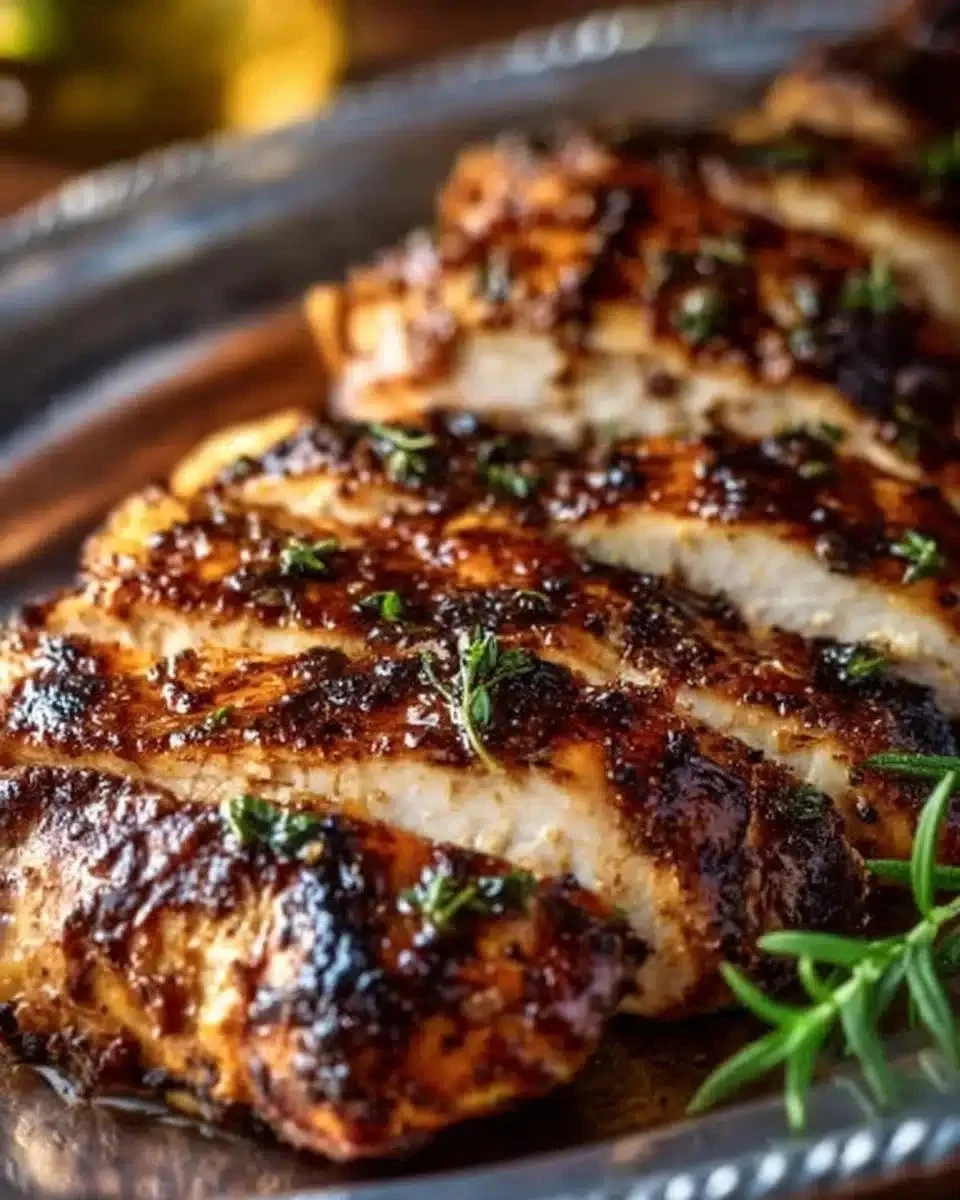
Balsamic Baked Chicken Breast
The tangy-sweet glaze caramelizes into a glossy coating that smells like a restaurant dinner. This balsamic baked chicken breast stays juicy under a sticky, flavorful glaze and takes just a few pantry staples. I developed and refined this version over many weeknight tests and during a season cooking for a small bistro. After testing this recipe eight times with different vinegar brands and pan finishes, I landed on timings and techniques that keep the meat tender and the glaze balanced. Read on for clear steps, precise temperatures, and tips to avoid dry chicken. This method turns plain chicken breasts into a quick, impressive main course you’ll want on repeat. If you like speedy chicken dinners, try our sizzling quick Mexican chicken breast for another weeknight option.
Why This Recipe Works
- The acidity in balsamic vinegar breaks down muscle fibers slightly, helping the chicken stay tender.
- A short marinate (15–30 minutes) seasons the meat without making it mushy.
- Broiling at the end caramelizes sugars for a glossy finish and deeper flavor.
- A resting period lets juices redistribute so slices stay moist.
- Cooking to an internal temperature of 74°C (165°F) avoids dryness while ensuring safety.
Ingredients Breakdown
- Boneless, skinless chicken breasts (680 g / 1.5 lb total; about 4 small breasts): Chicken breasts cook faster and more evenly when they are similar in size. Pound thicker pieces to even thickness for even cooking.
- Balsamic vinegar (60 ml / 1/4 cup): Provides sweet-acid balance. Use a good-quality aged balsamic for depth. Avoid imitation balsamic — flavor will be thin.
- Olive oil (30 ml / 2 tbsp): Helps the glaze set and promotes browning.
- Honey (30 g / 2 tbsp): Adds sweetness and helps the glaze caramelize. Maple syrup can substitute, but the color will be darker.
- Dijon mustard (15 g / 1 tbsp): Adds tang and helps the glaze emulsify.
- Garlic (2 cloves, minced ≈ 6 g): Fresh garlic gives bright aroma. Use 1/2 tsp garlic powder if fresh isn’t available.
- Soy sauce or tamari (15 ml / 1 tbsp): Boosts umami and salt. Use low-sodium soy to control salt.
- Kosher salt (use Diamond Crystal) (5 g / 1 tsp): If using Morton, halve the amount to 1/2 tsp because it’s denser.
- Black pepper (1/2 tsp freshly ground): Adds a subtle heat.
- Fresh herbs: 1 tbsp chopped parsley or basil for garnish. Dried herbs can work, but fresh gives brightness.
Substitutions with impact warnings: - Poultry alternative: Chicken thighs are juicier but take 5–8 minutes longer to cook.
- Gluten-free: Tamari keeps the recipe gluten-free; regular soy sauce contains wheat.
- Honey swap: Maple syrup will make the glaze less glossy and slightly richer.
Essential Equipment
- Baking dish or rimmed baking sheet (30 x 20 cm / 12 x 8 in): Use a rimmed sheet to collect glaze and make broiling easy.
- Meat thermometer (instant-read): Critical. Check toward the end to avoid overcooking.
- Small mixing bowl and whisk: For the glaze.
- Plastic wrap or shallow dish for marinating: For even coating.
- Rolling pin or meat mallet (if needed): To pound thicker breasts to even thickness.
If you don’t have a broiler, finish with a 200°C (400°F) oven for 3–5 minutes to thicken the glaze.
Step-by-Step Instructions
Prep 15 minutes | Cook 25 minutes | Inactive time 15 minutes marinating | Total about 55 minutes | Serves 4
Step 1: Pound and season the chicken
Place 4 boneless, skinless chicken breasts (680 g / 1.5 lb total) between two sheets of plastic. Pound to an even 1.5–2 cm (about 1/2–3/4 in) thickness, about 1–2 minutes per piece. Season both sides lightly with 5 g (1 tsp) kosher salt and 1/2 tsp freshly ground black pepper.
Step 2: Make the balsamic glaze
Whisk together 60 ml (1/4 cup) balsamic vinegar, 30 ml (2 tbsp) olive oil, 30 g (2 tbsp) honey, 15 g (1 tbsp) Dijon mustard, 2 cloves minced garlic (≈6 g), and 15 ml (1 tbsp) soy sauce. Whisk for 20–30 seconds until smooth and glossy.
Step 3: Marinate briefly
Place chicken in a shallow dish and pour half the glaze (about 60 ml / 1/4 cup) over the breasts. Turn to coat, then cover and refrigerate for 15–30 minutes. Do not marinate more than 2 hours — the acid will begin to change the texture.
Step 4: Preheat oven and arrange chicken
Preheat oven to 190°C (375°F). Line a rimmed baking sheet with foil or parchment. Arrange chicken in a single layer, leaving space between pieces. Brush each breast with remaining glaze.
Step 5: Bake until nearly done
Bake for 18–20 minutes, or until an instant-read thermometer inserted into the thickest part reads 68–71°C (155–160°F). This usually takes 18–20 minutes depending on thickness. The chicken should be opaque and the juices should run clear.
Step 6: Broil for glaze and finish
Switch oven to broil on high (or set to 260°C / 500°F if separate). Broil for 2–4 minutes, watching closely, until the glaze bubbles and forms a deep mahogany sheen. Do not walk away — sugars burn quickly under the broiler.
Step 7: Rest and serve
Remove chicken and let rest 5–7 minutes covered loosely with foil. Resting allows juices to redistribute. Slice and spoon any pan juices over the meat. Garnish with chopped parsley or basil and serve.
Expert Tips & Pro Techniques
- Use an instant-read thermometer to hit 74°C (165°F) final temp; pull at 68–71°C (155–160°F) and rest to reach 74°C (165°F) for perfect doneness.
- Common mistake: overmarinating. Acidic marinades longer than 2 hours will make texture mealy. Short marination keeps flavor without damage.
- If breasts vary in size, butterfly thicker ones or pound to even thickness so cooking time is uniform.
- Make-ahead: Marinate up to 2 hours, then refrigerate. Bake just before serving. Alternatively, fully cook and refrigerate for up to 3 days; reheat as below.
- Professional trick: Finish under a hot broiler for a quick Maillard reaction. Broiling mimics restaurant high-heat searing and deepens flavor.
- If you want more glaze, reduce an extra 120 ml (1/2 cup) balsamic with 2 tbsp honey in a small saucepan for 6–8 minutes until thickened, then brush on after broiling.
- For even browning, use a metal rimmed sheet, not a glass dish. Metal conducts heat faster for better caramelization.
- Try using a cast-iron skillet for initial sear on the stovetop for 2 minutes per side, then transfer to oven to finish. This adds a deeper crust.
Pairing idea with baked boneless skinless chicken
Storage & Reheating
- Refrigerator: Store leftover chicken in an airtight container for up to 3–4 days. Keep pan juices separate if possible.
- Freezer: Chicken can be frozen for up to 3 months. Wrap tightly in plastic and foil or use freezer-safe containers. Thaw overnight in the refrigerator before reheating.
- Reheating: Reheat in a 175°C (350°F) oven for 8–12 minutes, until warmed through to 74°C (165°F). To keep glaze glossy, tent with foil for the first 6 minutes then uncover to re-glaze briefly. Avoid microwaving — it can make the meat dry and the glaze dull.
Variations & Substitutions
- Honey-Balsamic Thighs: Use 4 bone-in, skin-on chicken thighs (about 1.2 kg / 2.6 lb). Increase bake time to 30–35 minutes and finish under broiler 3–5 minutes. Skin crisps beautifully with higher fat content.
- Lighter Version (less sugar): Replace honey with 10 g (2 tsp) maple syrup and add 1 tsp orange zest. Bake time unchanged; glaze will be less sticky and more citrus-forward.
- Gluten-Free: Swap soy sauce for 15 ml (1 tbsp) tamari. Flavor remains similar; no other changes needed.
- Grilled Option: Marinate 15–30 minutes, grill over medium-high heat 5–6 minutes per side, flipping once, then rest 5 minutes.
- Spicy Twist: Add 1/4 tsp red pepper flakes to the glaze and serve with a squeeze of lemon. Keep other quantities the same.
Serving Suggestions & Pairings
- Starch: Serve with creamy mashed potatoes or roasted sweet potatoes for a comforting plate.
- Vegetables: A crisp green salad or roasted asparagus provides a bright counterpoint. Try it alongside our 10-minute roasted chicken and vegetables in the air fryer for an easy vegetable side.
- Bread & Grains: Spoon over polenta or serve with crusty bread to mop up glaze.
- Fresh Finish: Top with torn basil or parsley and a light grating of Parmesan if desired.
- For a family-style option, pair with bruschetta chicken casserole flavors to echo tomato and balsamic notes.
Nutrition Information
Per serving (serving size: 1 chicken breast; recipe yields 4 servings)
- Calories: 340 kcal
- Total Fat: 12 g
- Saturated Fat: 2 g
- Cholesterol: 105 mg
- Sodium: 420 mg
- Total Carbohydrates: 18 g
- Dietary Fiber: 0.5 g
- Sugars: 15 g
- Protein: 39 g
Nutrition values are estimates. Actual values may vary based on specific ingredients and preparation methods.
Frequently Asked Questions
Q: Why did my chicken turn out dry?
A: Most dry chicken results from overcooking. Use an instant-read thermometer and remove breasts at 68–71°C (155–160°F). Rest 5–7 minutes; carryover heat will reach 74°C (165°F).
Q: Can I make this without honey?
A: Yes. Replace honey with 30 g (2 tbsp) maple syrup or brown sugar. Maple gives a different sweetness and darker color.
Q: Can I double this recipe?
A: Yes. Double all ingredients and bake on two rimmed sheets in separate oven racks. Rotate sheets halfway through cooking for even heat.
Q: Can I prepare this the night before?
A: You can marinate up to 2 hours. For full prep, cook, then refrigerate; reheat in a 175°C (350°F) oven for 8–12 minutes when ready to serve.
Q: How long does this keep in the fridge?
A: Store cooked chicken in an airtight container for 3–4 days in the refrigerator.
Q: Can I grill instead of baking?
A: Yes. Grill over medium-high heat 5–6 minutes per side, until an internal temperature of 74°C (165°F). Watch for flare-ups because of honey.
Q: Is balsamic necessary, or can I use red wine vinegar?
A: Balsamic adds sweetness and body. Red wine vinegar will be tangier and less glossy; add 1 tbsp honey to compensate.
Conclusion
If you want another take with a slightly different method, check this baked balsamic chicken breast recipe to compare glazing techniques and roast times. For a simpler, quick-marinade approach that leans more on pantry staples, this easy balsamic chicken recipe offers a helpful alternative.
Print
Balsamic Baked Chicken Breast
- Total Time: 55 minutes
- Yield: 4 servings 1x
- Diet: Gluten-Free
Description
This balsamic baked chicken breast is juicy under a tangy glaze, taking just a few pantry staples to create an impressive weeknight dinner.
Ingredients
- 680 g (1.5 lb) boneless, skinless chicken breasts
- 60 ml (1/4 cup) balsamic vinegar
- 30 ml (2 tbsp) olive oil
- 30 g (2 tbsp) honey
- 15 g (1 tbsp) Dijon mustard
- 2 cloves garlic, minced (≈ 6 g)
- 15 ml (1 tbsp) soy sauce or tamari
- 5 g (1 tsp) kosher salt
- 1/2 tsp freshly ground black pepper
- 1 tbsp fresh herbs (parsley or basil) for garnish
Instructions
- Pound and season the chicken: Place chicken breasts between two sheets of plastic and pound to an even thickness. Season with salt and pepper.
- Make the balsamic glaze: Whisk together balsamic vinegar, olive oil, honey, Dijon mustard, garlic, and soy sauce until smooth.
- Marinate briefly: Place chicken in a dish, pour half the glaze over, cover, and refrigerate for 15–30 minutes.
- Preheat oven: Preheat to 190°C (375°F) and arrange chicken on a baking sheet. Brush with remaining glaze.
- Bake until nearly done: Bake for 18–20 minutes until internal temperature reaches 68–71°C (155–160°F).
- Broil for glaze: Switch to broil and broil for 2–4 minutes until the glaze bubbles.
- Rest and serve: Let chicken rest for 5–7 minutes, garnish, and serve.
Notes
Avoid overmarinating as it can make the chicken mushy. An instant-read thermometer is crucial for ensuring perfect doneness.
- Prep Time: 15 minutes
- Cook Time: 25 minutes
- Category: Main Course
- Method: Baking
- Cuisine: Italian
Nutrition
- Serving Size: 1 serving
- Calories: 340
- Sugar: 15g
- Sodium: 420mg
- Fat: 12g
- Saturated Fat: 2g
- Unsaturated Fat: 10g
- Trans Fat: 0g
- Carbohydrates: 18g
- Fiber: 0.5g
- Protein: 39g
- Cholesterol: 105mg