
Introduction
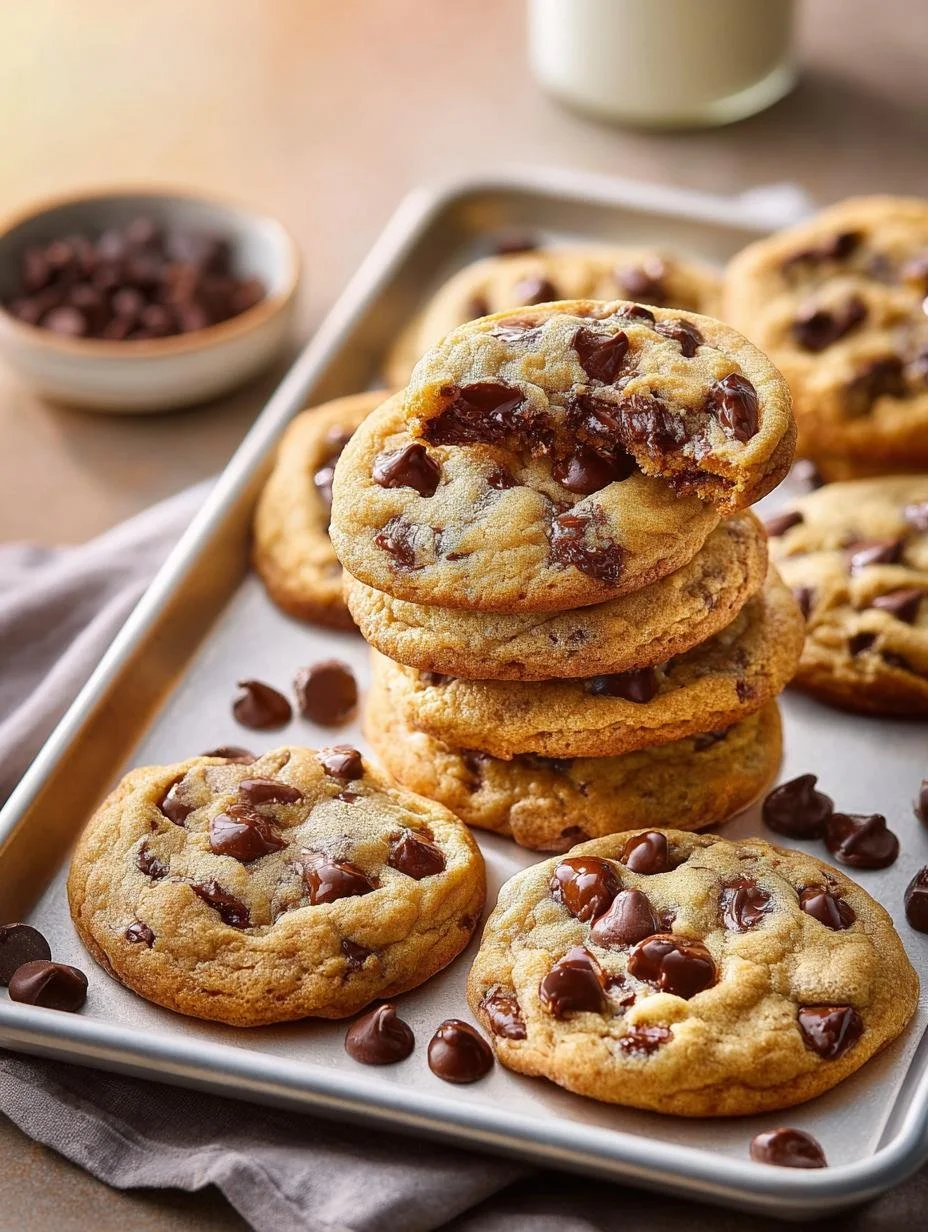
If you’ve ever bitten into a bakery cookie that was perfectly soft in the center, crisp at the edge, and loaded with glossy melted chocolate, you know why people chase that experience. This is a practical, mentor-style Traditional Bakery Style Chocolate Chip Cookies guide designed to teach you how to reproduce—and then customize—those iconic treats at home.
In this guide you’ll gain a grounded understanding of why bakery-style cookies behave the way they do, step-by-step instructions from beginner to advanced, troubleshooting help, and thoughtful variations to match your equipment and taste. Read this once to learn the principles; return to it as your baking library for fine-tuning and experimentation.
What you will get:
- A clear path from fundamentals (ingredients, tools, technique) to advanced adjustments.
- An explanation of the physics and chemistry behind texture and flavor.
- Practical recipes, timing, and pro tips for reliable results.
- Troubleshooting and creative variations you can use immediately.
This isn’t a list of tricks—it’s a systematic approach that helps you understand what matters and why, so you can adapt to any oven, any ingredient, and any preference.
Background & Context
The story of the chocolate chip cookie is surprisingly modern and regional. Born in Massachusetts in the 1930s, the cookie evolved quickly as bakers and shops adapted technique, ingredient proportions, and ovens to local preferences. Large commercial and small artisanal bakeries further shaped the cookie’s profile: some favored cakier textures, others emphasized chew and edge crisp.
When people refer to “bakery style” they usually mean cookies with:
- A tall, slightly domed center
- Soft, almost gooey interior
- Crisper perimeter that gives contrast
- Large, visible chocolate pockets
Understanding the Authentic Bakery Style Chocolate Chip Cookies origin helps clarify why many techniques exist: regional ovens, dough handling, and even ingredient sourcing (butter types, sugar crystal size, chocolate percentages) all influenced distinct results.
From a cultural standpoint, these cookies are both everyday comfort and a symbol of craft. The Classic Bakery Style Chocolate Chip Cookies history is one of adaptation—home cooks learned to replicate bakery textures with home ovens; pastry chefs refined the process to create signature product lines.
Personal note: in my experience working with small bakeries, the biggest shifts in cookie quality came from three places—fat handling (temperature and type), sugar ratio (affecting spread and moisture), and controlled chilling time. Master those three and you can reliably create a bakery profile at home.
Why This Approach Works
This guide emphasizes understanding over memorization. That has three concrete benefits:
- Predictability. When you understand what each ingredient does, you can predict how a change will affect texture or flavor. That reduces failed batches.
- Flexibility. You’ll learn simple substitutions and adjustments so you can adapt recipes for dietary needs or ingredient availability.
- Scalability. Whether you’re baking one sheet or scaling to dozens for an event, the same principles guide proportion and timing.
Why not just follow one perfect recipe? Because ovens, altitudes, ingredient brands, and even humidity vary. A recipe without the underlying why forces guesswork when things go wrong. This approach addresses common doubts—like whether chilling is necessary, or why dough spreads differently between trays—by connecting action to outcome.
Common objections addressed:
- “Chilling takes too long.” Chilling improves flavor and control; the guide offers minimal and advanced chilling methods to fit your schedule.
- “My oven is different.” We cover oven mapping, heat control, and simple tests to calibrate your home equipment.
- “I want cookies fast.” There are valid quick approaches included, alongside the fuller bakery method.
Core Concepts Explained
Break the bakery cookie into five core components: structure, fat, sugar, moisture, and heat. Understand each and you can tune the cookie.
Structure (Flour, Eggs, Leavening)
- Purpose: provide body, trap gas, and create crumb.
- Example: Higher-protein flours (bread or high-gluten) yield more chew; low-protein (cake flour) softens interior.
- Alternative: For softer cookies, use a mix of all-purpose + small amount of cake flour.
Fat (Butter, Shortening, Oils)
- Purpose: tenderness, flavor, spread.
- Clarify: Butter brings flavor and moisture; shortening reduces spread and increases height.
- Substitution tip: Replace 1/4 of butter with shortening to improve doming without losing flavor.
Sugar (White, Brown, Ratios)
- Purpose: sweetness, moisture retention, spread.
- Brown sugar (molasses) holds moisture and creates chew; white sugar increases crispness and spread.
- Rule of thumb: More brown sugar = chewier cookie; more white sugar = thinner, crisper cookie.
Moisture (Eggs, Liquid Additives)
- Purpose: aids emulsification, affects structure and softness.
- Example: Using an extra yolk or adding a small amount of cream can increase richness and chew.
Heat (Oven Temp, Baking Surface)
- Purpose: sets edges, controls rise, dictates caramelization.
- Practical: Higher temperature (e.g., 375–400°F/190–204°C) sets edges quickly and can produce taller centers. Lower temp spreads more and yields flatter cookies.
Substitutions and simplifications:
- For egg-free baking: use flaxseed “egg” (1 tbsp flax + 3 tbsp water per egg) as a binder, but expect slightly different texture.
- Gluten-free: use a 1:1 gluten-free blend with xanthan gum for structure; add a minute to baking time and chill longer.
Tools, Resources, or Foundations
Essentials:
- Digital scale (highly recommended): for consistent results.
- Oven thermometer: many ovens are off by 10–25°F.
- Mixing bowls and hand or stand mixer.
- Baking sheets (light-colored) and parchment or silicone mats.
- Cooling rack.
Optional enhancements:
- Baking stone or steel: evens heat, helps bottom color.
- Cookie scoops (1.5–3 tbsp) for uniform size.
- Dough scraper and bench scraper for tidy handling.
- Instant-read thermometer (for butter temperature checks).
Budget-friendly or beginner alternatives:
- Use a microwave-safe bowl and chill for butter if you can’t cream well by hand.
- Line pans with foil if you don’t have a silicone mat—just spray lightly to prevent sticking.
- Measure by volume if you don’t have a scale; be mindful that flour packing affects results—use the spoon-and-level method.
Brief commentary: A digital scale is perhaps the single best investment. It removes variance in flour measurement that causes inconsistent spread and texture.
Step-by-Step Process
Below is a practical bakery-style workflow. Times are approximate for a standard home kitchen.
Plan and mise en place (15–20 minutes)
- Measure ingredients precisely.
- Soften or cool butter to the target temperature (see pro tips).
- Preheat oven only when dough is ready to bake.
- Time estimate: 15–20 minutes.
Mix and hydrate (10–15 minutes)
- Cream butter and sugars until light and aerated.
- Add eggs one at a time; scrape bowl.
- Fold in dry ingredients until just combined.
- Add chocolate and mix minimally to avoid overdeveloping gluten.
- Time estimate: 10–15 minutes.
Chill and rest (minimum 30 minutes — ideally 24–48 hours)
- Chill dough to firm up fats and hydrate flour.
- Chilling transforms flavor through slow enzymatic reactions and controls spread.
- Time estimate: 30 minutes to 48 hours depending on plan.
Shape and bake (10–16 minutes per batch)
- Scoop uniform balls, allow extra room on tray.
- Bake 10–14 minutes (see H3: Baking specifics).
- Time estimate per batch: 10–16 minutes.
Cool and finish (20–30 minutes)
- Let cookies set on sheet for 5 minutes before moving to a rack.
- Warm cookies may be soft; they firm as cooling continues.
- Time estimate: 20–30 minutes.
Common mistakes + how to avoid them:
- Too warm butter → flat cookies. Use butter at the recommended temperature.
- Overmixing → tough cookies. Stop when dry ingredients are just incorporated.
- Inaccurate oven temp → inconsistent bake. Use an oven thermometer and map hot spots.
Pro tips:
- For taller centers, use a higher initial oven temperature and shift to lower later (see Expert Techniques).
- Always cool baking sheets between batches or rotate pans to prevent carryover heat spread.
H3: Baking specifics — temperatures & timing
- 350°F (177°C): reliable baseline for even bake and good spread.
- 375–400°F (190–204°C): faster edge set, taller center, but watch closely.
- Baking time adjustments: add 1–2 minutes for larger scoops, subtract 1–2 minutes for small cookies.
H3: Shaping & size guidance
- 1.5 tbsp scoop → yields bakery-style medium cookie. Bake ~10–12 min.
- 3 tbsp scoop → thick, café-style cookie. Bake ~12–15 min.
- Uniform size is the single biggest variable between batches—use a scoop.
Expert Techniques & Insights
Advanced bakers can refine texture and flavor using these approaches:
- Browned butter: Clarifies and intensifies nutty flavor. Cool slightly before creaming to preserve some liquid and structure.
- Dough hydration tweak: Add 1–2 tbsp cream or milk to increase chew and richness without increasing egg.
- Double chilling: Chill once after mixing, then scoop and chill again shaped dough. This minimizes spread and improves surface texture.
- Pan rotation and rack positioning: Use the middle rack for the most even bakes. Rotate pans halfway for ovens with hot spots.
- Baking surface: Use a pizza stone or cast iron to bring a stronger bottom heat that crisps edges quickly.
- Controlled caramelization: A sprinkle of coarse salt or a light brush of melted butter on edges after bake intensifies flavor and shine.
Lessons from experience:
- Small changes in sugar ratios and butter temperature yield larger texture changes than swapping chocolate brands.
- Letting dough rest 24–72 hours improves flavor measurably—think of it as a fermentation step that mellows and develops flavor.
Variations & Adaptations
Different contexts require slight rewrites of the method.
Skill-level adaptations:
- Beginner: Follow a single-sheet recipe with minimal chilling; use a 1.5 tbsp scoop and bake at 350°F.
- Intermediate: Try a 24-hour chill and experiment with browned butter.
- Advanced: Adjust sugar ratios, hydration, and baking surface for signature textures.
Dietary and cultural variations:
- Vegan: Replace butter with vegan butter high in fat, replace eggs with flax eggs, chill longer to firm dough.
- Gluten-free: Use a blend with xanthan gum; chill and bake slightly longer.
- Flavor profiles: Add espresso, orange zest, or toasted nuts to shift the cookie from classic to regional variations.
Use-case examples:
- Café sales: Use larger scoops and partial par-bake to finish in-store for a fresh-baked aroma.
- Home gifts: Make smaller, uniformly shaped cookies and package in layers with parchment.
Analysis & Benefits Breakdown
This table summarizes common bakery-style choices, their effects, and trade-offs.
| Choice | Effect on Cookie | Strengths | Limitations |
|—|—:|—|—|
| More brown sugar | Increased chew, darker color | Soft center, better shelf life | Slightly less crisp edge |
| Higher oven temp (375–400°F) | Faster edge set, taller center | Bakery-like dome | Risk of over-brown if not monitored |
| Browned butter | Nutty caramel notes | Depth of flavor | Must cool carefully or alter dough temp |
| Chilling 24–72 hours | Better flavor, controlled spread | Improved texture and flavor | Requires planning |
| Shortening addition | Less spread, taller cookie | Easier doming | Less butter flavor |
Strengths, limitations, and considerations:
- Strength: This method delivers controllable, repeatable bakery-style cookies at home.
- Limitation: It requires planning and slight equipment investments (scale, thermometer).
- Consideration: Time invested in chilling pays large dividends in flavor and texture.
Preparation, Retention & Long-Term Use
How to prepare effectively:
- Batch-plan: Combine dry ingredients for multiple recipes, label containers.
- Time-block: Mix dough in the evening and chill overnight to use the following day.
Retention or reuse strategies:
- Freezing dough: Scoop balls and freeze on a tray. Transfer to a bag and bake from frozen, adding 2–3 minutes.
- Refrigerating: Dough lasts 3–5 days refrigerated; flavor improves but monitor moisture loss.
Longevity of the skill:
- Once you internalize the relationships (sugar ratio, butter temp, chilling), you’ll be able to adapt quickly.
- Keep a notebook of results: oven, flour brand, humidity, and adjustments. Over time you’ll build a personal formula.
Troubleshooting & Common Problems
Problem → Cause → Solution (clear and concise)
- Flat, greasy cookies → butter too warm or too much sugar → chill dough longer; reduce white sugar slightly.
- Too cakey / dry → too much flour or overmixing → measure flour by weight; mix less.
- Centers collapse after baking → underbaked panic move or too much leavening → bake until edges are set; check baking powder/soda.
- Uneven browning → oven hot spots → use an oven thermometer; rotate pans mid-bake.
- Chocolate sinks to bottom → heavy mix-in, wet dough → chill shaped dough; fold in chocolate minimally.
- Tough cookies → overmixing or too much egg → stop mixing when combined; reduce egg or add a yolk rather than a whole egg.
Reassurance: most issues are correctable with one targeted change. Make one adjustment at a time so you can evaluate impact.
FAQ
Q: Do I have to chill the dough?
A: No—short-term (30 minutes) chilling helps manage spread; long-term (24–72 hours) improves flavor. For quick cookies, chill at least 30 minutes.
Q: Can I bake from frozen dough?
A: Yes. Add 2–4 minutes to the bake time and use lower rack for even bottom coloring.
Q: Which chocolate is best?
A: Use high-quality chocolate with 55–70% cacao for balance. Coarsely chopped chocolate or chips both work; large chunks create melty pockets.
Q: Will using a convection oven change things?
A: Convection accelerates browning and moisture loss. Reduce temp by ~25°F (about 15°C) and watch timing.
Q: How do I get a crisp edge and soft center?
A: Use a mix of sugars leaning toward brown, slightly higher oven temp at the start, and shorter total bake time to keep centers soft while edges set.
Q: Can I freeze baked cookies?
A: Yes. Freeze fully cooled cookies in a single layer, then store in airtight containers. Reheat at 300°F for 5–7 minutes to refresh texture.
Q: Why do my cookies spread unevenly?
A: Likely inconsistent dough temperatures or uneven portioning. Chill uniformly and use a scoop for even size.
Q: Is using more butter always better?
A: More butter increases flavor and moistness but also increases spread. Balance with sufficient brown sugar and chilling.
Related Topics & Next Steps
If you want to deepen your skills:
- Learn the science of sugar crystallization and how it affects chew.
- Practice browning butter and tempering for flavor control.
- Explore laminated cookie doughs and enriched doughs for hybrid textures.
- Explore coffee or malt additions to amplify chocolate flavor.
Complementary skills:
- Basic pastry dough handling
- Baking at scale and sheet management
- Ingredient sourcing and chocolate tasting
Suggested next steps:
- Make a baseline batch from this guide.
- Adjust one variable (sugar ratio or butter temp).
- Record and compare outcomes.
Quick Reference Summary
- Use a digital scale for consistent flour measurement.
- Aim for butter at the correct temperature: softened but not greasy for creaming; slightly cooler if you want less spread.
- Increase brown sugar to increase chew; increase white sugar to increase spread and crispness.
- Chill dough—30 minutes minimum, 24–72 hours ideal.
- Bake on light-colored pans and use an oven thermometer.
- Scoop uniformly and use 1.5–3 tbsp portions depending on desired size.
- For tall centers: slightly higher initial temp or partial shortening substitution.
- Freeze scooped dough for on-demand baking.
Conclusion
You now have a full Traditional Bakery Style Chocolate Chip Cookies guide—rooted in history, explained with why-it-works detail, and ready for real-world adaptation. Use the techniques here to build a reliable foundation, then experiment intentionally: change one variable at a time and observe.
If you’d like a recipe to practice the principles immediately, see this reliable practical example at Bakery Style Chocolate Chip Cookies Recipe (Thick, Chewy & Soft). For another high-quality approach and variation ideas, compare methods with The Best Bakery Style Chocolate Chip Cookies – Stuck On Sweet.
If you want, I can now convert this into a reusable system prompt, adapt it into a recipe-focused tutorial, or create a checklist you can use while baking. Which would you prefer next?
Print
Traditional Bakery Style Chocolate Chip Cookies
- Total Time: 34 minutes
- Yield: 24 cookies 1x
- Diet: Vegetarian
Description
Perfectly soft in the center, crisp at the edges, and loaded with glossy melted chocolate, these bakery-style cookies deliver an iconic treat experience.
Ingredients
- 2 1/4 cups all-purpose flour
- 1 cup unsalted butter, softened
- 3/4 cup brown sugar, packed
- 3/4 cup granulated sugar
- 2 large eggs
- 1 tsp vanilla extract
- 1 tsp baking soda
- 1/2 tsp salt
- 2 cups chocolate chips
Instructions
- Preheat your oven to 375°F (190°C).
- In a large bowl, cream together the softened butter, brown sugar, and granulated sugar until light and fluffy.
- Add the eggs one at a time, beating well after each addition, then stir in the vanilla.
- In another bowl, whisk together the flour, baking soda, and salt.
- Gradually add the dry ingredients to the wet ingredients, mixing until just combined.
- Fold in the chocolate chips.
- Chill the dough for at least 30 minutes.
- Scoop uniform balls of dough on a baking sheet lined with parchment paper, spacing them apart.
- Bake for 10-14 minutes, until the edges are golden but the centers are soft.
- Allow to cool on the baking sheet for 5 minutes, then transfer to a wire rack to cool completely.
Notes
For best results, chill the dough for 24-48 hours for enhanced flavor and texture. Use a higher initial baking temperature for taller centers.
- Prep Time: 20 minutes
- Cook Time: 14 minutes
- Category: Dessert
- Method: Baking
- Cuisine: American
Nutrition
- Serving Size: 1 cookie
- Calories: 200
- Sugar: 12g
- Sodium: 150mg
- Fat: 9g
- Saturated Fat: 5g
- Unsaturated Fat: 4g
- Trans Fat: 0g
- Carbohydrates: 30g
- Fiber: 1g
- Protein: 2g
- Cholesterol: 15mg