
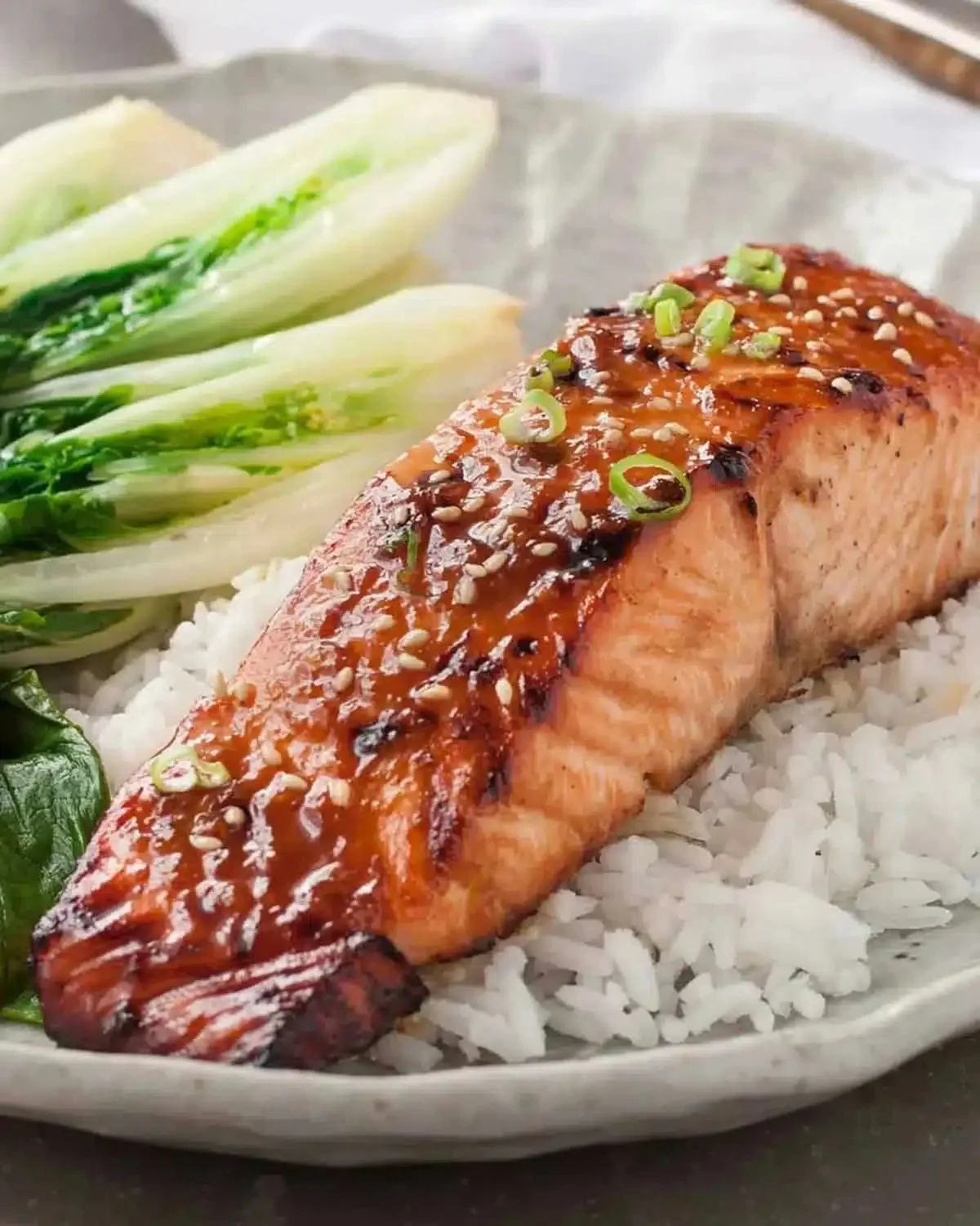
Asian Glazed Salmon — Sticky Maple-Soy Glaze
The maple-scented glaze caramelizes at the edges and makes the salmon glossy and savory on the tongue. Asian Glazed Salmon starts with a simple maple-soy mixture that turns into a sticky, shiny coating in just minutes. I developed this version testing it 8 times to balance sweetness, salt, and acid so the glaze won’t burn before the fish finishes cooking. My background as a trained cook taught me to sear first for texture, then finish in the oven for even doneness — that method is used here. The recipe is forgiving, fast, and built for weeknights, with clear timing and sensory cues so you can cook confidently from start to finish. Try it with a crisp salad or steamed rice and you’ll have a restaurant-style plate at home.
Why This Recipe Works
- The glaze is reduced just enough so sugars caramelize without burning; the result is sticky, not bitter.
- Searing the skin side first creates crisp texture and protects the flesh from overcooking.
- A short oven finish cooks the fillets evenly to tender doneness while keeping the glaze glossy.
- A splash of acid (rice vinegar or lime) balances the maple’s sweetness and brightens flavor.
- Salt timing: salting the fish right before cooking seasons without drawing out moisture.
Ingredients Breakdown
- Salmon fillets — 680 g (24 oz) total; about 170 g (6 oz) per serving. Use center-cut, skin-on fillets for best texture. Skin crisps and helps keep the fish moist.
- Maple syrup — 60 ml (¼ cup). Pure maple syrup gives a clean caramel flavor; pancake syrup will be cloying and overly sweet.
- Low-sodium soy sauce — 45 ml (3 tbsp). Low-sodium keeps the glaze from becoming too salty; if you only have regular soy sauce, reduce to 2 tbsp.
- Rice vinegar — 15 ml (1 tbsp). Adds bright acid to cut sweetness. You can substitute lime juice (½ lime), but the flavor shifts.
- Toasted sesame oil — 5 ml (1 tsp). Adds nutty aroma; flavor is strong so a little goes a long way.
- Fresh ginger — 10 g (2 tsp) grated. Fresh ginger gives sharp, bright heat. Ground ginger is weaker; use ½ tsp if needed.
- Garlic — 2 cloves, minced (about 6 g). Adds savory depth.
- Cornstarch slurry — 5 g (1 tsp) cornstarch + 15 ml (1 tbsp) water. Thickens the glaze quickly; skip if you prefer a looser sauce.
- Red pepper flakes — ¼ tsp optional for heat.
- Neutral oil for searing — 15 ml (1 tbsp) (canola, grapeseed). Use an oil with a high smoke point.
- Garnishes: sesame seeds, sliced scallions, lime wedges. These are optional but lift the dish.
Essential Equipment
- Heavy skillet or cast-iron pan, 25–28 cm (10–11 inch). A heavy pan holds heat for a strong sear.
- Tongs or fish spatula. A thin fish spatula helps flip fillets without tearing.
- Small saucepan for the glaze, or you can reduce glaze in the skillet after searing.
- Instant-read thermometer. Use to check doneness precisely (recommended).
- Oven preheated to 200°C (400°F). If you don’t have an oven, finish in a covered skillet on low heat for 3–5 minutes (see tips).
Step-by-Step Instructions
Serves 4 • Prep 15 minutes • Cook 12 minutes • Inactive time: None • Total 27 minutes
Step 1: Pat and season the salmon
Pat 680 g (24 oz) salmon dry with paper towels and season both sides with 1/2 tsp kosher salt and 1/4 tsp black pepper. Drying the skin helps it crisp; do this right before cooking so salt doesn’t draw out moisture.
Step 2: Make the glaze
In a small saucepan combine 60 ml (¼ cup) pure maple syrup, 45 ml (3 tbsp) low-sodium soy sauce, 15 ml (1 tbsp) rice vinegar, 5 ml (1 tsp) toasted sesame oil, 10 g (2 tsp) grated ginger, and 2 minced garlic cloves. Bring to a low simmer over medium heat, about 2 minutes, stirring. Stir in cornstarch slurry (5 g/1 tsp cornstarch + 15 ml/1 tbsp water), simmer 30–60 seconds until slightly thickened; remove from heat. Taste and add ¼ tsp red pepper flakes if desired.
Step 3: Heat the skillet and sear the salmon
Heat 15 ml (1 tbsp) neutral oil in a 25–28 cm (10–11 in) skillet over medium-high until shimmering, about 2 minutes. Place salmon skin-side down and press gently for 15 seconds to prevent curling. Sear until skin is deeply golden and crisp, about 3–4 minutes, leaving the flesh side pale.
Step 4: Glaze and finish in the oven
Brush or spoon half the glaze over the flesh side, then transfer the skillet to a preheated 200°C (400°F) oven. Roast until the salmon reaches 52–54°C (125–130°F) for medium-rare or 60–63°C (140–145°F) for medium, about 4–7 minutes depending on thickness. Cook until the glaze is glossy and the fish flakes easily with a fork. Do not overcook — salmon continues to carryover cook by a few degrees.
Step 5: Reduce remaining glaze
While the fish rests, return the remaining glaze to low heat for 1–2 minutes and reduce until shiny and slightly thicker. If you like a looser sauce, skip this step. Spoon the hot glaze over fillets just before serving.
Step 6: Rest and serve
Let the salmon rest 2 minutes to redistribute juices, then garnish with 1–2 tsp toasted sesame seeds and thinly sliced scallions. Serve with lime wedges for brightness.
Expert Tips & Pro Techniques
- Avoid overcrowding the pan: Cook in batches if needed. Overcrowding drops pan temperature and prevents crisping.
- Common mistake: glazing too early causes the sugars to burn. Always sear first, then add glaze in the final minutes.
- Use an instant-read thermometer to prevent dryness: remove at 52–54°C (125–130°F) for moist, slightly translucent center.
- Make-ahead: Mix the glaze up to 3 days ahead and refrigerate in a sealed jar; bring to room temperature and gently rewarm before using.
- Professional trick adapted for home cooks: finish under the broiler for 30–45 seconds to get an extra caramelized top — watch closely to avoid burning.
- Skin-on vs skinless: If you remove skin, reduce sear time and finish the fish in the oven to protect the flesh from overcooking.
Storage & Reheating
- Refrigerator: Store cooled salmon in an airtight container for up to 3 days. Keep glaze separate in a jar if possible to prevent sogginess.
- Freezer: Cooked glazed salmon can be frozen for up to 2 months. Wrap tightly in plastic wrap and place in a freezer bag. Thaw overnight in the fridge before reheating.
- Reheating: Reheat in a 175°C (350°F) oven for 6–8 minutes until warmed through. Spoon a bit of reserved glaze over the salmon before reheating to refresh the gloss. Avoid microwaving — it softens the skin and can make the glaze syrupy.
Variations & Substitutions
- Gluten-Free: Use tamari instead of soy sauce (45 ml/3 tbsp tamari). Everything else stays the same.
- Less Sweet: Reduce maple syrup to 45 ml (3 tbsp) and add 5 ml (1 tsp) honey or 5 ml (1 tsp) extra rice vinegar for balance.
- Spicy Version: Add 5–10 ml (1–2 tsp) gochujang or 1 tsp sambal oelek to the glaze; reduce glaze sugar slightly if using fermented pastes.
- Miso Glaze: Replace 15 ml (1 tbsp) of maple with 15 g (1 tbsp) white miso paste for umami depth; whisk into glaze and reduce heat to prevent bitterness.
- Air-Fryer Finish: Sear skin-side down in a hot pan for 2 minutes, then transfer to a 200°C (400°F) air fryer and cook 5–6 minutes, brushing glaze after 3 minutes.
Serving Suggestions & Pairings
- Serve with steamed jasmine rice and a quick cucumber salad for a classic plate; try Asian cabbage salad on the side for crunch.
- For a lighter bowl, add wilted bok choy, shredded carrots, and a handful of cilantro and top with the salmon.
- Pair with roasted sweet potatoes and sautéed green beans for a heartier dinner; see our BBQ salmon recipe for a smoky alternative.
- Use leftover glazed salmon over noodles tossed with sesame oil and scallions; a riff on our cilantro salmon tomato soup makes a cozy, brothy meal.
- For an appetizer, flake chilled glazed salmon onto cucumber slices and finish with a drop of extra glaze and sesame seeds—similar technique in our Bang Bang Salmon Bites.
Nutrition Information
Serving size: 1 fillet (about 170 g/6 oz) — Makes 4 servings
Per serving (estimates):
- Calories: 410 kcal
- Total Fat: 19 g
- Saturated Fat: 3.5 g
- Cholesterol: 95 mg
- Sodium: 580 mg
- Total Carbohydrates: 15 g
- Dietary Fiber: 0 g
- Sugars: 13 g
- Protein: 45 g
Nutrition values are estimates. Actual values may vary based on specific ingredients and preparation methods.
Frequently Asked Questions
Q: Why did my salmon turn out dry?
A: Most often it was overcooked. Use an instant-read thermometer and remove at 52–54°C (125–130°F) for medium-rare; it will rise a few degrees while resting.
Q: Can I make this without maple syrup?
A: Yes — substitute 45 ml (3 tbsp) honey or 30 ml (2 tbsp) brown sugar plus 15 ml (1 tbsp) water, but the flavor will be slightly different.
Q: Can I double this recipe?
A: Yes. Sear in batches to avoid crowding, and double the glaze ingredients in a saucepan. Timing per fillet remains the same.
Q: Can I prepare this the night before?
A: You can make the glaze and refrigerate overnight. Cook the salmon just before serving for best texture.
Q: How long does this keep in the fridge?
A: Cooked glazed salmon will keep 3 days in an airtight container in the refrigerator.
Q: Will the glaze burn while cooking?
A: If the pan is too hot, the sugars can burn. Sear at medium-high and finish in the oven. Add glaze late in the process and reduce heat as needed.
Q: Can I use frozen salmon?
A: Thaw it completely in the fridge overnight, pat it dry, then follow the recipe. Partially frozen fish steams and won’t sear properly.
Conclusion
If you want to compare different proportions or see another home-cook take on a similar glaze, this Maple Soy Glazed Salmon – Mess in the Kitchen post offers a useful variation. For another tested maple-soy approach with slightly different aromatics and prep notes, check the Maple-Soy Glazed Salmon – Cooking Classy recipe.
Print
Asian Glazed Salmon — Sticky Maple-Soy Glaze
- Total Time: 27 minutes
- Yield: 4 servings 1x
- Diet: Gluten-Free, Dairy-Free
Description
This Asian Glazed Salmon features a sticky maple-soy glaze that caramelizes beautifully, offering a savory and glossy finish to perfectly cooked salmon fillets.
Ingredients
- 680 g salmon fillets (24 oz), center-cut, skin-on
- 60 ml pure maple syrup (¼ cup)
- 45 ml low-sodium soy sauce (3 tbsp)
- 15 ml rice vinegar (1 tbsp)
- 5 ml toasted sesame oil (1 tsp)
- 10 g fresh ginger, grated (2 tsp)
- 2 garlic cloves, minced (about 6 g)
- 5 g cornstarch (1 tsp) + 15 ml water (1 tbsp) for slurry
- ¼ tsp red pepper flakes (optional)
- 15 ml neutral oil for searing (1 tbsp)
- Garnishes: sesame seeds, sliced scallions, lime wedges (optional)
Instructions
- Pat the salmon dry with paper towels and season with salt and pepper.
- Combine the maple syrup, soy sauce, rice vinegar, sesame oil, ginger, and garlic in a small saucepan and simmer.
- Heat the neutral oil in a skillet over medium-high until shimmering.
- Place the salmon skin-side down and sear until the skin is golden and crisp.
- Brush half of the glaze over the salmon and transfer to the oven to cook to desired doneness.
- Reduce the remaining glaze while the salmon rests and spoon it over the fillets.
- Garnish the salmon with sesame seeds and scallions before serving.
Notes
Make-ahead: The glaze can be mixed up to 3 days in advance. Ensure to bring it to room temperature before using.
- Prep Time: 15 minutes
- Cook Time: 12 minutes
- Category: Main Course
- Method: Baking
- Cuisine: Asian
Nutrition
- Serving Size: 1 fillet
- Calories: 410
- Sugar: 13g
- Sodium: 580mg
- Fat: 19g
- Saturated Fat: 3.5g
- Unsaturated Fat: 15.5g
- Trans Fat: 0g
- Carbohydrates: 15g
- Fiber: 0g
- Protein: 45g
- Cholesterol: 95mg