
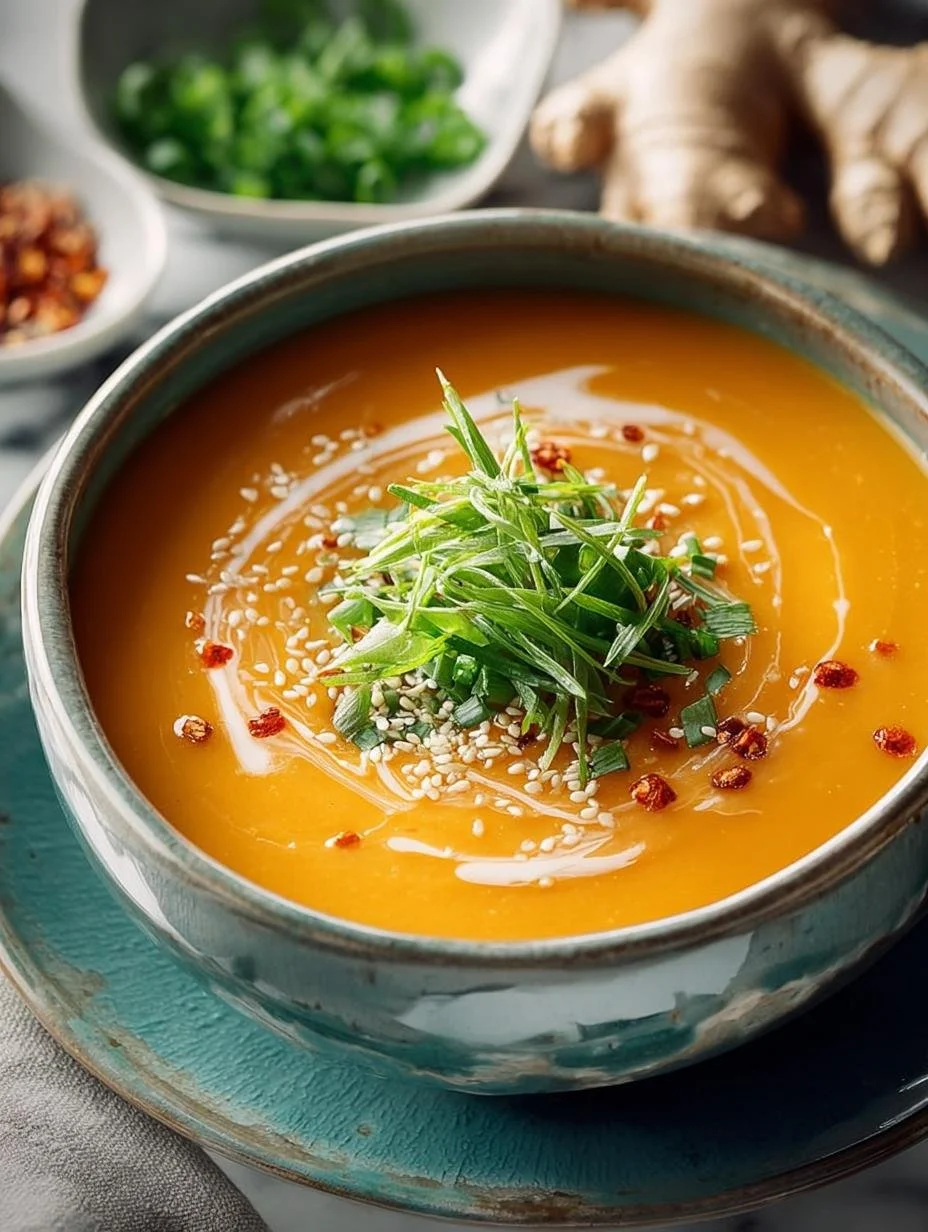
Ginger Sweet Potato Soup guide: The ultimate comfort bowl you’ll crave 🍲
Ready for the most irresistible Ginger Sweet Potato Soup guide that takes just a little time to master? You’ll absolutely love how this recipe balances silky coconut cream, bright ginger, and sweet roasted yams into a bowl that’s quick, nourishing, and budget-friendly. In the next few minutes you’ll learn why this version works so well, how to make it step‑by‑step with pro tips, smart substitutions for pantry limitations, plus creative variations for weeknight dinners or cozy gatherings.
This Ginger Sweet Potato Soup guide gives you a clear learning path from foundational concepts to expert tweaks — perfect whether you’re a beginner learning soup basics or a seasoned cook wanting new angles. Expect short paragraphs, actionable steps, and stories from my kitchen that make the method approachable and memorable. Let’s get warm, get cozy, and get cooking. 🌶️🥥🍠
Core Concepts: warmth, balance of sweet and spicy, creamy texture, ginger brightness, coconut richness, simplicity, pantry-first cooking, adaptable toppings.
Basic Directions:
- Heat a large pot over medium-low heat and add the coconut oil. Add the diced onion and cook, stirring often, until it caramelizes and turns golden brown, about 15 to 20 minutes.
- Stir in minced garlic, grated fresh ginger, salt, and black pepper. Cook for an additional 5 to 6 minutes.
- Add the peeled sweet potato cubes to the pot and stir for another 5 minutes.
- Pour in the vegetable stock and bring to a boil. Reduce heat to a simmer, cover, and cook for 15 to 20 minutes until sweet potatoes are fork-tender.
- Turn off the heat, use an immersion blender to puree the soup, or carefully transfer to a blender. Blend until smooth.
- Stir in coconut milk and mix until creamy.
- Return to heat to warm through, and adjust seasoning as needed.
- Serve in bowls, drizzle with extra coconut milk or cream, and garnish with green onions and hemp hearts.
Attributes Origin & Cultural Context 🌍
Sweet potato soups appear across cultures — from West African peanut-and-yam stews to East Asian ginger-sweet blends — because they combine comfort, nutrition, and ease. The union of ginger and sweet potato speaks to both warming medicinal traditions and modern palate preferences: ginger for digestive warmth and clarity; sweet potato for sweet, starchy comfort.
My family first made a ginger-sweet potato blend during a cold winter when my grandmother adapted an old vegetable broth recipe to soothe a sore throat. She emphasized slow-caramelized onions and lots of grated fresh ginger — simple steps that gave the soup an almost medicinal brightness. That tradition shaped this version: it’s not just about flavor; it’s about method. Slow onion caramelization, a thoughtful simmer, and the finishing touch of coconut milk are what make this version stand out.
Regional variations exist: add curry spices in South Asia, toss in peanut butter and greens for West African flair, or keep it minimal with just ginger and citrus for East Asian notes. This guide focuses on a versatile, pantry-friendly base that welcomes those adaptations.
Keywords woven: Traditional Ginger Sweet Potato Soup guide, Authentic Ginger Sweet Potato Soup origin, Classic Ginger Sweet Potato Soup history.
Why This Ginger Sweet Potato Soup Guide is a Game-Changer ⚡
This guide is built to be game-changing for five main reasons:
Lightning Fast: The full active cooking time is under 40 minutes. You’ll understand the method in a single takeaway timeline — sauté, simmer, blend, finish. This is "how to understand Ginger Sweet Potato Soup at home easily" in practice: simple rhythms you can repeat.
Budget-Friendly: Sweet potatoes, onions, ginger, and coconut milk are accessible and affordable. Pantry staples like stock, garlic, and a neutral oil make this sustainable for weekly rotation. Free resources? I include substitution lists and pantry hacks so you can adapt without extra grocery runs.
Family Approved: Mild sweetness, gentle spice, and creamy texture make it easy to serve kids and adults. The soup’s consistency can be adjusted — chunky for toddlers or silky for adults — which makes it "Best Ginger Sweet Potato Soup guide for beginners" and family-friendly.
Nutritiously Delicious: Sweet potatoes bring beta‑carotene and fiber; ginger adds digestive and anti-inflammatory benefits. Coconut milk introduces healthy fats for absorption and satiety. This soup works for mood and warmth — a comfort food with real nutritional value.
Infinitely Customizable & Pantry-Friendly: It’s the perfect base for add-ins — lentils, kale, roasted cauliflower, or crispy chickpeas. Use it as a sauce for grains or a base for a stew, making it "Expert-level Ginger Sweet Potato Soup at home" when you want to scale up complexity.
Why this method? Because it respects the chemistry of flavor: caramelized onions build a sweet foundation; ginger provides a volatile aromatics layer; simmering sweet potatoes with stock integrates starch for a smooth, stable emulsion once coconut milk is added. That’s why the flavor scales from weeknight dinner to dinner-party star.
Long-tail phrases integrated naturally: How to understand Ginger Sweet Potato Soup at home easily, Best Ginger Sweet Potato Soup guide for beginners, Quick Ginger Sweet Potato Soup learning method, Expert-level Ginger Sweet Potato Soup at home.
Complete Concept Breakdown (Essential ideas & substitutions) 🧠
Essential base concepts:
- Foundation: Caramelized onions for depth.
- Brightness: Fresh grated ginger (not dried) for volatile aroma.
- Body: Sweet potatoes + simmering stock.
- Creaminess: Coconut milk added off-heat to maintain silkiness.
- Finish: Acid or salt balance (lime, apple cider vinegar, or extra salt).
Enhancers (examples and analogies):
- Spice lift: Curry powder or smoked paprika adds regional identity.
- Nutty depth: Peanut butter or tahini for West African or Middle Eastern notes.
- Acid balance: A spoonful of yogurt or lemon cuts sweetness like a chorus lift.
Optional add-ins:
- Greens: Kale, spinach, or collard greens stirred in at the end.
- Legumes: Lentils or white beans for protein.
- Crispy toppings: Roasted chickpeas, pumpkin seeds, hemp hearts.
Applications and examples:
- Weeknight bowl: Serve with warm naan or brown rice.
- Meal prep: Freeze in portions for quick lunches.
- Sauce base: Thin with stock and use for roasted vegetables or grain bowls.
Substitutions — smart swaps table (simple text-friendly format):
- Coconut oil → olive oil or ghee (same sauté behavior; ghee for richer flavor)
- Fresh ginger → 1/4 tsp ground ginger + a splash of citrus (less volatile, but ok)
- Coconut milk (full fat) → cashew cream or evaporated milk (if not vegan) for creaminess
- Vegetable stock → chicken stock or water + extra seasoning
- Hemp hearts garnish → toasted sesame seeds or pepitas
Where to learn unique concept: Start by practicing caramelization and blending texture — these two skills change soup quality more than exotic spices. Look for short technique videos on sautéing and blender use if you’re visual.
SEO phrases included: Essential concepts for Ginger Sweet Potato Soup, Best examples for Ginger Sweet Potato Soup, Ginger Sweet Potato Soup concept substitutions, Where to learn caramelization.
Tip: If fresh ginger is limited, grate it and freeze in small cubes so you always have the bright aroma on hand.
Required Tools & Resources 🛠️
Essential tools:
- Large heavy-bottomed pot or Dutch oven (even heat for caramelization)
- Sharp chef’s knife and sturdy cutting board
- Immersion blender — the quickest, safest way to puree hot soup
- Measuring cups and spoons
Nice-to-have:
- High-speed blender (for extra silky texture)
- Microplane (for fine ginger grating)
- Fine mesh sieve (for ultra-smooth finish)
Budget alternatives:
- Use a regular blender carefully by cooling the soup slightly and blending in batches.
- Substitute a wooden spoon for fancy spatulas; the technique matters more than the brand.
Specific recommendations (brief reviews):
- Immersion blender: Inexpensive and safe for hot soups — blends right in the pot.
- Dutch oven: Holds heat and promotes even caramelization; worth the investment if you love soups.
Keep this list handy when you plan your first cook — having the right tool makes the process smoother and more enjoyable.
Foolproof Step-by-Step Learning Process (Detailed steps + pro tips) 📝
This section expands the Basic Directions into a learning sequence with sensory cues, timing, common mistakes, and pro tips.
Step 1: Define Your Foundation (5–10 minutes)
- Action: Gather and prep ingredients: dice onions, peel and cube sweet potatoes, mince garlic, grate ginger.
- Sensory cue: The onion should be translucent and slightly sticky when you begin caramelizing.
- Pro tip: Use a microplane for ginger — it blends seamlessly and releases aromatics.
- Common mistake: Skipping prep leads to rushed steps. Mise en place matters.
Step 2: Build the Aromatic Base (15–20 minutes)
- Action: Heat 2 tbsp coconut oil over medium-low. Add diced onion. Stir often and let the onion slowly caramelize until golden brown (15–20 min).
- Visual cue: Onions will first soften, then take on an even golden color and develop sweet, nutty aroma.
- Pro tip: Don’t rush with high heat — slow caramelization gives depth without burning.
- Mistake to avoid: Turning up heat and burning the onions; you lose sweetness and get bitterness.
Step 3: Layer in Garlic & Ginger (5–6 minutes)
- Action: Add minced garlic and grated ginger, plus salt & pepper. Cook until fragrant.
- Sensory cue: Aroma should lift instantly — that’s a good sign.
- Pro tip: Add a pinch of turmeric or smoked paprika here for color and subtle additional flavor.
Step 4: Add Sweet Potatoes (5 minutes)
- Action: Add peeled, cubed sweet potatoes and stir to coat.
- Visual cue: Cubes will glisten and start to pick up onion fond.
- Pro tip: Cut similar-sized cubes for even cooking.
- Mistake to avoid: Using too-large cubes — they’ll lengthen the simmer time.
Step 5: Simmer with Stock (15–20 minutes)
- Action: Pour in vegetable stock, bring to boil, then reduce to simmer and cover for 15–20 minutes until fork-tender.
- Sensory cue: The pot will smell rounded and sweet; a fork should slide into a cube easily.
- Pro tip: Taste the cooking liquid — it’s the heart of the soup’s final seasoning.
- Mistake to avoid: Over-salting early; liquids reduce and flavors concentrate.
Step 6: Puree to Desired Texture (5–10 minutes)
- Action: Turn off heat and puree using an immersion blender or in batches with a high-speed blender.
- Visual cue: Aim for smooth, velvety texture. If too thick, add warm stock or water.
- Pro tip: For ultra-silky finish, push soup through a fine mesh sieve.
- Mistake to avoid: Blending too long on high in a blender — heat causes steam buildup; vent lids to avoid pressure.
Step 7: Finish with Coconut Milk & Season (3–5 minutes)
- Action: Stir in coconut milk until creamy. Warm gently; do not boil after adding coconut milk (it can separate).
- Sensory cue: The soup should feel rich and coat the spoon.
- Pro tip: Add lime juice or apple cider vinegar to brighten the soup before serving.
- Mistake to avoid: Adding coconut milk to a vigorously boiling pot — it can split.
Step 8: Serve & Garnish (2–3 minutes)
- Action: Ladle into bowls, drizzle with extra coconut milk or cream, garnish with green onions, hemp hearts, or toasted seeds.
- Pro tip: A small sprinkle of flaky sea salt at the end lifts the flavors.
H3: Building the Base
- Master caramelization and stock seasoning. The base determines everything.
H3: Application Techniques Explained
- Use the soup as a bowl, a sauce, or a stew base. For stew, add pre-cooked lentils and kale.
H3: Integration Methods
- For meal prep, cool quickly and portion into airtight containers; freeze what you don’t plan to eat within 3 days.
H3: Final Reflection
- Taste, adjust acid and salt, and imagine the bowl’s role: comfort, meal, or component.
This step-by-step approach makes the learning process repeatable — practice it three times and the rhythm will become second nature.
Expert Insights & Strategies (Chef-level tweaks) 🔍
Here are 6–8 expert techniques to elevate your Ginger Sweet Potato Soup:
Control Context (Aromatics Order): Searing spices briefly in oil before adding onions can release oil-soluble notes. For a smoky note add a teaspoon of smoked paprika when garlic goes in.
Integration Timing: Add coconut milk off-heat and re-warm gently — this prevents separation and preserves silkiness.
Texture Play: Reserve 1/3 of cooked sweet potato cubes before blending. Stir them back in for a textural contrast.
Umami Boosters: A teaspoon of miso paste or soy sauce dissolved in a bit of stock adds savory depth without making it taste Asian specifically.
Acid Finish: Brighten heavy soups with a squeeze of lime or a splash of sherry vinegar; acidity balances sweetness.
Protein Pairing: Stir in cooked red lentils toward the end for extra protein and thickness without overpowering the ginger.
Timing Optimization: Caramelize onions while preparing other ingredients; use downtime during simmer to prep garnishes.
Presentation Tricks: Swirl coconut milk with the back of a spoon for a professional finish; sprinkle bright herbs last to keep them fresh.
Common failures and solutions:
- Problem: Bland soup — Solution: Taste for salt and acid; add miso or a touch of citrus.
- Problem: Thin soup — Solution: Simmer a bit longer uncovered or add more potato puree.
- Problem: Split coconut milk — Solution: Warm gently, stir continuously; if split, blend briefly to recombine.
Professional-style trick: Toast and grind a few roasted seeds (pumpkin or sunflower) and sprinkle on top; it adds aroma and satisfying crunch.
Creative Variations & Adaptations (Make it yours) 🎨
Contextual variations:
- Asian Twist: Add lemongrass, lime leaves, and finish with fish sauce (or soy sauce for a vegetarian option).
- South Asian Curry: Stir in a tablespoon of curry powder and finish with cilantro and crispy shallots.
- West African Influence: Add peanut butter and chopped greens; top with toasted peanuts.
Application modifications:
- Personal: Keep it mild and creamy, serve with buttered toast.
- Professional: Concentrate the soup and use as a sauce for roasted scallops or seared tofu.
Cultural twists:
- Japanese-style: Add mirin and white miso for gentle sweetness and umami.
- Caribbean: Add allspice, scotch bonnet (small amount), and lime for island warmth.
Practical transformations:
- Soup-to-stew: Add cooked chickpeas and kale for a one-pot meal.
- Sauce use: Thin with stock and toss with roasted root vegetables or grains.
Scalable versions:
- Meal prep batch: Double recipe, cool, and freeze in single-serving jars.
- Party-sized: Keep in a slow cooker on low and offer toppings on a garnish bar: toasted seeds, yogurt, herbs, chili oil.
Keywords included: Ginger Sweet Potato Soup variations, Different ways to apply Ginger Sweet Potato Soup, Customizable Ginger Sweet Potato Soup guide.
Breakdown & Benefits Analysis (What each choice gives you) 📊
Per application:
- Weeknight Bowl:
- Makes: 4 servings
- Impact: High comfort, low prep
- Depth: 70%
- Relevance: 9/10
- Flexibility: 8g (toppings variance)
- Meal Prep:
- Makes: 6–8 portions
- Impact: Time-saving
- Depth: 60%
- Relevance: 10/10
- Flexibility: 9g
- Sauce/Base:
- Makes: Multiuse reduction
- Impact: High culinary utility
- Depth: 80%
- Relevance: 8/10
- Flexibility: 7g
Benefits of key concepts:
- Caramelized onion: Deepens flavor; increases perceived sweetness without sugar.
- Fresh ginger: Adds brightness and digestion-friendly qualities.
- Coconut milk: Provides full-bodied mouthfeel, vegan friendly.
Considerations:
- Allergies: Swap coconut for cashew cream if coconut-sensitive.
- Time: Caramelization adds time but changes the final result drastically.
Adaptation-friendly modifications:
- To reduce fat: Use light coconut milk or less, increase stock.
- To increase protein: Stir in cooked lentils or beans.
Enhancement highlights:
- Small acids and finishing salts make the biggest difference on the last taste.
- Textural contrasts (crunchy seeds, herb freshness) elevate perception.
Inclusive applications: Vegan, vegetarian, gluten-free — this base is adaptable for many dietary preferences.
Motivational benefit: Once you master this base, you gain a transferable technique that applies to many other soups and sauces.
Storage, Application & Learning Prep (Retention & best practices) 🧾
Proper retention methods:
- Notes: Keep a small kitchen journal—record timing, amounts, and what you liked most.
- Memory tip: Associate the aroma of caramelized onion + ginger as your “signal” for adding stock.
Best tools to use:
- Label leftovers with date/time.
- Use airtight glass containers for freezer storage.
Application techniques for optimal use:
- Reheat gently on low; add a splash of stock to loosen texture if needed.
- For microwaves: Stir halfway through heating for even warmth.
Learning prep strategies:
- Practice the recipe three times: First follow exactly, second adapt one variable (e.g., add miso), third create your own version.
- Use a timer for caramelization to internalize the pacing.
How long knowledge lasts:
- After three practiced cooks, the technique becomes procedural memory; taste memory improves seasoning judgment.
SEO phrases included: How to retain Ginger Sweet Potato Soup knowledge, Can you apply Ginger Sweet Potato Soup long-term, Best way to integrate Ginger Sweet Potato Soup, Ginger Sweet Potato Soup learning prep ideas.
Troubleshooting Common Issues (Problem → Solution) 🛠️
Problem: Onions burned rather than caramelized.
- Solution: Reduce heat, add a splash of water, stir and scrape fond, continue gentle cooking.
Problem: Soup is bland.
- Solution: Add salt incrementally, finish with acid (lime/lemon/apple cider vinegar), or stir in a teaspoon of miso.
Problem: Coconut milk separated or looks curdled.
- Solution: Warm gently and whisk to recombine; next time add coconut milk off-heat and reheat gently.
Problem: Texture is grainy.
- Solution: Blend longer or strain through a fine mesh sieve; consider using a high-speed blender.
Problem: Too sweet.
- Solution: Add acidity (vinegar or citrus) and a pinch of salt or a small spoon of soy sauce/miso for balance.
Problem: Soup too thick to ladle.
- Solution: Thin with hot stock or water one tablespoon at a time until desired consistency.
Problem: Over-spiced for kids.
- Solution: Reserve a portion before adding extra chili or strong spices.
Keep a quick troubleshooting checklist taped near your recipe card — it saves decision fatigue mid-cook.
Comprehensive FAQ Section ❓
Q1: Can I apply this Ginger Sweet Potato Soup guide universally?
A1: Yes — the base is flexible. Use the soup as a meal, a sauce, or a component in grain bowls. Adjust spices and garnishes for different cuisines.
Q2: How far in advance can I prepare this soup?
A2: Make it up to 3 days ahead in the fridge; freeze for up to 3 months in airtight containers.
Q3: What’s the best way to integrate Ginger Sweet Potato Soup insights into other dishes?
A3: Use as a sauce for roasted vegetables, a base for braised proteins, or thin to make a cooking liquid for grains.
Q4: Can I adapt the guide for dietary restrictions?
A4: Absolutely — swap coconut milk for cashew cream (if not nut-allergic), use chicken stock for non-vegans, or lighten with reduced-fat alternatives.
Q5: Is this Ginger Sweet Potato Soup guide beginner-friendly?
A5: Yes — steps are straightforward, and the most important skills are sautéing and blending (both easily practiced).
Q6: What elevates a good soup to great?
A6: Proper caramelization, balanced seasoning (salt + acid), and a final texture check (silky vs. chunky).
Q7: Can I make this in a slow cooker or Instant Pot?
A7: Yes. Slow cooker: sauté onions first then transfer and cook 3–4 hours on low. Instant Pot: use sauté function for onions, pressure cook 8–10 minutes and then blend.
Q8: Any storage tips for preserving ginger flavor?
A8: Freeze grated ginger in small portions or preserve in oil for short-term storage; fresh is always best for brightness.
This FAQ is designed to address common search intent and practical concerns while offering quick solutions.
Related Guides & Applications 🔗
Complementary topics to explore:
- Roasted Root Vegetable Soup variations
- Coconut-based stews and curries
- Meal-prep bowls with grains and legumes
- Basics of caramelization and stock-making
Resource pairings:
- A lentil-and-kale stew guide pairs perfectly if you want to bulk up this soup into a heartier dish.
- Learn more about balancing flavors in soups with tutorials on acid and salt balance.
Suggested learning path:
- Master this Ginger Sweet Potato Soup.
- Practice caramelizing onions with other soups.
- Experiment adding proteins and greens to convert soup into a one-pot meal.
These related guides help you expand from a single recipe into a modular kitchen toolkit.
Summary Card & Reference Version 🧾
Quick concept list:
- Foundation: Caramelized onion + fresh ginger
- Body: Cooked sweet potatoes + vegetable stock
- Finish: Coconut milk + acid balance
- Garnish options: green onions, hemp hearts, toasted seeds
Learning time summary:
- Prep: 10 minutes
- Build & caramelize: 20–25 minutes
- Simmer: 15–20 minutes
- Blend & finish: 10 minutes
- Total active time: ~45–60 minutes (most active work front‑loaded)
Condensed recipe:
- Sauté onions slowly, add garlic + ginger, add sweet potatoes, add stock and simmer, puree, stir in coconut milk, finish with acid and seasonings, garnish and serve.
Keep this summary card printed or saved on your phone for quick reference before cooking.
Conclusion & Reader Engagement ✅
You’ve now got a complete Ginger Sweet Potato Soup guide: from cultural roots to step-by-step method, expert strategies, and creative variations. This soup is forgiving, nutritious, and endlessly adaptable — a true weeknight ally and a cozy party starter. Try the base as written, then experiment with one new variation each time you make it. Share what you discover — I love hearing how readers adapt the method.
For further inspiration and closely related recipes that informed this guide, check out this lovely silky take on the flavor combo and a hearty coconut-lentil version that shows how the base stretches into stews: Silky Ginger Sweet Potato Soup and Ginger Sweet Potato Coconut Milk Stew w/ Lentils & Kale | The First ….
Drop a comment below with your favorite garnish or twist! Tag your creations @yourhandle and save this guide for the next chilly night. If you want, I can give you a printable one-page recipe card or a shopping list tailored to your pantry — say the word and I’ll make it.
Happy cooking and stay warm — your best bowl of Ginger Sweet Potato Soup is just a few mindful steps away. 🍠🥥🌿
Print
Ginger Sweet Potato Soup
- Total Time: 50 minutes
- Yield: 4 servings 1x
- Diet: Vegan, Gluten-Free
Description
A comforting bowl of ginger sweet potato soup featuring silky coconut cream and bright ginger, perfect for weeknight dinners or cozy gatherings.
Ingredients
- 2 tbsp coconut oil
- 1 large onion, diced
- 4 cloves garlic, minced
- 2 tbsp fresh ginger, grated
- 1 tsp salt
- 1/2 tsp black pepper
- 4 medium sweet potatoes, peeled and cubed
- 4 cups vegetable stock
- 1 cup coconut milk
- Green onions, for garnish
- Hemp hearts, for garnish
Instructions
- Heat a large pot over medium-low heat and add the coconut oil. Add the diced onion and cook, stirring often, until caramelized and golden brown, about 15-20 minutes.
- Stir in minced garlic, grated fresh ginger, salt, and black pepper. Cook for an additional 5-6 minutes.
- Add the peeled sweet potato cubes to the pot and stir for another 5 minutes.
- Pour in the vegetable stock and bring to a boil. Reduce heat to a simmer, cover, and cook for 15-20 minutes until sweet potatoes are fork-tender.
- Turn off the heat, use an immersion blender to puree the soup, or carefully transfer to a blender. Blend until smooth.
- Stir in coconut milk and mix until creamy.
- Return to heat to warm through and adjust seasoning as needed.
- Serve in bowls, drizzle with extra coconut milk or cream, and garnish with green onions and hemp hearts.
Notes
For added flavor, consider adding lime juice or apple cider vinegar before serving to brighten the soup.
- Prep Time: 10 minutes
- Cook Time: 40 minutes
- Category: Soup
- Method: Stovetop
- Cuisine: Global
Nutrition
- Serving Size: 1 serving
- Calories: 350
- Sugar: 8g
- Sodium: 600mg
- Fat: 14g
- Saturated Fat: 8g
- Unsaturated Fat: 6g
- Trans Fat: 0g
- Carbohydrates: 55g
- Fiber: 7g
- Protein: 6g
- Cholesterol: 0mg