
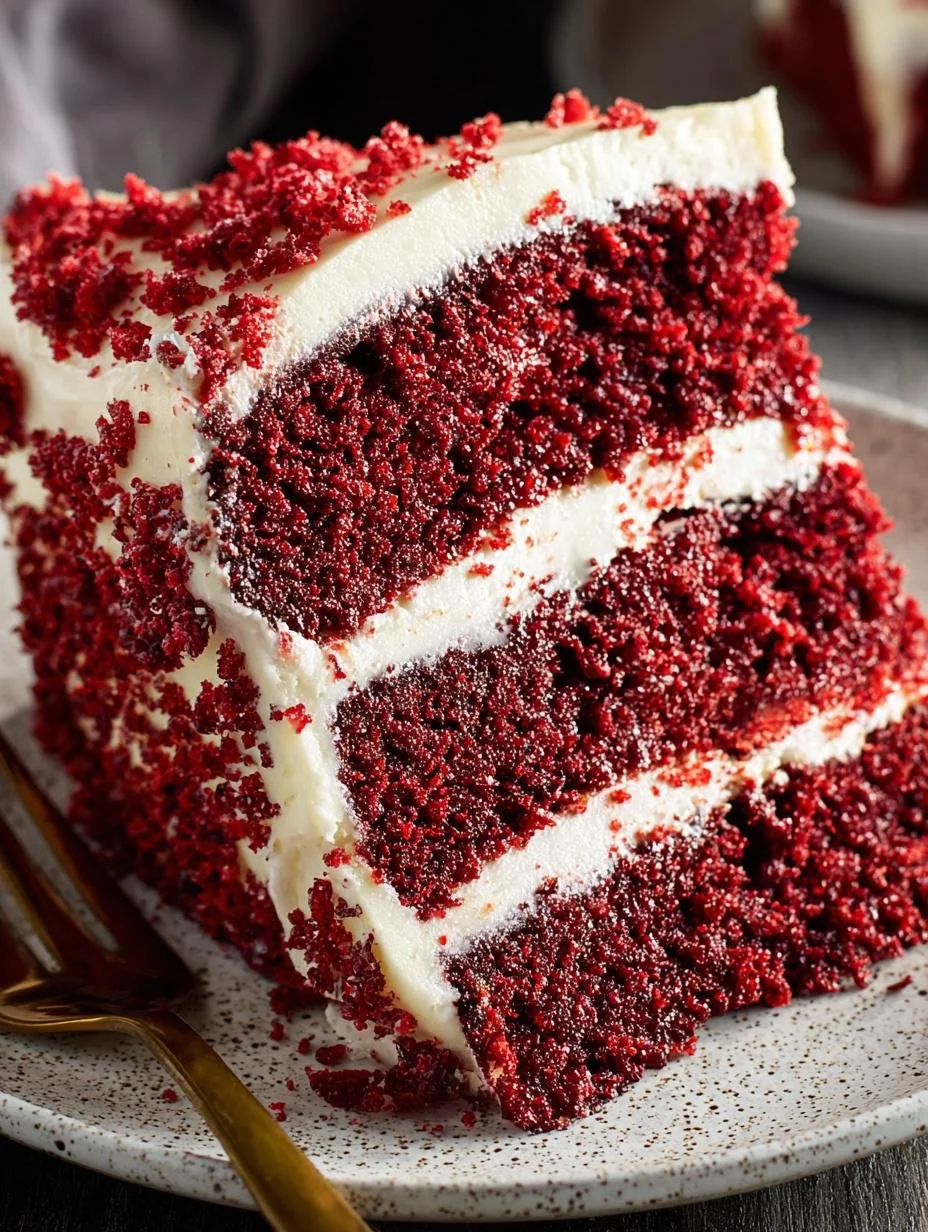
Traditional Red Velvet Cake guide: A Definitive, Practical Manual
Red velvet cake has a way of feeling like a small celebration on a plate — velvet crumb, subtle cocoa, tangy frosting, and a color that announces itself. This Traditional Red Velvet Cake guide will teach you how to make classic red velvet reliably, explain why the recipes work, and show adaptations for every level of baker.
By the end you’ll understand the chemistry behind the cake, know how to avoid common failures, and have step-by-step instructions to bake, frost, and store a genuinely great red velvet cake.
What you’ll gain: a clear pathway from basics to advanced techniques, time estimates, troubleshooting rules, resource lists, and practical tips to make a consistent, delicious cake every time.
Background & Context
Red velvet is one of those recipes that carries questions about its provenance and meaning. The phrase Classic Red Velvet Cake history points to several threads: Southern American baking, the Victorian-era interest in “velvet” cakes, and mid-20th-century commercial color and food chemistry developments.
The Authentic Red Velvet Cake origin is debated. Some point to the Waldorf-Astoria’s 1910s menu, others to Southern home baking where cocoa, buttermilk, and vinegar were used for texture and flavor. Over time, the cake became part of celebrations, especially in the American South.
Culturally, red velvet sits between novelty and tradition — visually striking but subtle in flavor. That dual identity makes it versatile for weddings, birthdays, and everyday baking. From a baker’s perspective, the cake rewards precision: small ingredient adjustments change texture and color significantly.
A personal note: I first learned red velvet as a layered birthday cake recipe that friends requested repeatedly. Simple changes — using real buttermilk, measuring by weight, respecting mixing times — turned inconsistent results into reliably great cakes.
Why This Approach Works
This guide focuses on fundamentals that produce repeatable results for any baker. The approach breaks down the cake into chemical roles (acid, liquid, fat, structure), practical steps, and contingency plans.
Why it works: red velvet’s distinct texture arises from the interaction of acidic ingredients with cocoa and leaveners, plus the right fat-and-sugar balance. Understanding those relationships reduces guesswork and increases consistency.
Accessibility is central: the recipe uses common ingredients and simple tools so beginners can succeed, while intermediate and advanced tips allow experienced bakers to refine crumb, color, and flavor.
Objections often revolve around color — “Is the red just food dye?” — or complexity. This guide addresses both: you’ll learn natural alternatives and where color choices affect chemistry, plus practical shortcuts that don’t sacrifice quality.
Core Concepts Explained
Break the cake into four logical components: structure, flavor, color, and moisture. Each component has a job and predictable ways to adjust it.
- Structure: flour and eggs create the crumb framework. Cake flour or a low-protein all-purpose flour yields a tender crumb. Overworking creates toughness; undermixing leaves tunnels or uneven crumb.
- Flavor: light cocoa provides chocolate notes without overpowering. Buttermilk and vinegar balance sweetness and enhance tang. Vanilla rounds flavors.
- Color: historically a subtle reddish-brown from cocoa-reactive anthocyanins. In modern practice red food coloring is often used for visual effect. Natural alternatives like beet puree or powdered freeze-dried beet work but alter flavor and moisture.
- Moisture: oil or butter, plus buttermilk, keep the cake tender and moist. Oil gives a moister crumb; butter adds flavor and structure. A common hybrid uses both to balance taste and texture.
Examples and substitutions:
- Cake flour substitute: for every cup, remove 2 tbsp all-purpose flour and replace with 2 tbsp cornstarch. Sift before measuring for a lighter result.
- Buttermilk alternative: 1 cup milk + 1 tbsp white vinegar or lemon juice, rest 5–10 minutes. It’s a practical substitute but slightly different acidity than cultured buttermilk.
- Cocoa choice: use natural (non-Dutched) cocoa powder if you want traditional interaction with acid. Dutch-processed cocoa neutralizes pH and changes how leavening reacts.
Tools, Resources, or Foundations
Essentials:
- Kitchen scale (preferred) — weight measurement improves consistency.
- Two 8- or 9-inch round cake pans (non-stick or lined) — for layered cakes.
- Mixer (stand or handheld) — for creaming and achieving stable batter.
- Instant-read thermometer — optional but useful for room temp and oven checks.
Optional enhancements:
- Offset spatula and bench scraper — for smoother frosting.
- Cake strips — for level layers.
- Sifter — for aerating dry ingredients.
- Piping bags and tips — for decorative finishes.
Budget-friendly alternatives:
- Use a glass or metal bowl instead of a stand mixer. Mixing by hand takes longer but works.
- Reuse parchment paper and spray lightly to prevent sticking.
- Replace cake strips with damp kitchen towels wrapped around pans if needed.
Commentary on usefulness:
A kitchen scale is the most impactful single purchase. Accuracy reduces batch-to-batch variation and will repay its cost across many recipes.
Step-by-Step Process
This section is a practical walk-through. Follow times and tips closely for best results.
1. Prep and Timing
- Time estimate: total active time 45–60 minutes, bake time 25–35 minutes, cooling/frosting 2–3 hours.
- Preheat oven to 350°F (175°C). Position racks center. Grease pans, line with parchment, and grease again.
- Measure ingredients precisely. If using a scale, tare between items. Room-temperature eggs and dairy integrate more evenly.
Common mistake: skipping pan prep leads to nicked layers or tears. Avoid by lining pans and scoring parchment.
2. Dry Ingredients
- Sift flour, cocoa, salt, and leaveners together. Sifting prevents clumps and evenly distributes the cocoa, which affects color and texture.
- For cake flour, sift twice for extra aeration.
Pro tip: weigh cocoa separately; small variations in cocoa change both flavor and color noticeably.
3. Wet Ingredients and Mixing
- Cream sugar with butter (if using) until light. If using oil, combine sugar with oil, then eggs. Add vanilla.
- Alternate adding dry ingredients and buttermilk (or milk mixture), beginning and ending with dry. Mix until just combined to avoid gluten development.
- Stir vinegar into a small amount of buttermilk or add directly to batter; it reacts with baking soda for lift.
Common mistakes: overmixing creates tunneling; undermixing gives uneven texture. Beat eggs into fat gradually for stable emulsion.
4. Color Adjustment
- Add red food coloring last, after batter is mixed. This preserves batter aeration. Gel colors concentrate pigment without extra liquid.
- For natural color: fold in beet puree (drained) or powdered beet carefully and taste for sweetness; adjust sugar if needed.
Pro tip: darker cocoa requires more color to get vibrant red; adjust accordingly.
5. Baking
- Divide batter evenly between pans. Tap pans on counter to release large air pockets.
- Bake 25–30 minutes, rotating pans halfway if your oven hotspots. Test with a toothpick — it should come out mostly clean with small moist crumbs.
- Avoid overbaking; remove when cake springs back slightly.
Common mistake: opening oven door too often lowers oven temperature and affects rise.
6. Cooling and Layer Prep
- Cool in pans 10–15 minutes, then invert onto racks to cool completely. Cooling in pans too long causes steaming and soggy edges.
- Level domes with a serrated knife or cake leveler. Wrap layers in plastic and chill 30 minutes for cleaner trimming.
Time estimate: cooling to room temperature usually 60–90 minutes depending on humidity.
7. Frosting and Assembling
- Classic frosting: cream cheese frosting is traditional and balances sweetness with tang. Ensure cream cheese and butter are room temp for smooth texture.
- Crumb coat: apply a thin layer of frosting to trap crumbs, chill 15–30 minutes, then apply final coat. This gives a clean finish.
- Assemble: place first layer on board, pipe a ring of frosting to hold filling if using fresh fruit or loose filling, then continue layering and decorate.
Pro tip: use a turntable and bench scraper for professional-looking sides.
Expert Techniques & Insights
- Crumb control: freeze layers briefly (15–20 minutes) before cutting/crumbling for garnishes. Slightly frozen cake is firmer and trims cleanly.
- Emulsion stability: adding eggs gradually and scraping bowl ensures a uniform batter and minimizes curdling.
- Oven calibration: use an oven thermometer and note if you should lower or raise the set temperature by 10–20°F for even baking. Ovens vary.
- Color management: if you prefer less artificial dye, add cocoa that’s darker and use a pink blush of dye rather than full red to maintain subtlety.
Lessons from experience:
- Freshness matters. Stale flour or cocoa shows in flavor. Buy small quantities of cocoa if you don’t bake often.
- Slightly underbaked cakes set up as they cool; don’t remove immediately for fear of collapsing but don’t overbake.
Variations & Adaptations
- Cupcakes: bake at 325–335°F for 18–22 minutes. Watch for dome size; liners help with portion control.
- Gluten-free: substitute 1:1 GF flour blends designed for cakes (with xanthan gum). Reduce mixing to avoid gummy texture.
- Vegan: use dairy-free cream cheese and replace eggs with flax eggs (1 tbsp flax + 3 tbsp water per egg, rested), but expect differences in rise and crumb. Use oil for moisture.
- Spiced red velvet: add 1/4 tsp cinnamon and a pinch of nutmeg for warmth. Keep balance so cocoa remains perceptible.
- Cultural adaptations: pair with citrus-scented creams, espresso-laced frostings, or swap cream cheese for mascarpone for an Italian twist.
Skill-level adaptations:
- Beginner: follow a trusted recipe closely and use standard pans.
- Intermediate: measure by weight, experiment with pan sizes and temperatures.
- Advanced: alter recipe ratios, test cocoa types, and refine frosting textures.
Analysis & Benefits Breakdown
A compact comparison of approaches and considerations helps decide which path to use depending on priorities.
| Aspect | Classic (Butter + Buttermilk + Dye) | Oil-Based (Moist) | Natural Color (Beet) |
|—|—:|—:|—:|
| Texture | Tender, slightly firm | Very moist, softer crumb | Moist, may be denser |
| Flavor | Balanced, buttery | Neutral fat flavor | Earthy notes from beet |
| Color Reliability | High with dye | High with dye | Variable; fades faster |
| Shelf Life | 2–3 days refrigerated | 3–4 days refrigerated | 2–3 days refrigerated |
| Ease for Beginners | Medium | Easier (for moisture forgiveness) | Harder (color/flavor tuning) |
| Best Use | Layered celebration cakes | Single-layer, moist cupcakes | Natural/clean-label requests |
Key takeaways: oil-based recipes tolerate slight overbakes better; butter provides flavor complexity; natural color needs testing to avoid off-flavors.
Preparation, Retention & Long-Term Use
Effective prep: mise en place every ingredient and tool before starting. Pre-measure and label bowls for complex projects.
Retention: store frosted cakes covered in the refrigerator for 3–4 days. For best texture, bring to room temp 30–60 minutes before serving. For longer storage, freeze unfrosted layers wrapped tightly in plastic and foil for up to 2 months.
Reuse strategies:
- Freeze slices for single-serve thawing. Wrap slices in plastic and foil. Thaw wrapped in the fridge overnight, then bring to room temp.
- Repurpose stale crumbs into truffles or cake pops by mixing with frosting and chilling.
Longevity of knowledge:
The skills learned here apply broadly: emulsion control, acidity balance, and crumb handling are transferable to other cakes and pastries.
Troubleshooting & Common Problems
Problem → Cause → Solution
- Dense, heavy cake → Overmixing or too much flour → Measure by weight; mix until just combined.
- Cake sinks in the center → Oven temp too low, opening door, underbaked → Bake to set; use oven thermometer and resist opening door early.
- Dry crumb → Overbaking or insufficient fat/liquid → Reduce bake time, increase oil slightly, use buttermilk.
- Cake is gummy → Underbaked or too much liquid → Test with toothpick; reduce liquid proportion slightly.
- Frosting too runny → Warm ingredients or too much liquid → Chill frosting and beat to firm; refrigerate briefly.
- Frosting too stiff → Too cold or too much powdered sugar → Warm slightly and beat in a tsp of milk at a time.
- Faded color after baking → Natural color or low dye, high cocoa acidity → Use gel dye for stable color or accept subtler hue.
- Crumbly layers that fall apart → Overbaked or insufficient binding (eggs) → Ensure proper egg weight, don’t overbake, chill layers before assembly.
The format keeps solutions direct and actionable. When in doubt, consult the “what changed” rule: compare yesterday’s successful bake to the failed one and isolate a single variable.
FAQ Section
Q: Is red velvet actually chocolate cake?
A: It contains cocoa but in lower amounts than chocolate cake. The flavor is cocoa-scented rather than deeply chocolatey.
Q: Why does red velvet use vinegar or buttermilk?
A: They provide acidity to react with baking soda (leavening) and to tenderize gluten, creating the cake’s fine crumb and subtle tang.
Q: Can I make red velvet without food coloring?
A: Yes. Use natural beet products or rely on cocoa’s natural color. Expect a more muted hue and slight flavor differences.
Q: How far in advance can I bake the layers?
A: Unfrosted layers freeze well up to 2 months. For short-term, bake a day ahead and wrap tightly at room temperature.
Q: Should I use Dutch-processed cocoa?
A: Classic recipes typically use natural cocoa due to its acidity. Dutch-processed cocoa is neutralized and changes leavening dynamics; if using it, adjust with acid.
Q: What frosting pairs best?
A: Classic pairing is cream cheese frosting for its tang. Buttercream is an option for longer shelf life or firmer decoration.
Q: Why does my frosting develop beads of moisture?
A: Temperature differentials can cause condensation. Chill assembled cake gently and avoid rapid temperature changes.
Q: Can I halve or double the recipe reliably?
A: Yes, but use weight-based scaling and adjust bake times for different pan sizes. Larger batches may need slight changes in bake time and mixing speed.
Related Topics & Next Steps
If you enjoyed this guide, explore:
- Cream cheese frosting techniques and stabilization.
- Cake decorating basics: crumb coat, piping, and smooth finishes.
- Flavor pairing: coffee or citrus accents that complement red velvet.
- Advanced pastry skills: tempering chocolates, making syrups, and using spatulas like a pro.
Skill next steps:
- Practice one technique per bake (e.g., leveling layers), then combine skills into a full layered cake.
Quick Reference Summary
- Roles: flour/eggs = structure; cocoa = flavor/color; buttermilk/vinegar = acidity; fat = moisture.
- Essentials: weigh ingredients, use room-temp dairy/eggs, don’t overmix, bake until toothpick shows moist crumbs.
- Frosting: cream cheese is classic; ensure ingredients are smooth and chilled for stability.
- Storage: refrigerate frosted cake 3–4 days; freeze unfrosted layers up to 2 months.
- Troubleshooting rule: change one variable at a time to isolate causes.
Conclusion
Thank you for following this Traditional Red Velvet Cake guide. If you’d like a tested recipe to practice the techniques covered here, consider these full recipes: Red Velvet Cake with Cream Cheese Frosting – Sally’s Baking offers clear step-by-step instructions, and Homemade Red Velvet Cake Recipe provides another reliable home-kitchen approach to reinforce the skills in this guide.
If you want, I can convert this into a reusable system prompt, adapt it for technical guides or tutorials, or create a content evaluation checklist based on this framework. Which would you like next?
Print
Traditional Red Velvet Cake
- Total Time: 2 hours
- Yield: 12 servings 1x
- Diet: Vegetarian
Description
A classic red velvet cake with velvet crumb, subtle cocoa, and tangy cream cheese frosting.
Ingredients
- 2 1/2 cups all-purpose flour
- 1 1/2 cups granulated sugar
- 1 cup vegetable oil
- 1 cup buttermilk
- 2 large eggs
- 1 tbsp red food coloring
- 1 tsp vanilla extract
- 1 tsp baking soda
- 1 tsp salt
- 1 tbsp vinegar
- 1/2 cup unsweetened cocoa powder
Instructions
- Preheat your oven to 350°F (175°C).
- Grease the cake pans and line with parchment paper.
- Sift the flour, cocoa, salt, and baking soda together in a bowl.
- Cream sugar and oil until light and fluffy, then add eggs and vanilla.
- Alternately mix in the dry ingredients and buttermilk.
- Stir in vinegar and food coloring until well combined.
- Divide the batter between the prepared pans.
- Bake for 25–30 minutes or until a toothpick comes out clean.
- Cool in pans for 10–15 minutes before inverting onto racks to cool completely.
- Frost layers with cream cheese frosting once cooled.
Notes
Ensure all ingredients are at room temperature for better mixing. Use gel food coloring for a more vibrant cake.
- Prep Time: 30 minutes
- Cook Time: 30 minutes
- Category: Dessert
- Method: Baking
- Cuisine: American
Nutrition
- Serving Size: 1 slice
- Calories: 350
- Sugar: 34g
- Sodium: 250mg
- Fat: 17g
- Saturated Fat: 2g
- Unsaturated Fat: 15g
- Trans Fat: 0g
- Carbohydrates: 45g
- Fiber: 1g
- Protein: 4g
- Cholesterol: 30mg